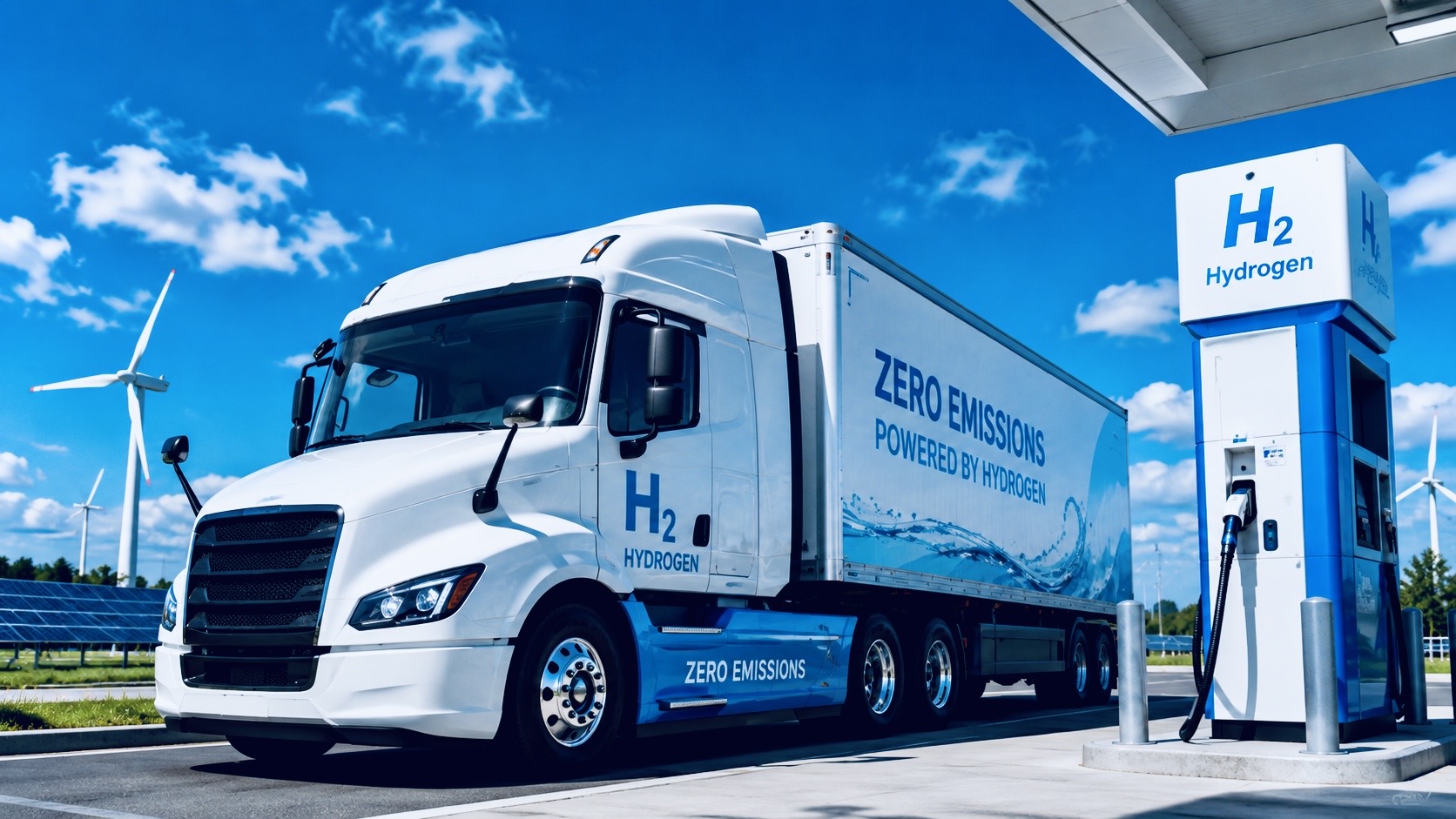
Hydrogen Trucks Begin Entering Real-World Freight Routes
Heavy-duty hydrogen-powered transport trucks are moving closer to large-scale deployment as governments and logistics companies push for zero-emission freight solutions
The global freight industry is accelerating efforts to transition away from diesel-powered transport as hydrogen fuel-cell heavy trucks begin entering commercial testing and early production phases across North America, Europe, and Asia. The shift matters because heavy-duty trucking remains one of the world’s largest sources of transportation-related emissions, and governments are increasingly pushing for zero-emission freight solutions capable of handling long-haul commercial routes without sacrificing payload capacity or operational range.
Hydrogen-powered heavy trucks are now being viewed by many transportation companies and industry analysts as one of the most realistic alternatives for sectors where battery-electric systems still face major limitations involving charging time, towing capacity, vehicle weight, and long-distance operations. Several truck manufacturers, energy companies, and logistics operators have expanded pilot programs and infrastructure investments during the past year as commercial demand for cleaner freight technology grows.
The latest developments come as companies including Daimler Truck, Volvo Group, Hyundai, Nikola, Toyota, PACCAR, and several Canadian startups continue advancing hydrogen fuel-cell truck programs aimed at replacing diesel engines in large commercial fleets. Canadian company Elemental Trucks recently confirmed plans to begin fulfilling early orders for hydrogen-powered heavy-duty trucks designed for long-haul freight transport.
Industry attention surrounding hydrogen trucking has intensified because freight transportation remains difficult to decarbonize using current battery technology alone. Long-haul transport vehicles often travel thousands of kilometres while carrying extremely heavy cargo loads, making charging times and battery weight major operational concerns for many fleet operators.
Hydrogen fuel-cell systems operate differently from traditional electric battery vehicles. Instead of relying entirely on large battery packs, hydrogen trucks generate electricity onboard using hydrogen fuel cells that produce power through chemical reactions involving hydrogen and oxygen. The only direct emission released from the process is water vapour.
Supporters of hydrogen trucking argue that the technology offers several advantages for heavy commercial transport, including faster refuelling times, reduced vehicle weight compared to massive battery systems, and the ability to maintain longer driving ranges under demanding freight conditions.
Several governments have increased support for hydrogen infrastructure projects as part of broader emissions reduction strategies. Canada, the United States, Germany, Japan, South Korea, and parts of the European Union have all announced investments tied to hydrogen production, refuelling stations, and transportation technology development.
Canada has emerged as one of the countries actively promoting hydrogen development due to its natural resources, energy infrastructure, and growing clean technology sector. British Columbia and Alberta in particular have become major centres for hydrogen-related projects involving trucking, industrial fuel production, and energy storage.
Industry analysts note that infrastructure remains one of the largest challenges facing widespread hydrogen truck adoption. Unlike conventional diesel systems, hydrogen vehicles require specialized fuelling networks that remain limited in many regions. Companies and governments are now racing to expand refuelling stations capable of supporting large commercial fleets.
The trucking sector is also facing increasing pressure from environmental regulations and emissions targets. Several jurisdictions are introducing stricter transportation emissions rules over the coming decade, forcing logistics operators to evaluate alternatives to traditional diesel fleets.
At the same time, battery-electric heavy trucks continue advancing rapidly, creating an ongoing debate over which technology may ultimately dominate zero-emission freight transport. Some experts believe hydrogen and battery-electric systems may coexist depending on route type, cargo requirements, and regional infrastructure availability.
Hydrogen technology has already begun appearing in several major freight pilot projects globally. Switzerland deployed hydrogen fuel-cell freight trucks through commercial retail distribution systems, while California continues expanding hydrogen freight infrastructure connected to ports and logistics hubs. Major shipping and industrial companies are also investing in hydrogen-related transportation technologies.
Automakers and trucking manufacturers have additionally focused on reducing fuel-cell costs and improving durability. Early hydrogen systems were considered too expensive for widespread commercial use, but technological improvements and larger-scale manufacturing are gradually lowering costs.
Safety concerns surrounding hydrogen storage and transport remain part of the discussion, although industry groups argue that modern fuel systems include multiple safeguards and rigorous engineering standards. Hydrogen has long been used industrially in sectors including chemical manufacturing and aerospace operations.
The economic competitiveness of hydrogen trucking may ultimately depend heavily on energy production costs. Much of today’s hydrogen is still produced using fossil fuels, though governments and energy companies are investing heavily in so-called “green hydrogen” generated through renewable-powered electrolysis systems that produce far lower emissions.
The global freight sector itself is under enormous pressure to modernize as supply chains evolve and governments demand lower-carbon transportation systems. Heavy trucking accounts for a significant percentage of transportation emissions globally despite representing a smaller percentage of total vehicles on the road.
Some industry leaders believe hydrogen may become especially important for sectors involving mining, construction, freight rail, shipping, and long-haul trucking where extremely high energy demands make large battery systems less practical.
Meanwhile, logistics operators continue testing whether hydrogen trucks can perform reliably under real-world commercial conditions involving harsh weather, steep terrain, heavy loads, and extended operating schedules. Fleet operators are closely monitoring fuel efficiency, maintenance costs, reliability, and refuelling logistics before committing to large-scale fleet conversions.
The next several years are expected to become critical for the future of hydrogen-powered transportation. If infrastructure expansion, fuel production, and manufacturing costs improve quickly enough, hydrogen trucks could become a major part of the freight industry’s long-term transition away from diesel dependence.
As transportation companies race toward lower-emission freight systems, hydrogen-powered heavy trucks are increasingly moving from experimental technology into commercial reality.
About the Author Brad Socha is the founder of The Universal Record, focused on sourced, factual global reporting. Coverage includes international news, geopolitics, technology, and major developments.