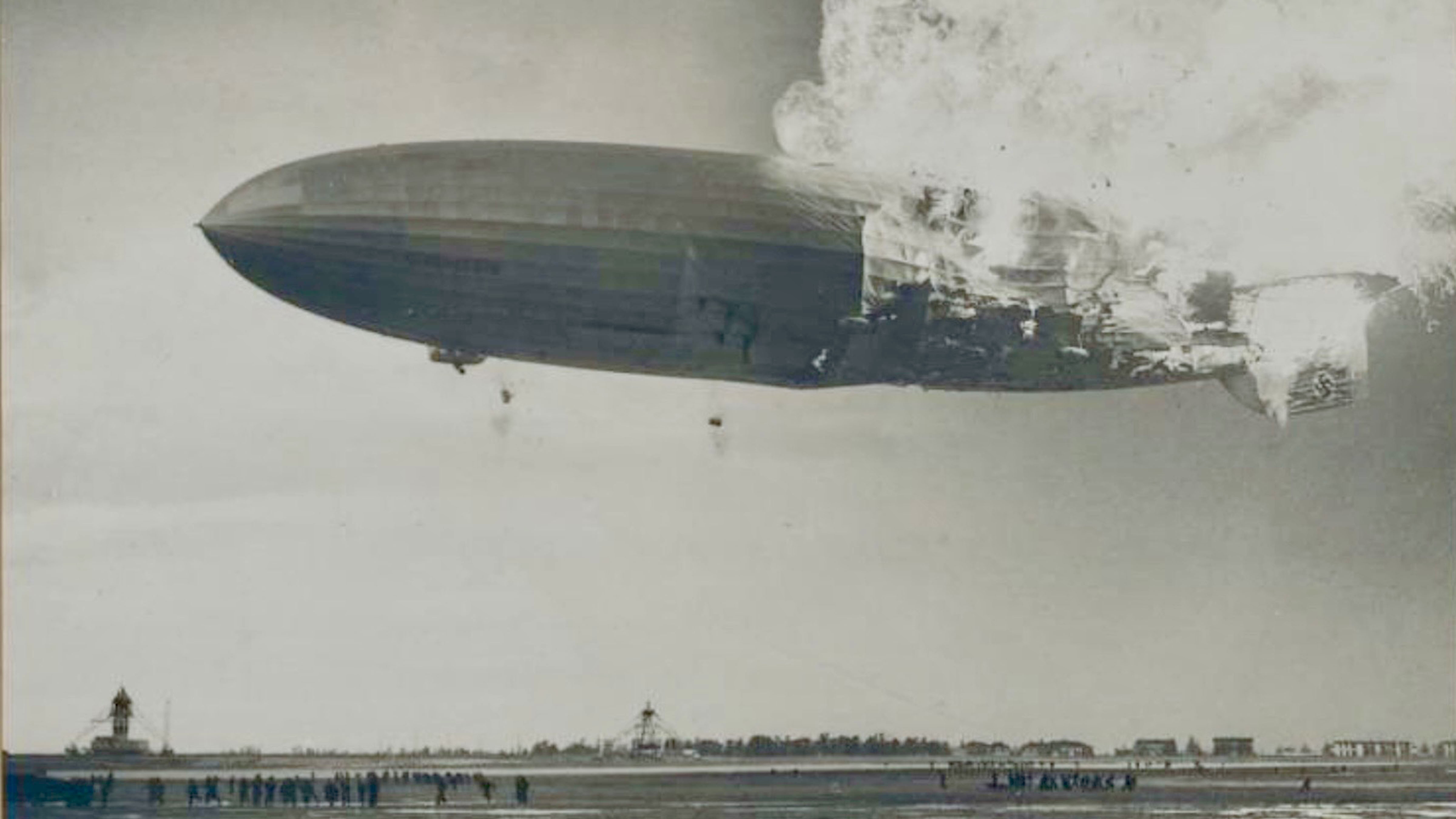
The Hindenburg disaster still matters today because it remains one of the defining moments in aviation history, a tragedy that permanently changed public trust in airship travel and demonstrated how rapidly technology can rise and collapse. More than eight decades later, the haunting images and live radio coverage of the disaster continue to symbolize the dangers of early aviation innovation and the global impact of catastrophic transportation failures.
On May 6, 1937, the German passenger airship LZ 129 Hindenburg caught fire while attempting to land at Naval Air Station Lakehurst in New Jersey. The massive hydrogen-filled dirigible had completed most of its transatlantic journey from Frankfurt, Germany, carrying passengers and crew across the Atlantic in what was then considered one of the most luxurious forms of travel. Within seconds of beginning its landing procedure, flames erupted near the tail section of the airship, engulfing the aircraft in a rapidly spreading fireball.
The disaster unfolded in front of journalists, photographers, and spectators gathered at the airfield. News cameras captured the event in real time, producing some of the most famous footage ever recorded. Radio reporter Herbert Morrison’s emotional eyewitness broadcast became legendary, preserving the shock and horror of the moment for generations. The combination of visual footage and live audio coverage turned the Hindenburg tragedy into one of the first globally recognized media disasters of the modern age.
The Hindenburg measured more than 800 feet in length and represented the peak of airship engineering during the 1930s. Operated by Germany’s Zeppelin Company, it was designed for long-distance passenger travel and offered amenities that rivaled luxury ocean liners, including dining rooms, lounges, sleeping cabins, and observation decks. At the time, airships were viewed by many as the future of international transportation.
However, safety concerns had always surrounded the use of hydrogen gas, which was highly flammable. Helium, a far safer alternative, was not available to Germany in sufficient quantities due to export restrictions imposed by the United States. As a result, the Hindenburg relied on hydrogen to achieve lift, creating the conditions for a potentially catastrophic fire.
Investigators have spent decades examining what caused the ignition. The exact source remains debated, but many experts believe a static electricity spark ignited leaking hydrogen during the landing process. Once the fire began, it spread with extraordinary speed, destroying the airship in less than a minute. Of the 97 people onboard, 36 lost their lives, including passengers, crew members, and one ground worker.
The disaster immediately altered public perception of airship travel. Confidence in rigid dirigibles collapsed almost overnight, and the era of passenger airships effectively came to an end. While airplanes of the time still faced risks, advances in aircraft engineering and speed soon pushed fixed-wing aviation ahead as the dominant form of air travel.
The Hindenburg disaster also demonstrated the growing power of global media. The dramatic footage and emotional reporting allowed millions of people around the world to witness the event in unprecedented detail. Historians often point to the disaster as one of the earliest examples of a tragedy becoming deeply embedded in international public consciousness through mass communication.
Today, the Hindenburg remains a powerful symbol in both aviation history and popular culture. The image of the burning airship has appeared in documentaries, museums, films, and educational programs for decades. It is frequently referenced when discussing engineering risk, transportation safety, and how public confidence can shift after a major disaster.
Interest in the Hindenburg has continued in recent years as aviation historians and researchers revisit the technological ambitions of the early twentieth century. Modern advances in materials science and lighter-than-air technology have even sparked limited renewed interest in airships for cargo transport and environmental applications. However, the Hindenburg catastrophe continues to serve as a reminder of the consequences of technological limitations and overlooked safety risks.
The site of the disaster at Lakehurst remains historically significant, and surviving artifacts from the airship are preserved in museums and collections around the world. Each anniversary renews public fascination with the event, driven by the extraordinary footage, the scale of the tragedy, and the dramatic end of an era that once promised to reshape global travel.
The destruction of the Hindenburg was more than an aviation accident, it marked the collapse of an entire vision for the future of transportation. Its legacy endures as one of the most recognizable disasters ever recorded, and its impact continues to influence discussions surrounding engineering, safety, and public trust in emerging technologies.
About the Author Brad Socha is the founder of The Universal Record, focused on sourced, factual global reporting. Coverage includes international news, geopolitics, technology, and major developments.