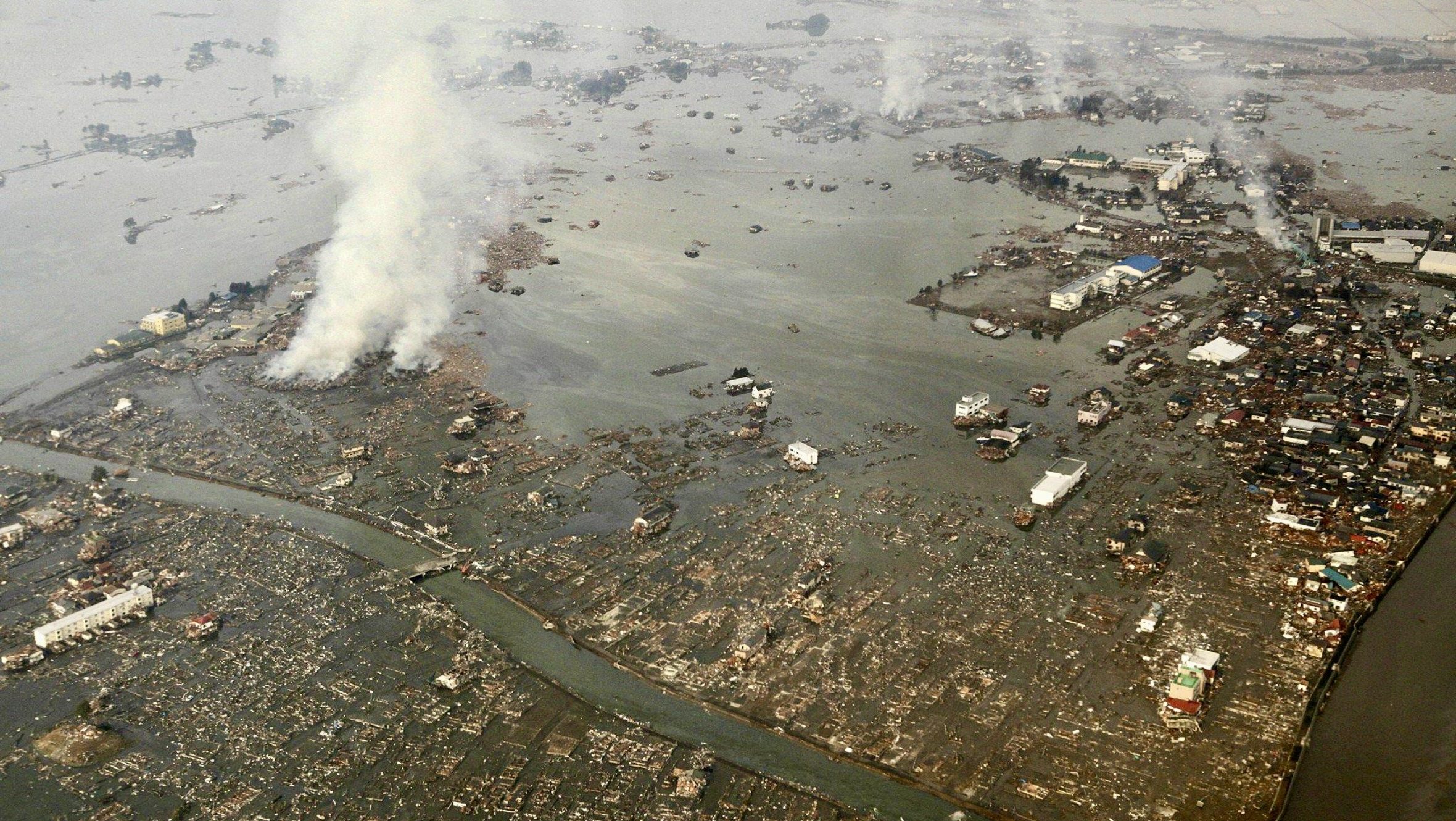
On March 11, 2011, a massive undersea earthquake struck off the northeastern coast of Japan, unleashing one of the most destructive natural disasters in modern history. The magnitude 9.0 earthquake triggered a powerful tsunami that devastated coastal communities, caused widespread infrastructure destruction, and led to the Fukushima Daiichi nuclear disaster.
The event, known as the Tōhoku Earthquake and Tsunami, reshaped global conversations about nuclear safety, disaster preparedness, and coastal resilience.
The Earthquake
The earthquake struck at 2:46 p.m. local time beneath the Pacific Ocean approximately 70 kilometres east of the Oshika Peninsula in Japan’s Miyagi Prefecture.
Key facts about the earthquake:
Magnitude: 9.0–9.1
Depth: roughly 30 kilometres
Duration: shaking lasted several minutes
One of the five strongest earthquakes ever recorded worldwide
The violent shaking was felt across much of Japan, including Tokyo, hundreds of kilometres away. Buildings swayed, transportation systems shut down, and millions immediately lost power.
The earthquake occurred along the Japan Trench, where the Pacific tectonic plate is forced beneath the Okhotsk Plate. The sudden release of energy caused the seafloor to shift dramatically, displacing enormous volumes of water and generating a powerful tsunami.
The Tsunami
Within minutes of the earthquake, tsunami waves began racing toward Japan’s northeastern coast.
Some waves reached heights of more than 40 metres in certain areas. Entire towns along the coastline were overwhelmed as the water surged inland, sweeping away homes, vehicles, ships, and infrastructure.
The tsunami travelled several kilometres inland in some regions, leaving widespread destruction across Miyagi, Iwate, and Fukushima prefectures.
Key impacts included:
Entire neighbourhoods destroyed
Ports and fishing fleets wiped out
Highways and railways severely damaged
Airports flooded
Fires breaking out across industrial areas
Tsunami waves also crossed the Pacific Ocean, reaching Hawaii, North America, and South America hours later, though with far less destructive impact.
Human Toll
The disaster caused immense human loss.
Official figures reported:
Nearly 16,000 people confirmed dead
More than 2,500 people missing
Over 6,000 injured
Hundreds of thousands of residents were forced to evacuate their homes, and entire communities were permanently displaced.
Many victims were elderly residents who were unable to evacuate in time as the tsunami struck.
The Fukushima Nuclear Disaster
One of the most serious consequences of the disaster occurred at the Fukushima Daiichi Nuclear Power Plant.
The earthquake automatically shut down the reactors, but the tsunami disabled backup power systems that were needed to cool the reactors. Without cooling, several reactors overheated.
This led to:
Core meltdowns in three reactors
Hydrogen explosions that damaged reactor buildings
The release of radioactive material into the environment
The disaster became the worst nuclear accident since the 1986 Chernobyl disaster.
More than 150,000 people were evacuated from surrounding areas due to radiation concerns.
Economic and Infrastructure Damage
The Tōhoku disaster caused enormous economic damage.
Estimates placed total losses at approximately $200–$235 billion USD, making it the costliest natural disaster in recorded history.
Damage included:
Hundreds of thousands of buildings destroyed or damaged
Massive disruption to Japan’s manufacturing sector
Japan’s government launched one of the largest reconstruction efforts in modern history to rebuild devastated regions.
Long-Term Aftermath
In the years following the disaster, Japan implemented major changes to disaster preparedness and nuclear policy.
Key outcomes included:
Reinforced tsunami warning systems
Construction of larger coastal seawalls
Strengthened building and evacuation protocols
Temporary shutdown of many nuclear reactors across Japan
The Fukushima cleanup and decommissioning process remains ongoing and is expected to take several decades.
The disaster also prompted global reviews of nuclear safety standards, particularly in countries operating coastal nuclear facilities.
Historical Significance
The Tōhoku earthquake and tsunami demonstrated the immense power of natural forces and the vulnerability of even highly developed nations to catastrophic disasters.
It also reshaped international discussions on nuclear energy, disaster preparedness, and climate resilience.
More than a decade later, the events of March 11, 2011 remain deeply etched into Japan’s national memory and serve as a powerful reminder of the importance of preparedness in the face of natural hazards.
About the Author Brad Socha is the founder of The Universal Record, focused on sourced, factual global reporting. Coverage includes international news, geopolitics, technology, and major developments.