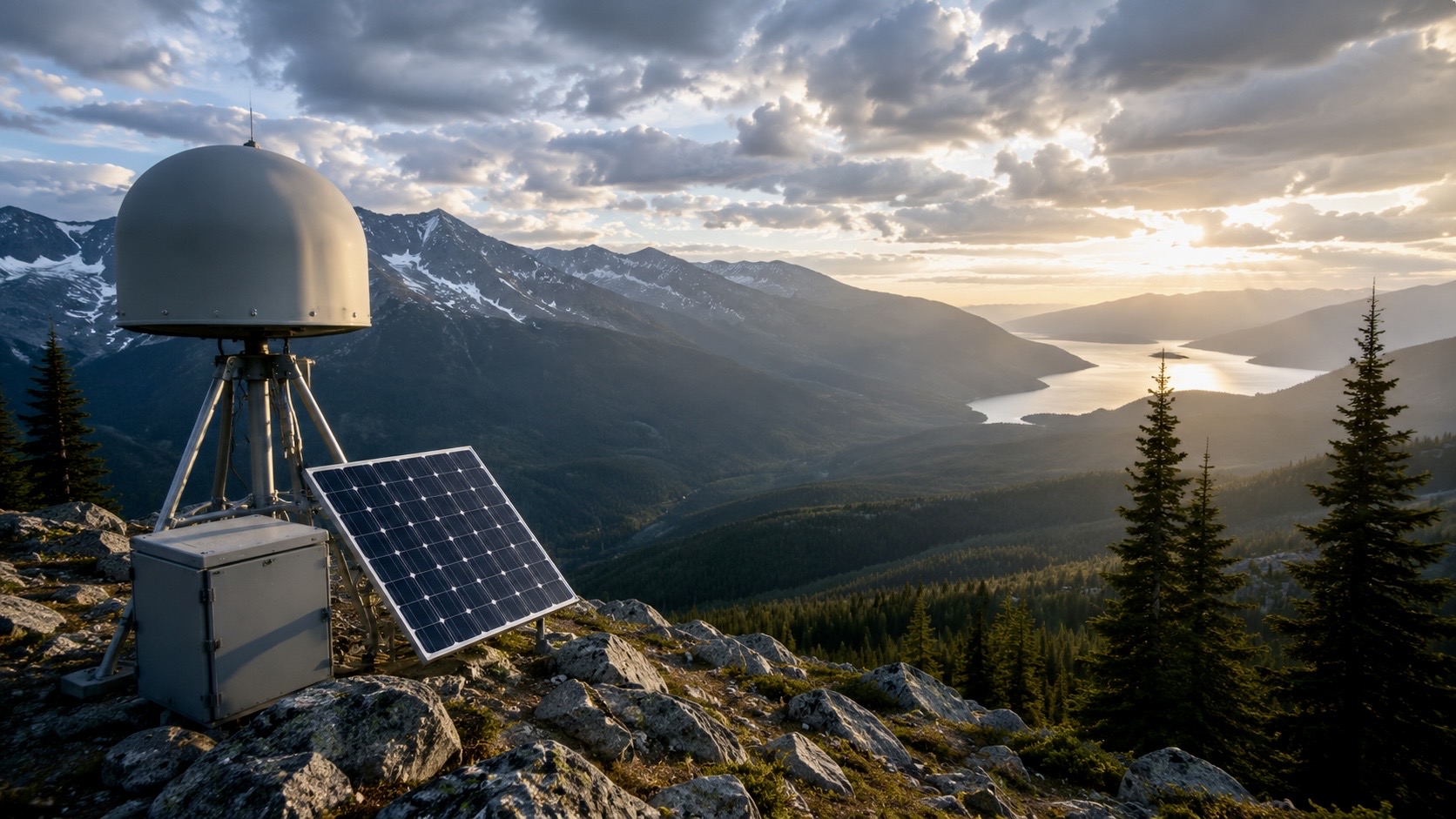
A growing global network of seismic sensors, satellites, and tsunami warning systems is helping scientists detect earthquakes faster than ever, but significant challenges remain in protecting communities before disaster strikes.
Every major earthquake raises the same question: could more lives have been saved with earlier warning? As powerful earthquakes continue to strike around the world, governments and scientific agencies are investing billions of dollars in increasingly sophisticated monitoring systems designed to detect seismic activity within seconds, issue tsunami alerts, and provide precious moments of advance warning before destructive shaking reaches populated areas.
Recent earthquakes across the Pacific “Ring of Fire,” parts of Asia, South America, and the eastern Mediterranean have once again highlighted both the strengths and limitations of modern earthquake detection. While today’s technology allows scientists to identify an earthquake almost immediately after it begins, accurately predicting exactly when and where the next major earthquake will occur remains beyond current scientific capability.
Instead, researchers have focused on something more achievable: building a global monitoring network capable of detecting earthquakes rapidly, estimating their magnitude, determining whether a tsunami is possible, and transmitting alerts to people before the strongest ground motion arrives.
The backbone of this system consists of thousands of highly sensitive seismometers operated by national geological agencies, universities, and international scientific organizations. Networks maintained by the United States Geological Survey (USGS), Japan Meteorological Agency (JMA), European-Mediterranean Seismological Centre (EMSC), China’s earthquake monitoring agencies, and dozens of national observatories continuously record tiny ground movements around the clock.
These instruments detect seismic waves generated when stress along geological faults is suddenly released. The fastest-moving primary, or P-waves, arrive first and generally cause relatively little damage. Slower but much more destructive secondary, or S-waves, and surface waves follow seconds later. That small time difference forms the foundation of modern earthquake early-warning systems.
Once multiple monitoring stations detect the initial P-waves, powerful computer systems rapidly estimate the earthquake’s location, depth, and magnitude. If calculations indicate the potential for significant shaking, automated alerts can be transmitted before the stronger waves reach nearby cities.
Depending on a person’s distance from the epicenter, those warnings may provide only a few seconds, or in some cases nearly a minute, of advance notice. While that may seem brief, even several seconds can allow trains to slow automatically, surgeons to pause delicate procedures, elevators to stop at the nearest floor, factories to shut down hazardous equipment, and individuals to take protective action.
Building these monitoring networks requires substantial public investment. The United States has spent hundreds of millions of dollars developing the ShakeAlert Earthquake Early Warning System along the West Coast. Japan, one of the world’s most earthquake-prone nations, has invested for decades in one of the planet’s most advanced seismic observation networks. Similar systems continue expanding across Mexico, Taiwan, South Korea, Italy, Turkey, New Zealand, and several other countries exposed to major seismic hazards.
Beyond ground-based instruments, scientists increasingly rely on Global Navigation Satellite Systems (GNSS), including GPS technology, to measure subtle movements of Earth’s crust. These satellite observations can detect slow deformation of tectonic plates over months or years while also improving calculations for the largest earthquakes, where traditional seismic instruments may briefly underestimate magnitude.
Satellites equipped with radar imaging also play an expanding role. Using a technique known as Interferometric Synthetic Aperture Radar (InSAR), researchers compare repeated satellite images to measure ground displacement with remarkable precision. Following major earthquakes, these maps reveal how faults shifted, where land subsided or rose, and which regions may remain vulnerable to aftershocks.
Artificial intelligence has become another increasingly important component of earthquake monitoring. Machine-learning algorithms now help scientists distinguish genuine seismic activity from background noise, rapidly classify earthquake signals, identify aftershocks, and improve the speed of automated event detection. These systems do not replace human seismologists, but they significantly reduce the time required to analyze the enormous volume of data generated every second by global monitoring stations.
The benefits extend beyond emergency response. Long-term seismic monitoring also improves engineering standards, infrastructure planning, insurance risk assessments, and disaster preparedness. Governments use decades of earthquake records to update building codes, identify active fault zones, and prioritize investments in hospitals, bridges, schools, dams, and transportation networks that must withstand future seismic events.
Despite these technological advances, important limitations remain. Earthquake early-warning systems do not predict earthquakes before they begin. They detect an earthquake only after fault rupture has already started. Communities located directly above or extremely close to the epicenter may receive little or no warning because damaging shaking arrives almost immediately.
For this reason, scientists continue emphasizing preparedness alongside technology. Emergency planning, resilient infrastructure, public education, and strict building standards remain among the most effective tools for reducing casualties when powerful earthquakes inevitably occur.
As monitoring networks continue expanding across continents and oceans, international cooperation has become increasingly important. Earthquakes do not recognize political borders, and seismic data collected by one nation often helps improve warning capabilities for neighboring countries. Organizations including UNESCO’s Intergovernmental Oceanographic Commission, the International Seismological Centre, and the World Meteorological Organization work alongside national agencies to improve data sharing, standardize detection methods, and strengthen global resilience against seismic hazards.
One of the most important components of the global earthquake monitoring network lies beneath the oceans. Because many of the world’s largest earthquakes occur along underwater subduction zones, detecting whether an earthquake has displaced the seafloor is critical in determining whether a tsunami may develop.
The Pacific Tsunami Warning Center (PTWC), operated by the U.S. National Oceanic and Atmospheric Administration (NOAA), and regional warning centres around the world continuously monitor seismic activity alongside deep-ocean pressure sensors known as DART (Deep-ocean Assessment and Reporting of Tsunamis) buoys. These systems measure subtle changes in ocean pressure caused by passing tsunami waves, allowing scientists to confirm whether a destructive tsunami has formed.
Information from seismic stations, offshore buoys, coastal tide gauges, and satellites is combined within minutes to produce tsunami forecasts. Warnings are then distributed to emergency management agencies, broadcasters, mobile devices, and public alert systems across multiple countries. While no warning system can eliminate risk, advances in communication technology have significantly reduced the time required to alert coastal populations.
Artificial intelligence is expected to play an even larger role over the next decade. Researchers are developing machine-learning models capable of processing millions of seismic observations, identifying unusual fault behaviour, improving aftershock forecasts, and helping distinguish genuine earthquakes from non-seismic events such as mining activity or explosions.
Scientists are also experimenting with fibre-optic sensing technology that transforms existing telecommunications cables into thousands of virtual seismic sensors. If widely deployed, these systems could dramatically expand earthquake monitoring in regions where conventional seismometers are sparse, particularly beneath the oceans.
Following the Investment
Building and maintaining these monitoring networks requires sustained public investment. In the United States, Congress has appropriated hundreds of millions of dollars over the past decade for the continued expansion of the USGS ShakeAlert Earthquake Early Warning System and related seismic monitoring infrastructure. Japan invests heavily through the Japan Meteorological Agency and the National Research Institute for Earth Science and Disaster Resilience, while the European Union supports collaborative seismic monitoring and hazard research through multinational scientific programs.
The economic justification is straightforward. A single major earthquake can cause tens or even hundreds of billions of dollars in damage. The 2011 Great East Japan Earthquake and tsunami caused estimated economic losses exceeding US$200 billion, while the 2023 Türkiye-Syria earthquakes produced damage and reconstruction costs estimated at well over US$100 billion. Compared with these losses, investments in monitoring systems, resilient infrastructure, and public preparedness represent only a small fraction of potential disaster costs.
Private industry also benefits. Utilities, airlines, rail operators, manufacturers, data centres, insurers, and telecommunications companies increasingly rely on seismic monitoring data to automate safety procedures, protect critical infrastructure, and reduce business interruptions.
What Scientists Still Cannot Do
Despite remarkable technological progress, one critical challenge remains unsolved: accurately predicting earthquakes before they begin.
Researchers continue studying fault mechanics, underground stress accumulation, satellite observations, groundwater chemistry, electromagnetic signals, and other possible indicators. To date, however, no method has consistently demonstrated the ability to predict the precise time, location, and magnitude of future earthquakes with sufficient reliability for operational public warnings.
For that reason, geological agencies around the world continue emphasizing preparedness rather than prediction. Strong building codes, resilient infrastructure, public education, emergency planning, tsunami evacuation routes, and regular disaster exercises remain the most effective ways to reduce casualties.
International collaboration is also expanding. Earthquake data collected in one country often strengthens hazard assessments across entire regions. Scientific organizations routinely exchange seismic observations in near real time, allowing earthquakes to be detected, analyzed, and communicated globally within minutes.
As population growth continues in many earthquake-prone regions, monitoring networks will likely become even more important. Advances in satellite technology, artificial intelligence, cloud computing, fibre-optic sensing, and global communications promise faster analysis and broader coverage than ever before. Although scientists cannot yet prevent earthquakes, or predict exactly when they will occur, they are steadily improving humanity’s ability to detect them quickly, assess the risks, and provide communities with valuable time to respond.
About the Author Brad Socha is the founder of The Universal Record, focused on sourced, factual global reporting. Coverage includes international news, geopolitics, technology, and major developments.