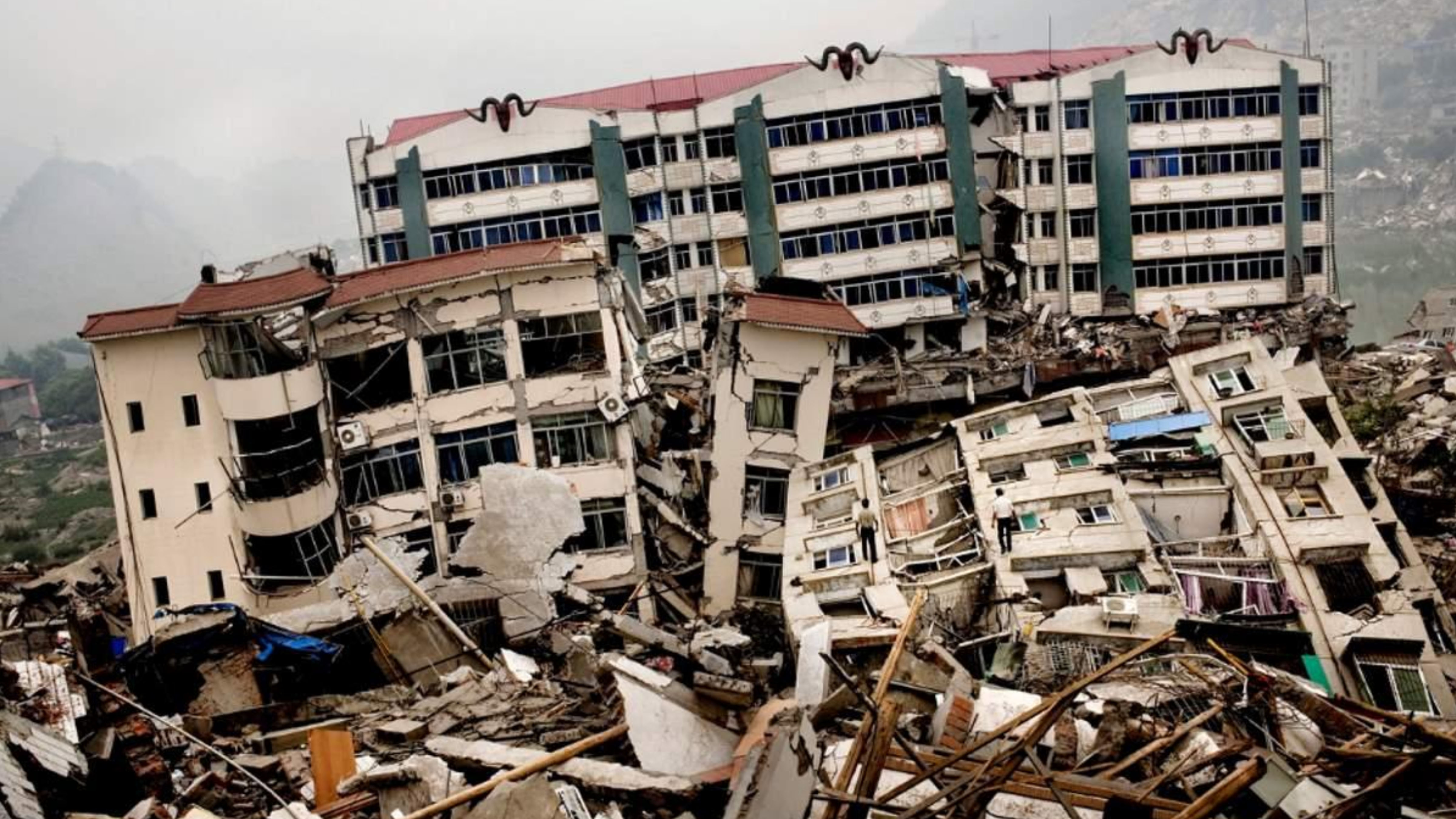
A devastating earthquake struck China’s Sichuan Province on May 12, 2008, killing tens of thousands and becoming one of the deadliest natural disasters of the 21st century
The 2008 Sichuan earthquake remains one of the most catastrophic natural disasters in modern history, both for the scale of destruction and the lasting impact it had on China and the world. Eighteen years later, the disaster continues to shape earthquake preparedness, building safety standards, emergency response planning, and public memory across Asia and beyond.
At 2:28 p.m. local time on May 12, 2008, a massive earthquake measuring approximately magnitude 7.9 struck Sichuan Province in southwestern China. The epicenter was located near Wenchuan County, northwest of Chengdu, a densely populated region surrounded by mountainous terrain.
The earthquake triggered widespread devastation across Sichuan and neighboring provinces. Entire towns collapsed within seconds. Schools, apartment buildings, hospitals, roads, and bridges were destroyed or severely damaged. Landslides buried villages and blocked transportation routes, complicating rescue operations during the critical first days after the disaster.
Chinese authorities later confirmed that nearly 70,000 people were killed, with hundreds of thousands injured and millions displaced from their homes. Thousands more were listed as missing. The scale of destruction shocked the international community and quickly became one of the deadliest earthquakes since the 2004 Indian Ocean tsunami.
The disaster also became one of the defining moments in modern Chinese history due to the emotional public response and the unprecedented scale of the rescue effort. Soldiers, emergency workers, volunteers, medical teams, and civilians rushed into affected regions to search for survivors trapped beneath collapsed buildings.
Images from the disaster spread rapidly across global media. Rescue crews digging through rubble with bare hands, damaged schools reduced to concrete fragments, and families searching desperately for loved ones became some of the most widely recognized scenes associated with the tragedy.
One of the most controversial aspects of the disaster involved the collapse of school buildings. In several areas, schools were destroyed while nearby government buildings remained standing. Parents and activists raised concerns about construction quality and whether weak building standards contributed to the unusually high number of child fatalities. The issue sparked public debate within China and drew international attention to infrastructure safety in earthquake-prone regions.
Scientists later determined the earthquake occurred along the Longmenshan Fault, where pressure had built up between the Indian and Eurasian tectonic plates. The immense energy released during the quake caused violent ground shaking across a vast area of western China.
The earthquake’s effects extended far beyond the immediate impact zone. Tremors were reportedly felt in Beijing, Shanghai, Thailand, Vietnam, and parts of India. The disaster also triggered thousands of aftershocks over the following months, keeping residents on edge and complicating recovery operations.
The economic impact was enormous. Entire transportation networks required rebuilding, while millions of homes needed repair or replacement. Chinese authorities launched one of the largest reconstruction efforts in the country’s history, investing heavily in infrastructure, housing, schools, and disaster preparedness programs.
The Sichuan earthquake also accelerated changes in emergency management and earthquake monitoring in China. Officials expanded seismic detection systems, strengthened building codes, and increased public awareness campaigns about disaster preparedness. Schools across China began implementing more earthquake drills and emergency response education following the tragedy.
Globally, the disaster reinforced concerns about urban growth in earthquake-prone regions. Engineers and emergency planners around the world studied the Sichuan earthquake closely to better understand how building design, population density, and infrastructure resilience influence survival rates during major seismic events.
The earthquake remains especially significant because it occurred during a period of rapid modernization in China. Many cities and communities in western China were expanding quickly, increasing concerns about whether infrastructure development was keeping pace with safety requirements.
Today, memorials and remembrance ceremonies continue to be held annually across Sichuan Province. Survivors, families, rescue workers, and officials gather each year to honour those who lost their lives and reflect on the lessons learned from the disaster.
The event also continues to influence discussions surrounding climate resilience, urban planning, emergency response systems, and international disaster cooperation. Experts warn that densely populated regions around the world remain vulnerable to similar catastrophic earthquakes, particularly in areas located near major fault lines.
Despite the tragedy, the Sichuan earthquake also became a story of resilience and recovery. Entire communities were rebuilt, transportation systems restored, and millions of people eventually returned to daily life. However, the emotional scars of the disaster remain deeply embedded in the memories of survivors and families affected by one of the deadliest earthquakes of the modern era.
As the anniversary is observed once again, the Sichuan earthquake stands as a reminder of both the destructive power of nature and the importance of preparedness, resilient infrastructure, and coordinated emergency response in an increasingly urbanized world.
About the Author Brad Socha is the founder of The Universal Record, focused on sourced, factual global reporting. Coverage includes international news, geopolitics, technology, and major developments.