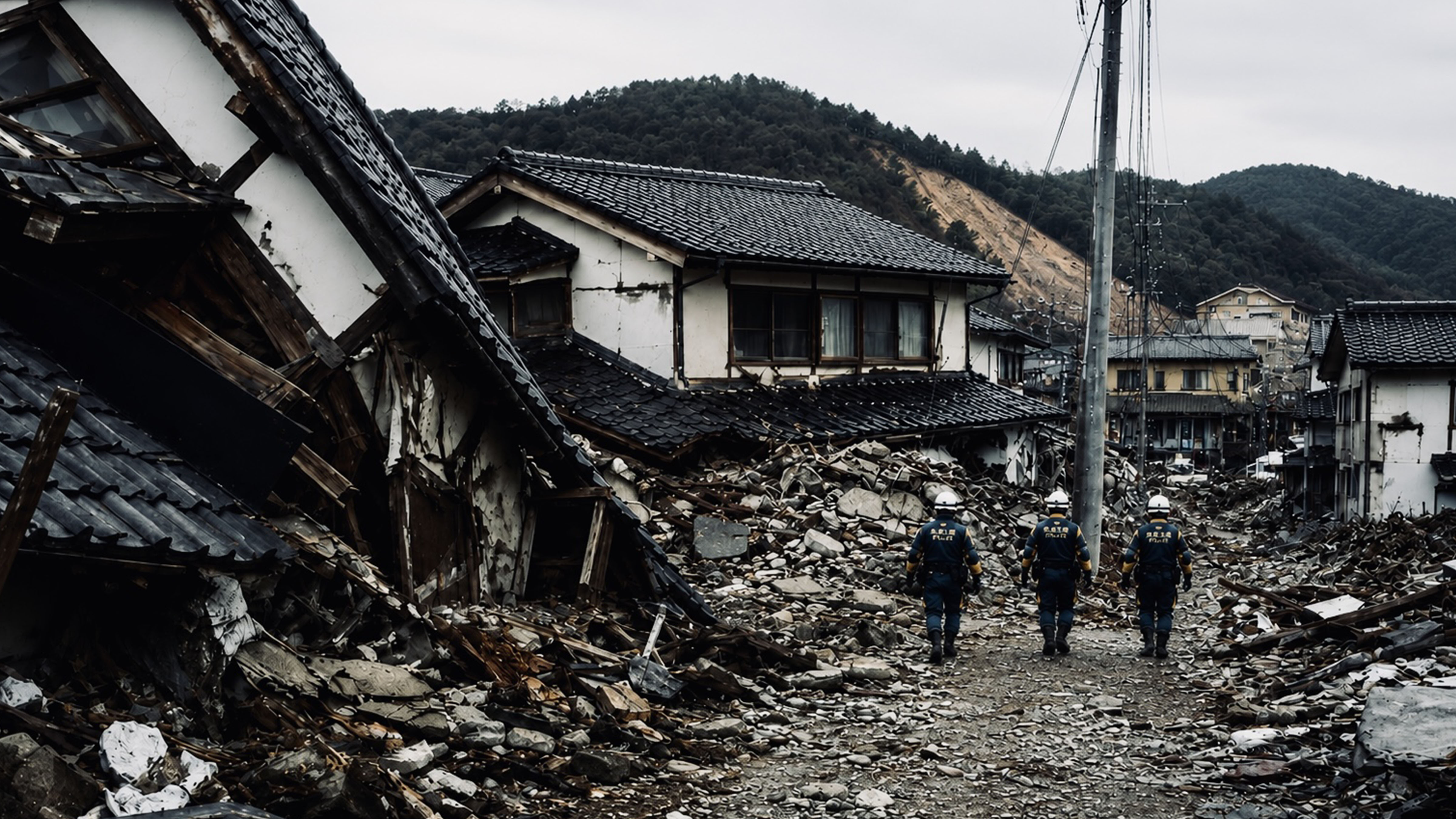
Rescue crews race against time as rising casualties, extreme heat, and widespread infrastructure damage test one of the world’s most earthquake-prepared nations
Japan is once again confronting the devastating consequences of a major earthquake as rescue crews continue searching damaged buildings across Kumamoto Prefecture while the death toll continues to rise. Although the country is recognized as a global leader in earthquake preparedness, the powerful tremor has demonstrated that even the most advanced disaster planning cannot eliminate the risks posed by powerful seismic events.
The earthquake struck southwestern Japan on July 28, with the U.S. Geological Survey initially measuring the event at magnitude 7.1 before revising it to 6.8. Japan’s Meteorological Agency recorded the strongest possible seismic intensity, Shindo 7, in parts of Kumamoto Prefecture, indicating violent ground shaking capable of causing severe structural damage.
Two days after the earthquake, emergency crews remain focused on collapsed structures where survivors may still be trapped. Authorities have expanded search operations while continuing to assess damaged communities spread across Kyushu.
Rescue Operations Continue
Thousands of firefighters, police officers, Self-Defense Force personnel, and emergency medical teams have been deployed throughout the affected region.
Among the hardest-hit locations was an Aeon shopping mall, where an explosion following the earthquake caused part of the structure to collapse. Rescue teams have continued carefully searching unstable sections of the building while engineers work to reduce the risk of additional collapses.
Another major disaster occurred at a Nippon Paper facility in Yatsushiro, where a large chimney collapsed during the earthquake, trapping workers beneath debris.
Officials have confirmed multiple fatalities at both locations, while additional deaths occurred in damaged homes and other structures throughout the region. Rescue efforts remain active as authorities continue searching for missing individuals.
The earthquake has also left dozens injured, with hospitals treating patients ranging from minor injuries to critical trauma.
Heat, Aftershocks and Basic Needs
The disaster response has become increasingly difficult as residents face extreme summer temperatures.
Many communities remain without reliable electricity or running water. Tens of thousands of households have experienced service disruptions, forcing residents to rely on emergency water deliveries and temporary shelters established in schools, community centers, and public facilities.
Authorities have warned that heat exhaustion and dehydration are becoming additional concerns for evacuees, particularly older adults and young children.
Repeated aftershocks have further complicated rescue operations, forcing crews to temporarily halt searches whenever strong shaking occurs. Engineers continue evaluating damaged buildings before responders are allowed to re-enter unstable structures.
For many residents, the psychological toll has become nearly as significant as the physical destruction. Some families are choosing to sleep in tents or vehicles rather than return to homes that remain standing because they fear additional earthquakes.
Economic Impact Extends Beyond Japan
Kyushu plays a significant role in global manufacturing, particularly in the automotive and semiconductor industries.
Several major manufacturers temporarily suspended operations following the earthquake while facilities undergo structural inspections and employees account for damage.
Production disruptions have affected companies including Toyota, Honda, Sony, and Taiwan Semiconductor Manufacturing Company (TSMC), which operates advanced semiconductor facilities in the region.
Although manufacturers have begun assessing recovery timelines, analysts are watching closely to determine whether prolonged disruptions could affect global supply chains already sensitive to production interruptions.
Transportation networks have also experienced disruptions as damaged roads, rail lines, and infrastructure slow the movement of people and goods across the region.
Why Japan Experiences So Many Powerful Earthquakes
Japan sits along the Pacific Ring of Fire, one of the world’s most active seismic zones.
The country lies at the intersection of several major tectonic plates, including the Pacific, Philippine Sea, Eurasian, and North American plates. Constant movement between these plates creates enormous geological pressure that is periodically released through earthquakes.
Japan experiences thousands of earthquakes every year, although most are too small to cause damage.
Because of this constant seismic activity, Japan has invested heavily in earthquake-resistant construction, advanced early warning systems, nationwide emergency drills, and public education. Those measures are widely credited with reducing casualties compared with disasters of similar magnitude in many other countries.
Even so, large earthquakes remain capable of producing localized destruction, particularly when they occur beneath populated areas.
Recovery Will Take Time
Government officials have stated that restoring electricity, water systems, transportation infrastructure, and public services remains the immediate priority once search-and-rescue operations conclude.
Engineers will continue inspecting bridges, highways, public buildings, schools, hospitals, and industrial facilities before many areas can safely resume normal operations.
The disaster also serves as another reminder that disaster preparedness is not a one-time investment but an ongoing process requiring constant upgrades as scientific understanding and engineering standards evolve.
While Japan’s emergency response has mobilized rapidly, recovery for many communities will continue long after the headlines fade, as families rebuild homes, businesses reopen, and damaged infrastructure is restored.
About the Author Brad Socha is the founder of The Universal Record, focused on sourced, factual global reporting. Coverage includes international news, geopolitics, technology, and major developments.