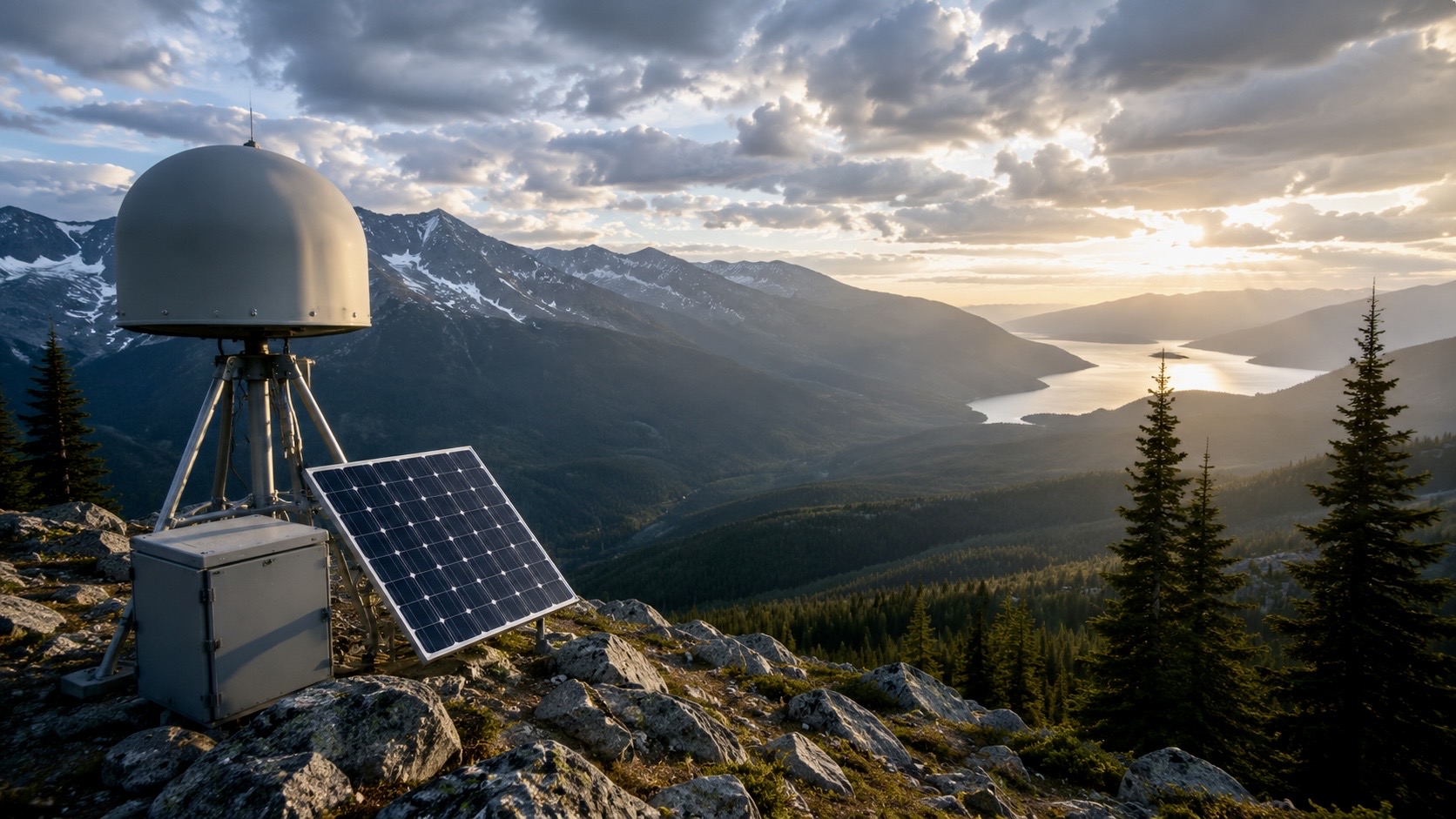
Artificial intelligence is improving earthquake detection, forecasting and early warning, but science still cannot reliably predict when and where a major earthquake will strike.
Artificial intelligence can detect subtle seismic signals, process enormous earthquake catalogues and improve estimates of where damaging shaking may occur. What AI still cannot do is answer the question people most want answered: exactly when, where and how large the next major earthquake will be.
That distinction between prediction, forecasting and early warning is crucial. The U.S. Geological Survey says a genuine earthquake prediction must specify three things: the date and time, location and magnitude. No scientifically reliable method currently accomplishes all three.
Machine learning is nevertheless changing seismology. Researchers are using algorithms to recognize earthquake signals in continuous seismic recordings, identify previously overlooked small events, analyze patterns within earthquake sequences and estimate future seismic probabilities.
The result is a field in which AI is becoming increasingly useful without yet solving one of geophysics’ hardest problems.
What AI Can See in Earthquake Data
Modern seismic networks produce enormous volumes of waveform data. Machine-learning systems are particularly suited to finding patterns within those datasets that can be difficult or time-consuming for conventional analytical methods to identify.
The USGS has investigated machine-learning approaches that exploit increasingly detailed seismic catalogues to improve forecasts of earthquake rates, locations and sizes. The objective is probabilistic forecasting rather than promising the precise prediction of an individual future earthquake.
Researchers are also finding encouraging results under controlled conditions. A 2025 study in Communications Earth & Environment demonstrated deep-learning models capable of predicting laboratory earthquakes from acoustic emissions and changes in fault-zone properties. The researchers specifically noted, however, that transferring such results to natural earthquakes requires establishing whether the models generalize across conditions encountered outside the laboratory.
Other research has explored more practical applications. Machine learning can help estimate aftershock behaviour following a major earthquake, while deep-learning systems have been developed to rapidly estimate ground shaking after an earthquake has already begun. A 2024 study, for example, examined deep learning for predicting peak ground acceleration from the initial seismic waves detected by an early-warning system.
More recently, researchers reported WaveCastNet, a deep-learning system designed to forecast how seismic wavefields evolve after an earthquake begins. Published in Nature Communications in 2025, the work demonstrated forecasting of the timing and intensity of ground motions using simulated San Francisco Bay Area data and evaluated the model on real earthquake recordings. This is potentially valuable for early warning, but it is fundamentally different from predicting an earthquake before it starts.
Why AI Cannot Yet Predict Earthquakes
The central problem is not simply a shortage of computing power.
Earthquakes occur when accumulated stress causes rocks along a fault to rupture. Scientists understand much of the physics involved, but the conditions kilometres underground cannot be observed everywhere and continuously with enough detail to determine exactly when a fault will fail.
For prediction to become reliable, researchers would need a precursor, or combination of precursors, that consistently appears before major earthquakes and distinguishes an impending rupture from the enormous amount of normal geological activity.
No such universally reliable signal has been established.
Scientists have investigated proposed precursors ranging from foreshocks and ground deformation to radon emissions, electromagnetic phenomena and unusual animal behaviour. None has provided a reproducible method for determining the time, place and magnitude of a future major earthquake.
AI faces another fundamental problem: major earthquakes are comparatively rare. Machine-learning systems perform best when supplied with large quantities of representative training data. The largest earthquakes provide relatively few examples, while geological conditions differ significantly among faults and regions.
A model that detects a statistical pattern in one dataset can therefore appear successful without having discovered a physical signal that reliably precedes earthquakes elsewhere. Researchers must also guard against overfitting, when an algorithm learns peculiarities of historical data that fail when confronted with genuinely new events.
That is why retrospective success is not sufficient. An earthquake forecasting system must be rigorously tested on data it has not previously seen and evaluated against established statistical models.
Forecasting May Be the More Realistic Goal
The most meaningful advances may come not from predicting a particular earthquake days in advance, but from progressively improving probability estimates and warning systems.
Operational earthquake forecasting already estimates how seismic activity may change over time. After a significant earthquake, for example, scientists can calculate the changing probability of aftershocks. Long-term hazard models estimate the likelihood of earthquakes of specified magnitudes within particular regions over years or decades.
AI could make these systems more capable by extracting information from richer seismic catalogues, identifying smaller earthquakes more consistently and integrating different forms of geophysical data.
Early-warning systems address a different problem. Once an earthquake has started, instruments near the source can detect the first seismic waves and rapidly estimate the expected shaking farther away. Depending on distance from the rupture, alerts can sometimes arrive before the strongest shaking reaches a location. Machine learning may improve the speed and accuracy of those calculations, but the earthquake has already begun.
The distinction matters because claims that an AI system has “predicted earthquakes” can describe very different achievements: recognizing earthquake signals, estimating aftershock probabilities, forecasting seismic activity over a broad interval, or calculating impending shaking after rupture begins.
None is equivalent to knowing beforehand that a magnitude 7 earthquake will occur at a particular location on a particular day.
For now, AI is giving scientists increasingly sophisticated tools for understanding earthquakes and reducing their consequences. Whether patterns hidden in seismic, geodetic and other geophysical observations will eventually provide genuinely predictive information remains an open scientific question.
The technology is advancing, however, the earthquake prediction problem remains unsolved.
About the Author Brad Socha is the founder of The Universal Record, focused on sourced, factual global reporting. Coverage includes international news, geopolitics, technology, and major developments.