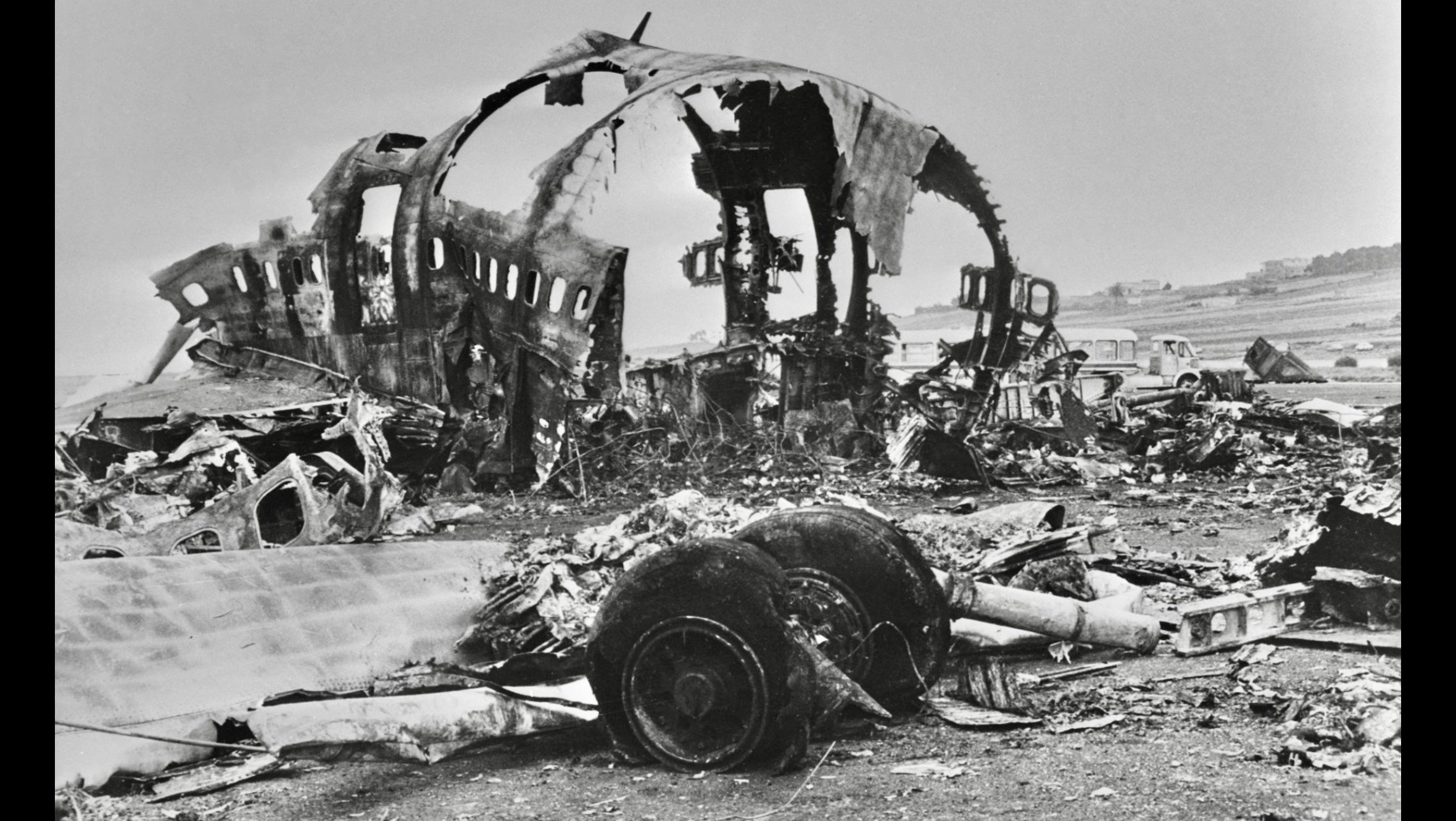
On March 27, 1977, two Boeing 747 passenger aircraft collided on a runway at Los Rodeos Airport (now Tenerife North Airport) in the Canary Islands, resulting in 583 fatalities. The incident remains the deadliest aviation accident in history.
The disaster involved a KLM flight and a Pan American World Airways (Pan Am) flight. Due to a bomb threat at a nearby airport, both aircraft had been diverted to Tenerife, causing heavy congestion at the smaller facility. With limited taxiway space available, aircraft were required to taxi along the active runway.
As dense fog moved across the airport, visibility dropped significantly, impairing communication between pilots and air traffic control. During this period, the KLM aircraft began its takeoff roll while the Pan Am aircraft was still on the runway. Miscommunication and overlapping radio transmissions prevented clear confirmation of runway clearance.
The two aircraft collided at high speed, causing an explosion and fire. All 248 people aboard the KLM flight were killed, along with 335 of the 396 people on the Pan Am aircraft. Sixty-one passengers on the Pan Am flight survived.
Investigations identified several contributing factors, including unclear radio phraseology, reduced visibility due to fog, airport congestion, and assumptions made by flight crews under pressure. The findings led to significant changes in international aviation procedures.
Following the disaster, standardized communication protocols were strengthened worldwide, including the mandatory use of clear and unambiguous language such as “takeoff” only when clearance is explicitly given. Crew Resource Management (CRM) training was also introduced and expanded, emphasizing teamwork, communication, and decision-making within the cockpit.
More than four decades later, the Tenerife disaster remains a critical case study in aviation safety and is widely referenced in pilot training and air traffic control procedures globally.
About the Author Brad Socha is the founder of The Universal Record, focused on sourced, factual global reporting. Coverage includes international news, geopolitics, technology, and major developments.