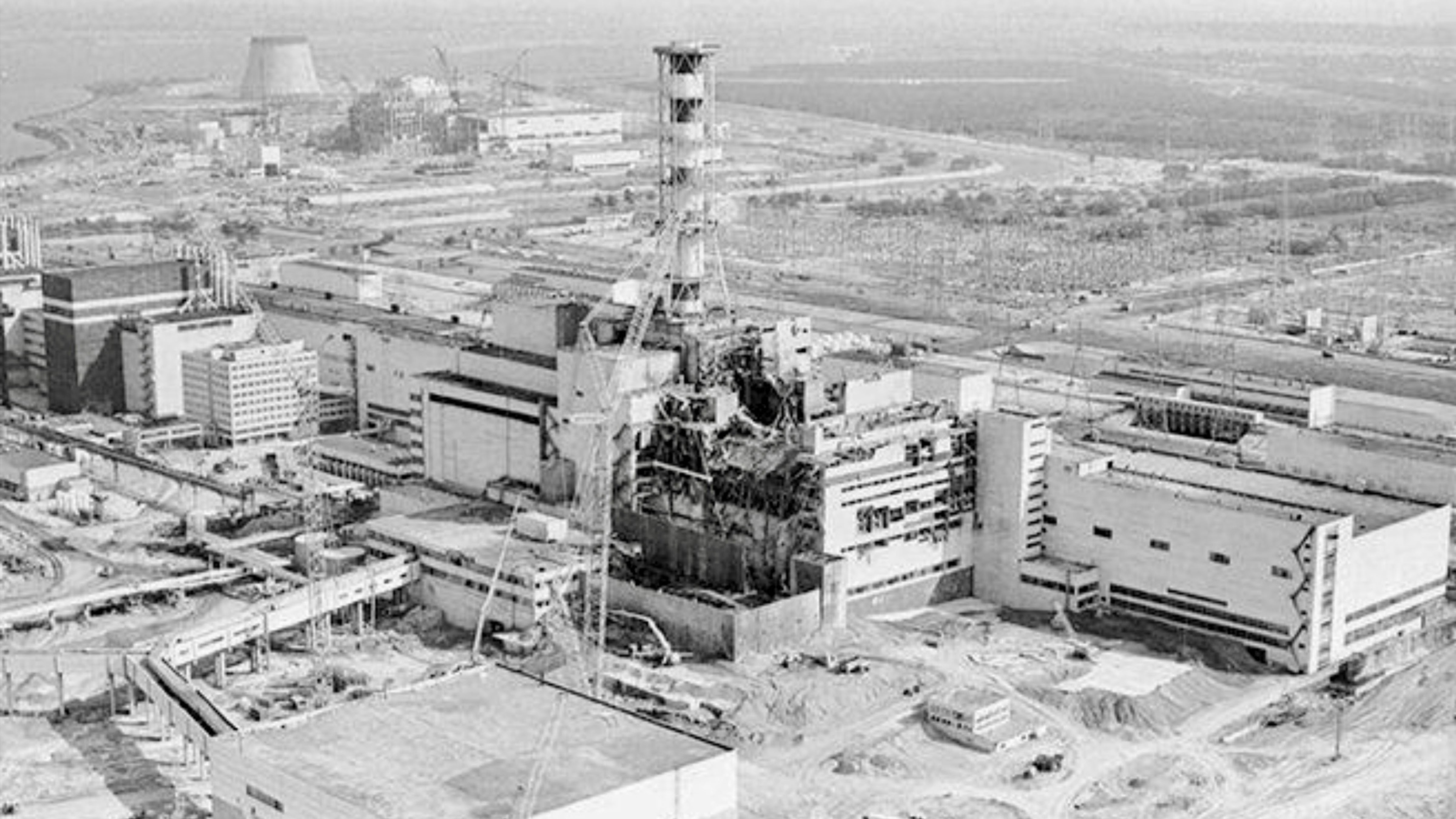
On April 26, 1986, a catastrophic explosion at the Chernobyl Nuclear Power Plant in northern Ukraine, then part of the Soviet Union, triggered the worst nuclear disaster in history. The accident occurred during a late-night safety test at Reactor No. 4, when a combination of design flaws and human error led to an uncontrollable power surge. Within seconds, the reactor core ruptured, causing a massive explosion and fire that released large amounts of radioactive material into the atmosphere.
The immediate aftermath was chaotic and dangerous. Plant workers and emergency responders were exposed to extremely high levels of radiation, many without proper protective equipment. Fires burned for days, sending radioactive particles high into the air, where winds carried contamination across large parts of Europe. Nearby communities, including the city of Pripyat, were not immediately evacuated, exposing tens of thousands of residents to harmful radiation in the critical early hours following the explosion.
Soviet authorities initially delayed public disclosure of the disaster, contributing to confusion and increased exposure. It was only after radiation alarms were triggered in Sweden that the international community became aware of the scale of the incident. In the days that followed, the Soviet government began evacuating affected areas, eventually relocating more than 100,000 people from the surrounding region.
The explosion destroyed the reactor building and exposed the radioactive core, releasing isotopes such as iodine-131 and cesium-137 into the environment. These materials contaminated land, water, and food supplies across Ukraine, Belarus, and parts of Russia, with detectable levels spreading as far as Western Europe. The long-term environmental impact has been significant, with large areas remaining uninhabitable decades later.
The human cost of the disaster has been widely studied and debated. In the immediate aftermath, dozens of plant workers and firefighters died from acute radiation sickness. Over time, increased rates of thyroid cancer, particularly among children exposed to radioactive iodine, were documented in affected regions. The full extent of long-term health consequences remains a subject of ongoing research, but the disaster is widely recognized as one of the most severe public health crises linked to nuclear energy.
In response to the explosion, Soviet authorities constructed a massive concrete and steel structure known as the “sarcophagus” to contain the damaged reactor. Decades later, an international effort led to the installation of a new containment system, the New Safe Confinement, designed to prevent further radiation leaks and allow for the gradual dismantling of the reactor remains.
The Chernobyl disaster had a profound impact on global nuclear policy. It exposed critical weaknesses in reactor design, safety procedures, and emergency response planning. In the years following the incident, countries around the world implemented stricter safety standards, improved reactor technology, and enhanced international cooperation on nuclear oversight. Organizations such as the International Atomic Energy Agency expanded their role in monitoring nuclear safety and promoting best practices.
Beyond its technical and political consequences, Chernobyl became a symbol of the risks associated with nuclear power and the importance of transparency in crisis situations. The disaster contributed to growing public skepticism toward nuclear energy in many countries, influencing energy policy decisions for decades. It also highlighted the long-term challenges of managing radioactive contamination and the lasting impact of large-scale industrial accidents.
Today, the Chernobyl Exclusion Zone remains one of the most unique and closely studied environments in the world. While human habitation is restricted, wildlife has returned in significant numbers, providing researchers with an unexpected opportunity to study ecological recovery in the absence of human activity. The site continues to serve as both a reminder of past failures and a case study in environmental resilience.
Nearly four decades later, the events of April 26, 1986, remain a defining moment in modern history. The Chernobyl disaster reshaped how governments, scientists, and the public view nuclear energy, emphasizing the need for rigorous safety standards, accountability, and international cooperation in managing powerful technologies.
About the Author Brad Socha is the founder of The Universal Record, focused on sourced, factual global reporting. Coverage includes international news, geopolitics, technology, and major developments.