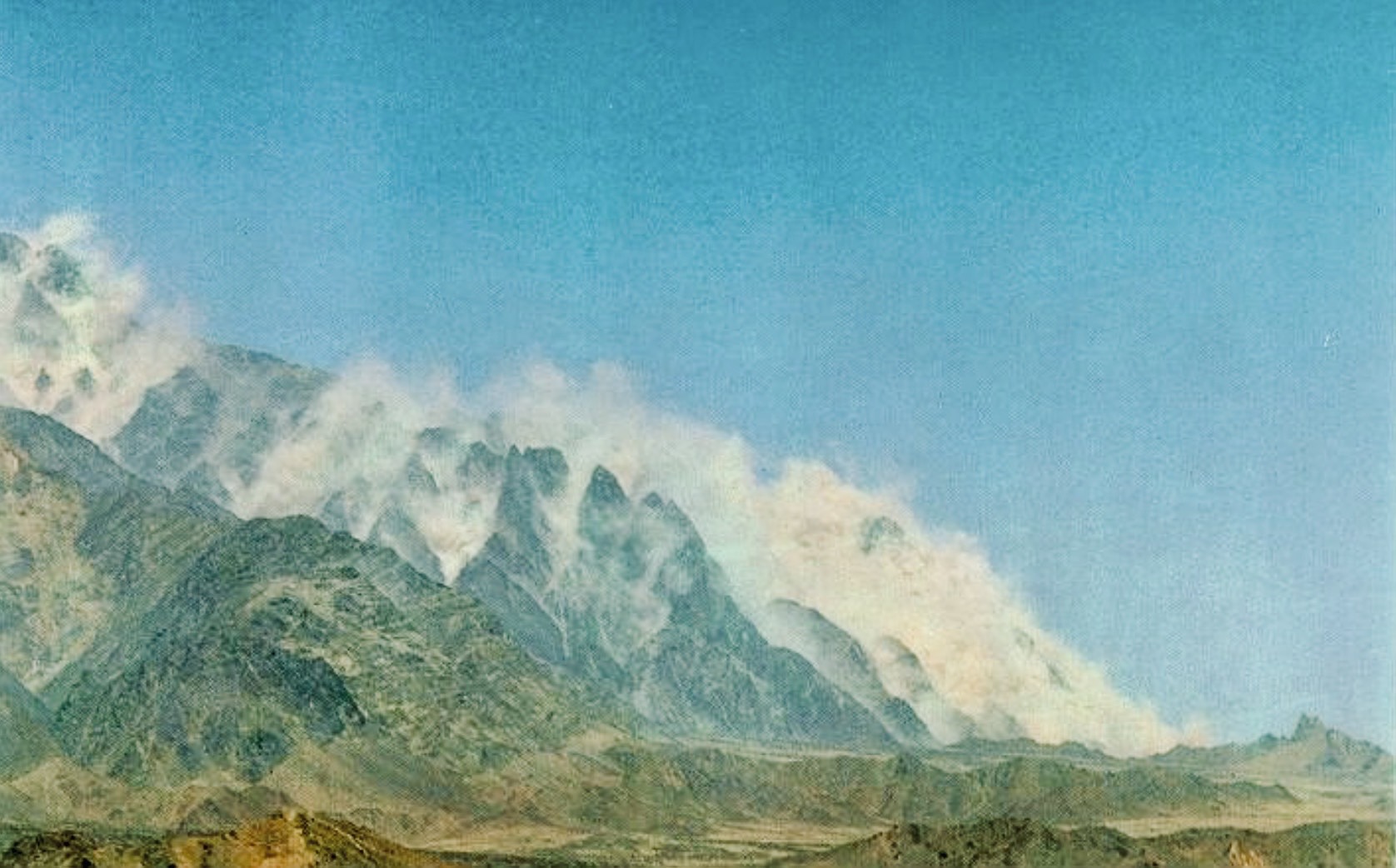
Pakistan’s underground nuclear detonations transformed South Asia’s military balance and permanently reshaped global non-proliferation efforts after India’s earlier tests that same month.
The nuclear tests conducted by Pakistan on May 28, 1998, remain one of the most consequential geopolitical moments in modern South Asian history. The detonations not only confirmed Pakistan as the world’s seventh declared nuclear power, but also dramatically altered military strategy, diplomacy, and security calculations across the region. More than a quarter century later, the tests continue influencing global nuclear policy, India-Pakistan relations, and international concerns surrounding deterrence, escalation, and regional stability.
Pakistan carried out the tests in the remote Chagai Hills of Balochistan province just over two weeks after India conducted a series of nuclear explosions known as Pokhran-II. The rapid sequence of events stunned the international community and officially introduced overt nuclear rivalry into one of the world’s most politically fragile regions.
The decision by Prime Minister Nawaz Sharif’s government to proceed with the detonations came after enormous domestic pressure, military consultation, and intense debate over how Pakistan should respond to India’s nuclear declaration. Many Pakistani officials believed failing to answer India’s tests would permanently weaken the country’s strategic position and alter the military balance in South Asia.
The first Pakistani nuclear detonations occurred on May 28, 1998, followed by additional tests on May 30. Officials stated that five devices were detonated simultaneously during the initial operation inside granite mountain tunnels beneath the Chagai Hills. Images released afterward showed the surrounding mountains turning pale from the force of the underground blasts, creating one of the defining visual symbols of Pakistan’s entry into the nuclear era.
The tests triggered celebrations across Pakistan. Crowds gathered in major cities waving flags, chanting patriotic slogans, and praising the country’s scientific community. The government later declared May 28 as “Youm-e-Takbir,” or Day of Greatness, commemorating the moment Pakistan publicly demonstrated nuclear capability.
A.Q. Khan and Pakistan’s Nuclear Program
One of the central figures associated with Pakistan’s nuclear development was metallurgist Abdul Qadeer Khan, widely known as A.Q. Khan. His role became deeply embedded in Pakistan’s national narrative surrounding the nuclear tests.
Khan had previously worked in Europe during the 1970s and gained access to uranium enrichment technology linked to centrifuge systems used in nuclear fuel production. After returning to Pakistan, he became instrumental in developing the country’s uranium enrichment infrastructure at the Kahuta Research Laboratories.
Pakistani officials and many citizens viewed Khan as a national hero following the 1998 tests, crediting him with helping the country achieve nuclear parity with India. His influence extended far beyond scientific research, becoming symbolic of national defence and technological independence.
However, Khan’s legacy later became internationally controversial. In the early 2000s, investigations revealed that nuclear technology and expertise connected to his network had spread to countries including Iran, Libya, and North Korea. Khan publicly admitted involvement in unauthorized nuclear proliferation activities in 2004, although the full extent of state knowledge regarding the network remains debated among historians and intelligence analysts.
Despite the controversy, Khan remains a deeply significant and complex figure in Pakistan’s modern history. For many within the country, his contribution to the nuclear program is still viewed through the lens of national survival and strategic deterrence.
The Global Response and Economic Fallout
The international reaction to Pakistan’s tests was swift.
The United States, Japan, and several European governments condemned both India and Pakistan for escalating nuclear tensions. Economic sanctions were imposed against Islamabad under U.S. non-proliferation laws, restricting financial assistance, military cooperation, and certain international lending activities.
World leaders expressed concern that South Asia had entered a dangerous new phase where future regional conflicts could potentially involve nuclear escalation. The fear was especially serious because India and Pakistan had already fought multiple wars since partition in 1947, including conflicts in 1947–48, 1965, and 1971.
The tests also weakened hopes that the global nuclear non-proliferation framework could prevent additional states from openly developing nuclear arsenals outside the Treaty on the Non-Proliferation of Nuclear Weapons, commonly known as the NPT. Neither India nor Pakistan had signed the treaty.
Financial markets reacted nervously following the detonations. Concerns emerged over regional instability, sanctions, and the possibility of an arms race across South Asia. Pakistan’s economy, already facing debt pressures and limited foreign reserves, experienced additional strain from sanctions and reduced external investment.
Still, many Pakistani officials argued the tests were strategically unavoidable.
Military planners believed nuclear capability would deter future large-scale conventional war with India. Supporters of the decision pointed to the concept of mutually assured destruction, arguing that overt nuclear status would force both countries to exercise greater caution during future confrontations.
The years that followed demonstrated both the stabilizing and destabilizing aspects of nuclear deterrence.
Just one year after the tests, India and Pakistan fought the Kargil conflict in 1999 along the Line of Control in Kashmir. Although the conflict remained limited geographically, it alarmed the world because it represented the first direct military confrontation between two newly declared nuclear powers.
Since then, repeated crises between the two nations, including border clashes, militant attacks, airspace incidents, and military mobilizations, have regularly triggered international fears of escalation.
A Lasting Nuclear Rivalry
Today, India and Pakistan both maintain expanding nuclear arsenals alongside increasingly sophisticated missile systems and delivery platforms. Analysts continue debating whether nuclear deterrence has prevented full-scale war or merely created a permanent environment of high-risk military brinkmanship.
The 1998 tests also accelerated broader military modernization across Asia. China, India, and Pakistan all increased investment in missile defence systems, tactical nuclear capabilities, submarine deterrents, and advanced delivery technology in the decades that followed.
Globally, the tests reinforced fears surrounding nuclear proliferation and regional arms races. The events of May 1998 became a defining example frequently referenced in diplomatic discussions involving Iran, North Korea, and future nuclear containment strategies.
For Pakistan, the detonations remain one of the most nationally significant moments in the country’s post-independence history.
For the wider world, the tests marked the beginning of a permanently altered geopolitical reality in South Asia, one where diplomacy, military strategy, and regional security would forever operate under the shadow of nuclear weapons.
About the Author Brad Socha is the founder of The Universal Record, focused on sourced, factual global reporting. Coverage includes international news, geopolitics, technology, and major developments.