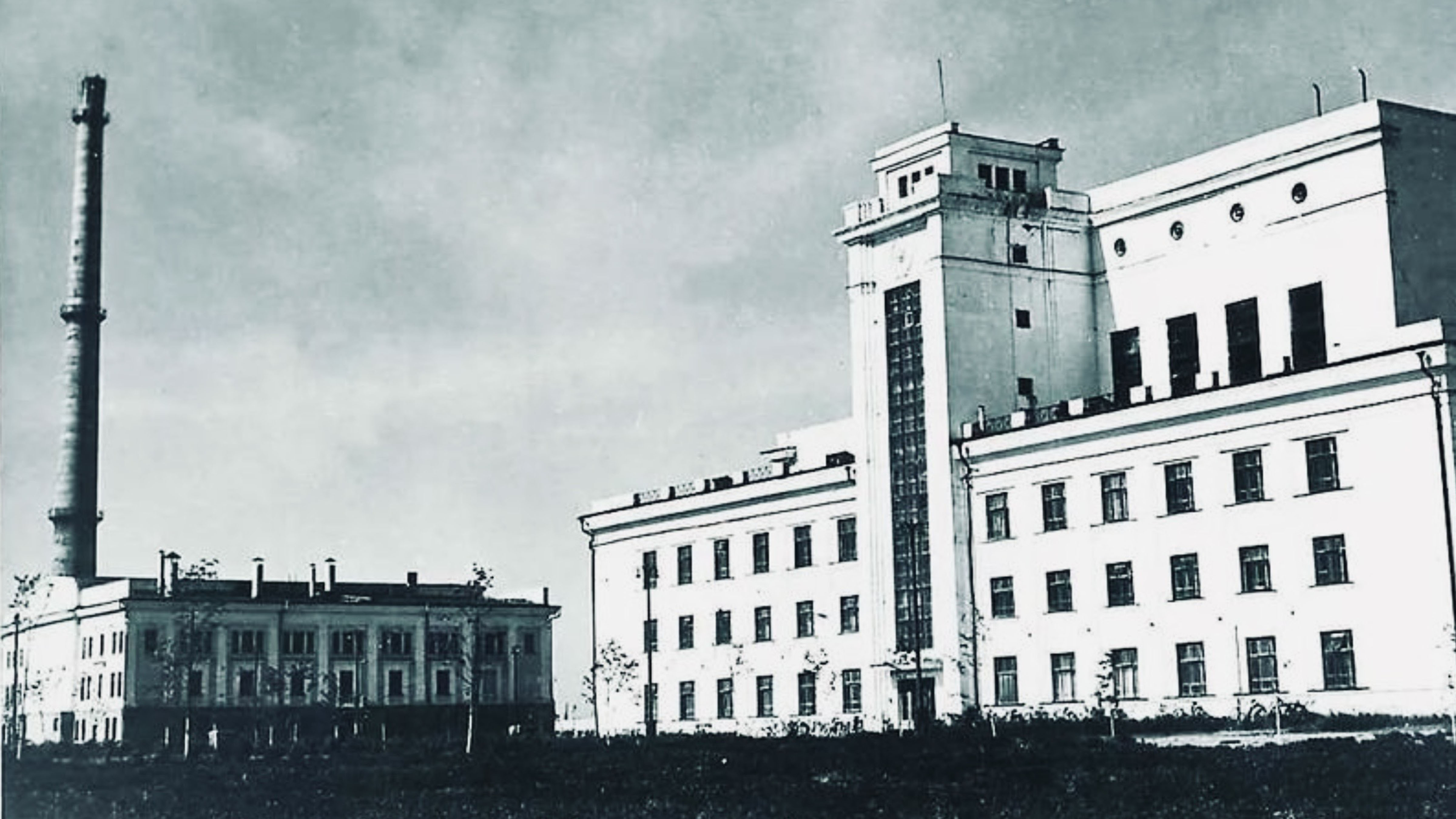
The world’s first civilian nuclear power plant began supplying electricity to the public, marking a scientific milestone that continues to shape global energy, technology, and climate discussions more than seventy years later.
On June 27, 1954, a quiet scientific experiment in the Soviet Union became one of the defining technological milestones of the twentieth century. The Obninsk Nuclear Power Plant, located about 100 kilometers southwest of Moscow, officially began supplying electricity to the national power grid, becoming the first nuclear power station in the world designed to generate electricity for civilian use.
Although modest by today’s standards, the facility demonstrated for the first time that energy released through nuclear fission could reliably power homes, businesses, and industries rather than serving only military or research purposes. Its successful operation marked the beginning of the civilian nuclear energy industry and permanently changed how governments, engineers, and scientists viewed the future of electricity generation.
The achievement arrived less than a decade after the end of the Second World War and fewer than nine years after the atomic bombings of Hiroshima and Nagasaki. Nuclear technology had already demonstrated unprecedented destructive power, but Obninsk represented an entirely different vision, one focused on peaceful applications capable of supplying enormous amounts of electricity without burning fossil fuels.
Construction of the plant began in the early 1950s under the Soviet nuclear program. Engineers designed the reactor using a graphite moderator and water cooling system. Known as the AM-1 reactor, short for “Atom Mirny,” meaning “Peaceful Atom”, it produced approximately five megawatts of electrical power, enough to prove the concept of commercial nuclear electricity generation even though its output was relatively small.
While five megawatts would be considered insignificant compared with modern nuclear stations capable of producing more than 1,000 megawatts each, the importance of Obninsk was never measured by its size. Instead, its significance lay in proving that controlled nuclear reactions could generate continuous electricity for civilian infrastructure on a practical basis.
The reactor also served as an important research facility. Scientists studied reactor physics, fuel performance, heat transfer, radiation management, and operational safety while gaining practical experience that would influence future reactor designs throughout the Soviet Union and beyond.
The successful startup immediately accelerated global interest in civilian nuclear energy. During the following decade, numerous countries launched ambitious nuclear power programs. The United Kingdom opened the Calder Hall nuclear power station in 1956, becoming the first commercial-scale nuclear power plant to deliver substantial electricity to the public. The United States soon followed with the Shippingport Atomic Power Station in Pennsylvania in 1957, further expanding civilian nuclear technology into the Western world.
As nuclear engineering advanced, reactor designs became larger, safer, and more efficient. Pressurized water reactors, boiling water reactors, and other technologies gradually replaced the earliest experimental systems, allowing nuclear energy to become an important component of electricity generation in many countries.
The appeal of nuclear power stemmed from several advantages. Nuclear fuel contains vastly more energy than coal, oil, or natural gas by weight, allowing reactors to operate continuously for months before refueling. Unlike fossil fuel power stations, nuclear plants generate electricity without producing carbon dioxide during operation, making them increasingly relevant as governments seek ways to reduce greenhouse gas emissions.
Over the decades, however, nuclear energy has also faced major challenges. High-profile accidents at Three Mile Island in 1979, Chernobyl in 1986, and Fukushima Daiichi in 2011 fundamentally reshaped public attitudes toward reactor safety. Each incident prompted significant regulatory reforms, engineering improvements, and international cooperation aimed at strengthening safety standards across the industry.
Today, modern reactors incorporate multiple redundant cooling systems, reinforced containment structures, passive safety features, and extensive emergency procedures that differ substantially from early reactor designs such as Obninsk’s AM-1.
Despite continuing debate, nuclear power remains an important source of electricity around the world. According to the International Atomic Energy Agency, hundreds of reactors currently operate across more than 30 countries, collectively providing roughly 10 percent of global electricity and approximately one-quarter of the world’s low-carbon electricity generation.
Growing concerns about climate change have renewed international interest in nuclear technology. Countries including China, India, France, the United Kingdom, Canada, South Korea, and several European nations are investing in new reactors or extending the operational life of existing facilities. At the same time, engineers are developing small modular reactors (SMRs), which promise lower construction costs, enhanced safety features, and greater flexibility than traditional large-scale plants.
The legacy of Obninsk can also be seen in advances beyond electricity generation. Nuclear reactors have contributed to medical isotope production, scientific research, naval propulsion, desalination technologies, and space exploration concepts. Decades of reactor development have expanded the peaceful uses of nuclear science into fields that early engineers could scarcely have imagined.
The Obninsk plant itself remained in operation for nearly 48 years before being permanently shut down in 2002. Rather than being demolished immediately, portions of the facility have been preserved as a museum and educational site, recognizing its historic importance in the evolution of modern energy systems.
More than seventy years after its historic startup, the questions first raised by Obninsk remain remarkably relevant. Governments continue to balance energy security, environmental goals, technological innovation, construction costs, waste management, and public confidence while determining the future role of nuclear power.
Whether viewed as a breakthrough in engineering, a cornerstone of modern electricity generation, or the beginning of one of the world’s most debated energy technologies, June 27, 1954, stands as one of the defining moments in the history of science and industry. The world’s first civilian nuclear power plant proved that the atom could become more than a weapon, it could become a source of power that continues to influence energy policy and technological progress around the globe.
About the Author Brad Socha is the founder of The Universal Record, focused on sourced, factual global reporting. Coverage includes international news, geopolitics, technology, and major developments.