1882: America’s First Hydroelectric Power Plant Opens
Just 26 days after Edison’s Pearl Street Station began generating electricity in New York, a small plant on Wisconsin’s Fox River demonstrated how flowing water could power a commercial electric-light system.
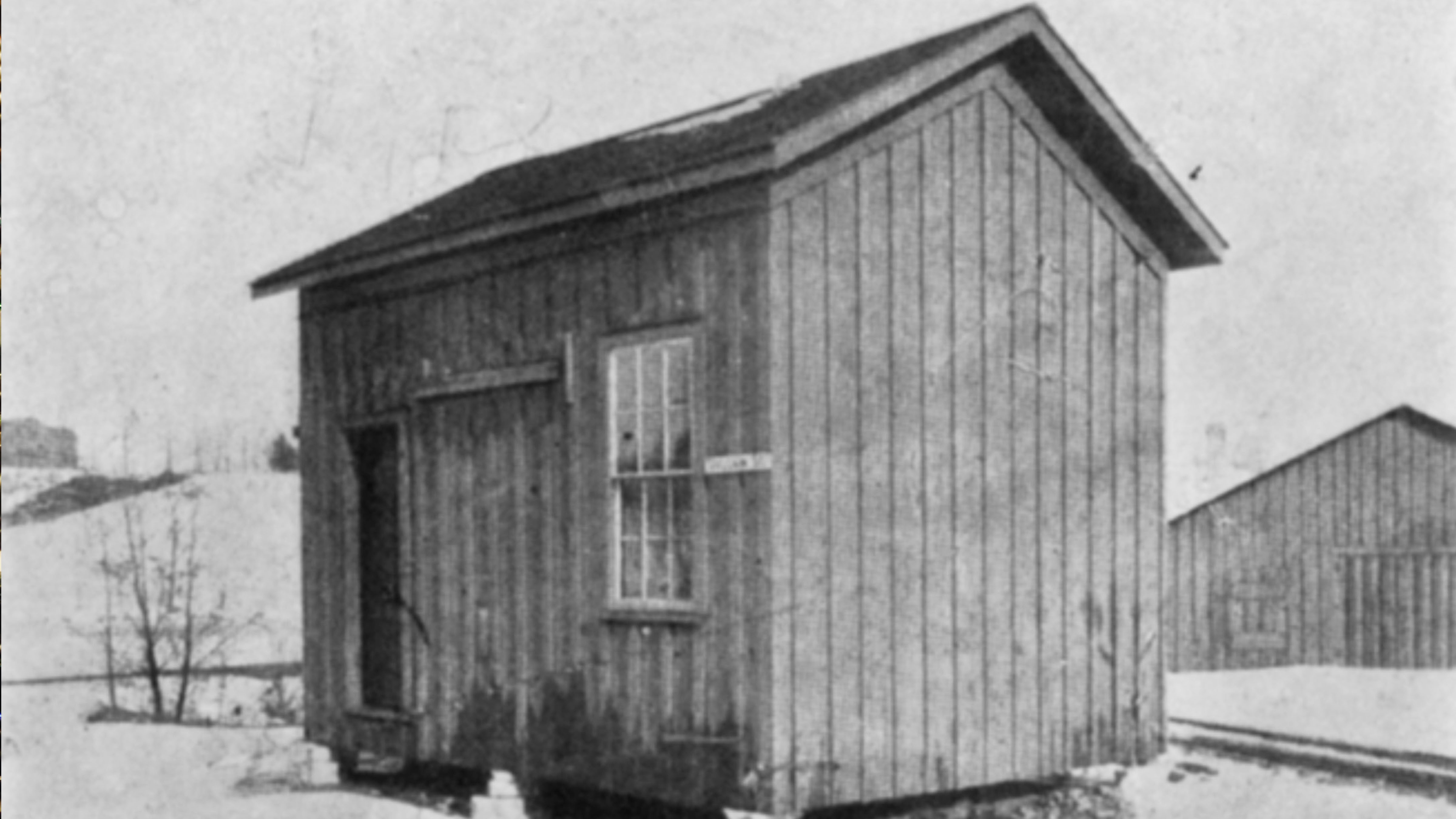
On September 30, 1882, the Vulcan Street Plant began operating beside the Fox River in Appleton, Wisconsin. Using the river to drive an Edison generator, the pioneering hydroelectric station initially supplied electricity to two paper mills and the home of businessman H.J. Rogers.
The plant generated only about 12.5 kilowatts, tiny by modern standards, but its importance was much greater than its output. Engineering authorities recognize Vulcan Street as the first Edison hydroelectric central station to serve a network of private and commercial customers in North America.
It arrived at a remarkable moment in electrical history. Thomas Edison’s steam-powered Pearl Street Station in New York City had begun commercial operation only 26 days earlier, on September 4.
Two very different sources of mechanical power, steam in Manhattan and flowing water in Wisconsin, were suddenly demonstrating how centralized electricity generation could illuminate homes and businesses.
Bringing Hydroelectric Power to Appleton
Appleton was well suited to experiment with water-generated electricity. The Fox River had already provided mechanical power for the region’s mills, and H.J. Rogers, president of the Appleton Paper and Pulp Company, recognized that the same source could drive electrical machinery.
Rogers learned about Edison’s developing electric-light system through H.E. Jacobs, a representative of the Western Edison Light Company in Chicago. Rogers and other local investors organized the Appleton Edison Electric Light Company in 1882.
Instead of duplicating Pearl Street’s steam-powered arrangement, Appleton could exploit something it already possessed: moving water.
At Vulcan Street, water power drove an Edison “K” type dynamo through a system of mechanical connections. The generator operated at approximately 110 volts and was capable of supplying about 250 sixteen-candlepower lamps.
The original installation illuminated three buildings: two paper mills and Rogers’ residence.
The technology was primitive compared with a modern electrical grid. There were no automatic voltage regulators. Operators had to judge the brightness of the lamps themselves and adjust the system accordingly. Protection against electrical faults was also rudimentary, and service initially concentrated on the hours when lighting was needed.
Yet the underlying concept was unmistakably modern: electricity was being generated at a central location and distributed to multiple customers.
That distinction is important when describing Vulcan Street as a historic “first.”
Electricity had been generated from water before September 1882. The U.S. Bureau of Reclamation records earlier examples, including water-powered electric lighting in Grand Rapids, Michigan, in 1880 and at Niagara Falls in 1881. Historical research has likewise identified several hydroelectric installations that preceded Vulcan Street.
What made Appleton particularly significant was the system it created. The American Society of Mechanical Engineers identifies Vulcan Street as the first Edison hydroelectric central station serving private and commercial customers in North America, while the American Society of Civil Engineers describes it as the first central-station plant to combine the developing Edison electrical system with hydro power.
It was not the invention of hydroelectricity. It was an important step toward making hydroelectricity a commercial utility.
From Three Buildings to a National Industry
Vulcan Street’s opening came during an extraordinarily compressed period of electrical innovation.
At Pearl Street in Lower Manhattan, Edison had created a steam-powered central generating station capable of supplying electricity to customers within a defined district. Appleton demonstrated almost immediately that the central-station idea could also work where water power was readily available.
The advantages were compelling in regions rich in rivers and industrial waterways. Rather than burning fuel to create steam, hydroelectric stations could convert the energy of moving or falling water into mechanical rotation and then electricity.
Development accelerated rapidly.
The National Park Service reports that by August 1886, roughly 40 to 50 hydroelectric plants were either operating or under construction in the United States and Canada. These early systems were still geographically constrained because transmitting electricity efficiently over long distances remained a major technical challenge.
That limitation would gradually be overcome as electrical generation and transmission technology advanced. Larger hydroelectric developments followed, eventually allowing rivers to supply electricity far beyond the immediate area surrounding a generating station.
The original Vulcan Street Plant did not survive. It burned in 1891.
Its place in engineering history did.
For the plant’s 50th anniversary in 1932, a replica was constructed in Appleton. It was later moved closer to the original site on the Fox River. Vulcan Street has been recognized as a historic engineering landmark by major American engineering organizations.
The Rogers residence also survived. Today known as Hearthstone Historic House Museum, it preserves an unusually direct connection to the earliest period of centralized electric service in the United States.
Hydroelectricity eventually developed on a scale that Rogers and the Appleton investors could scarcely have imagined. Massive dams and generating stations would produce electricity for cities and regions rather than a handful of nearby buildings.
But the scale of the first Appleton system is precisely what makes the story revealing.
On September 30, 1882, approximately 12.5 kilowatts was enough to demonstrate an idea: the energy flowing through a river could be converted into electricity at a central station and delivered to paying customers.
Twenty-six days after Pearl Street helped illuminate the future of electricity with steam, Appleton showed that water could help power it too.
About the Author Brad Socha is the founder of The Universal Record, focused on sourced, factual global reporting. Coverage includes international news, geopolitics, technology, and major developments.