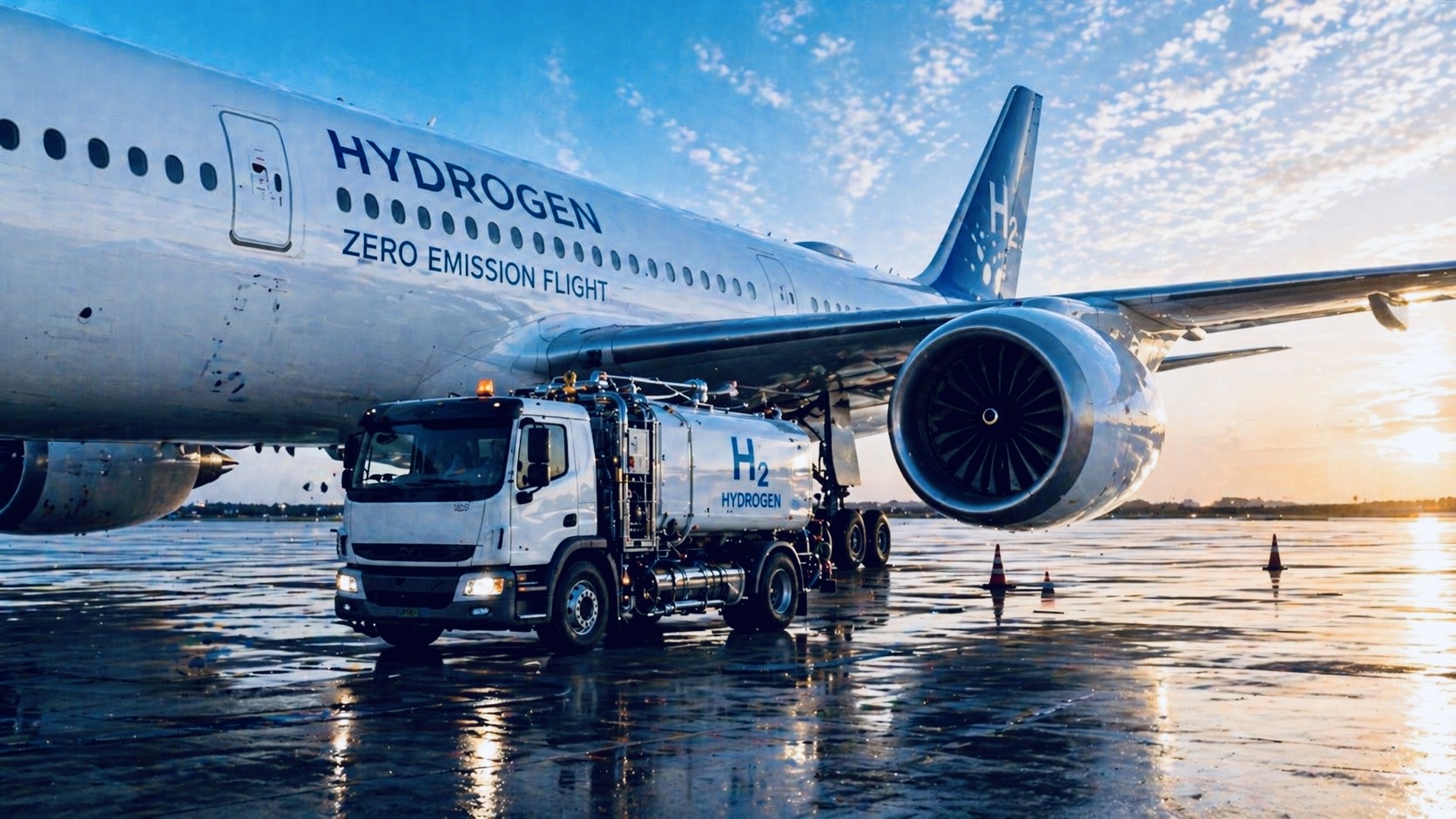
Hydrogen aviation is rapidly emerging as one of the most important developments in the future of global air travel, as the industry works to reduce emissions and meet long-term climate targets. While still in early stages for commercial passenger aircraft, hydrogen technology is already being deployed in airport operations, tested in flight, and integrated into long-term aviation strategies worldwide.
The push toward hydrogen comes as aviation remains one of the most difficult sectors to decarbonize. Unlike ground transportation, which has widely adopted electric solutions, aircraft face strict weight, range, and safety requirements that make traditional electrification impractical for long-haul flight. As a result, hydrogen is being explored as a viable alternative fuel capable of delivering zero carbon emissions at the point of use.
At Toronto Pearson International Airport, hydrogen technology is already being implemented on the ground. The airport has introduced hydrogen-powered vehicles as part of its broader decarbonization strategy, marking one of the first deployments of hydrogen in aviation operations in Canada.
Pearson is also home to Ontario’s only publicly accessible hydrogen fueling station, supporting both airport operations and broader regional adoption.
These developments highlight a critical first phase of hydrogen integration: decarbonizing airport ground fleets, including buses, service vehicles, and support equipment. Industry experts view this as a necessary stepping stone before hydrogen can be scaled for use in flight.
Beyond ground operations, major aviation companies are actively developing hydrogen-powered aircraft. Airbus and ZeroAvia have partnered with leading Canadian airports, including Toronto Pearson, to study hydrogen infrastructure and aircraft integration.
These efforts are part of a broader global push to create a hydrogen aviation ecosystem, including production, storage, refuelling, and aircraft design. The goal is to support the aviation industry’s target of achieving net-zero emissions by 2050.
Hydrogen can be used in aviation in several ways, each with different timelines and levels of readiness. The most immediate application is in the production of sustainable aviation fuel (SAF), specifically e-SAF, which is created using hydrogen and captured carbon dioxide. This fuel can be used in existing aircraft without modification, making it a key near-term solution for reducing emissions.
Longer-term solutions involve using hydrogen directly onboard aircraft. One approach is hydrogen combustion in modified jet engines, which eliminates carbon emissions but requires significant redesign of aircraft due to storage challenges. Hydrogen must be stored as a cryogenic liquid, which takes up more space than traditional jet fuel and impacts aircraft structure and range.
Another approach is hydrogen fuel-cell propulsion, where hydrogen is converted into electricity to power electric motors. This technology is considered especially promising for short-haul and regional aircraft, offering zero emissions and potentially lower noise levels.
Real-world progress is already being demonstrated. In 2023, a modified regional aircraft successfully completed a hydrogen-powered flight, marking a major milestone for the industry.
More recently, hydrogen-electric aircraft concepts have achieved extended flight ranges, with some experimental designs demonstrating significantly longer endurance compared to battery-powered alternatives.
Despite this progress, significant challenges remain. Hydrogen has a high energy content by weight but lower energy density by volume, requiring larger storage tanks.
Additionally, new infrastructure will be required across the aviation ecosystem, including production facilities, transport systems, cryogenic storage, and airport refuelling capabilities. Safety standards, certification processes, and public perception also remain key hurdles to widespread adoption.
Canada is positioning itself as a leader in hydrogen development, with dozens of projects underway and billions in potential investment. Hydrogen is expected to play a major role in achieving national net-zero targets by 2050, including within aviation.
Across the industry, hydrogen is increasingly viewed not as a single solution, but as part of a broader strategy that includes SAF, improved aircraft efficiency, and operational changes.
The transition to hydrogen-powered flight is expected to occur gradually, beginning with ground operations and short-range aircraft before expanding to larger commercial flights over the coming decades.
As global demand for air travel continues to grow, the development of hydrogen aviation could reshape the industry, offering a path toward cleaner, more sustainable flight without compromising performance or connectivity.
The coming years will be critical in determining how quickly hydrogen moves from experimental technology to mainstream aviation fuel. With major investments, ongoing trials, and real-world deployments already underway, the future of flight is no longer theoretical—it is actively taking shape.
About the Author Brad Socha is the founder of The Universal Record, focused on sourced, factual global reporting. Coverage includes international news, geopolitics, technology, and major developments.