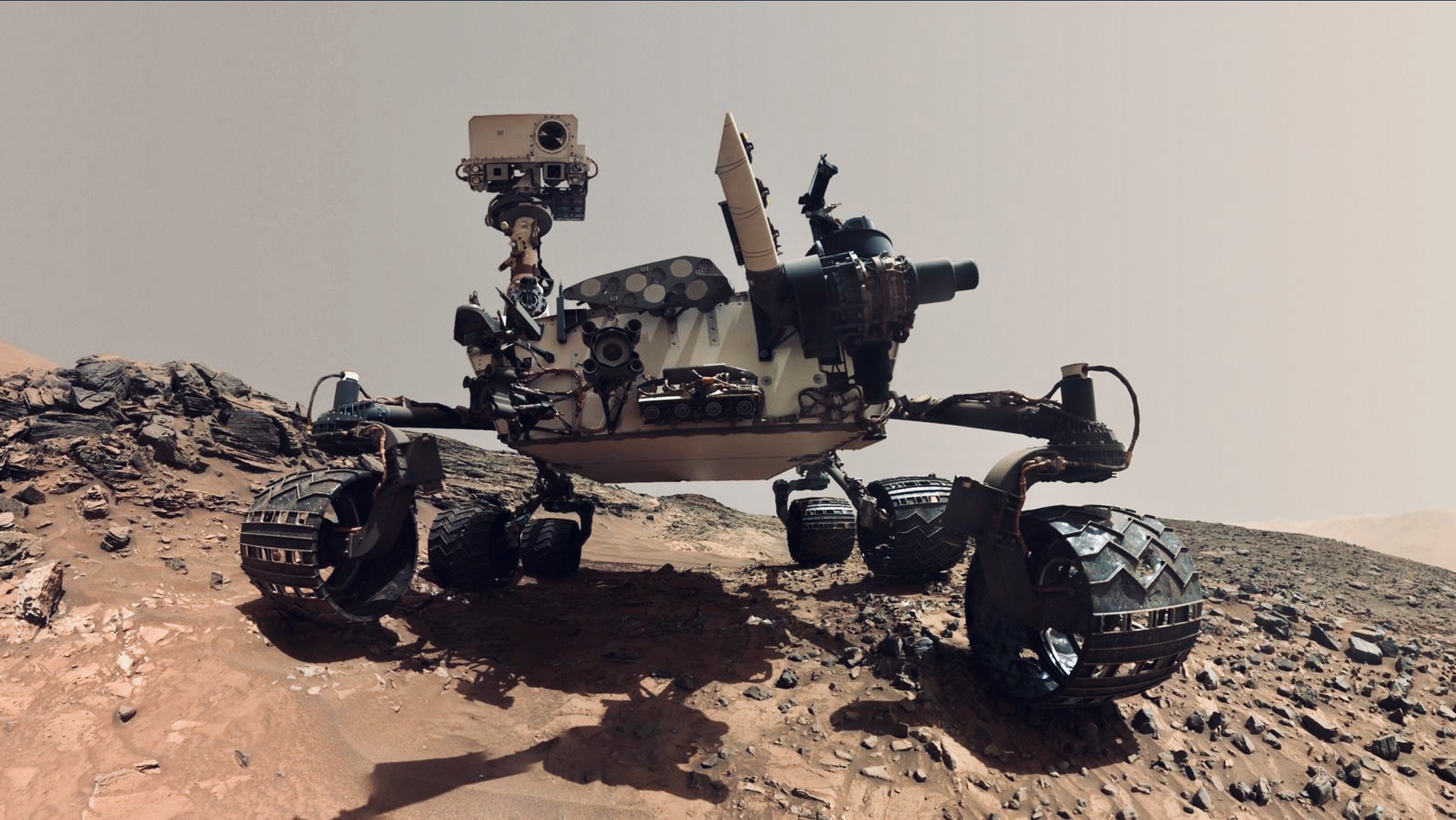
New findings from NASA’s Curiosity rover are expanding the scientific search for ancient life after researchers confirmed the detection of additional organic compounds preserved within Martian rock samples.
Scientists studying data from NASA’s Curiosity rover announced this week that newly identified organic molecules discovered on Mars are strengthening evidence that the planet once possessed conditions potentially capable of supporting microbial life billions of years ago.
The findings are drawing major international attention because the molecules were detected in ancient sedimentary rocks believed to have formed when liquid water existed on the Martian surface. Researchers say the discovery does not confirm life existed on Mars, but it significantly strengthens the scientific case that the planet may once have been chemically suitable for biological activity.
The newly analyzed compounds were identified inside rock samples collected within Gale Crater, a region that Curiosity has been exploring since landing on Mars in 2012. Scientists stated that several molecules detected in the samples are more chemically complex than previously identified organic material discovered during earlier Mars missions.
Researchers involved in the study explained that organic molecules are carbon-containing compounds commonly associated with life on Earth, although they can also form through non-biological geological or chemical processes. The importance of the latest findings lies not only in the molecules themselves, but in their preservation inside ancient Martian rocks despite exposure to radiation and harsh environmental conditions over immense spans of time.
NASA officials stated Tuesday that the samples appear to originate from rocks estimated to be roughly 3.7 billion years old, dating back to a period when Mars likely possessed lakes, rivers, and a thicker atmosphere capable of supporting liquid water on the surface.
The compounds were identified using Curiosity’s Sample Analysis at Mars laboratory, commonly known as SAM.
The onboard instrument suite is capable of heating powdered rock samples and analyzing gases released during the process to identify chemical signatures. Scientists said improved analytical techniques and newly refined data processing methods helped reveal molecular structures that earlier examinations may have missed.
Several researchers described the discovery as one of the most scientifically significant organic detections yet made by Curiosity.
The findings come as international interest in Mars exploration continues accelerating. NASA, ESA, China, and private aerospace firms are all expanding long-term plans involving robotic exploration, sample-return missions, and eventual human missions to the planet.
Scientists emphasized that the molecules themselves are not direct biosignatures proving ancient organisms existed on Mars. However, the growing inventory of preserved organics is helping researchers better understand the ancient Martian environment and identify locations where signs of past microbial life may be most likely to survive.
The geological context surrounding the discovery is considered especially important.
The molecules were reportedly found in fine-grained mudstone deposits believed to have accumulated at the bottom of an ancient lake environment. Such conditions on Earth are known to preserve organic material exceptionally well over geological timescales.
Researchers also noted that certain sulfur-containing minerals discovered in the rocks may have helped shield the organic compounds from radiation damage for billions of years.
The discovery arrives during a broader transformation in planetary science.
Modern Mars exploration is increasingly focused not only on whether water once existed on the planet, but whether Mars may have sustained stable chemical environments capable of supporting microbial ecosystems over long periods of time.
NASA’s Perseverance rover, currently operating inside Jezero Crater, is simultaneously collecting rock cores intended for future return to Earth through the agency’s Mars Sample Return program. Scientists believe laboratory analysis conducted on Earth could eventually provide far more detailed information than robotic instruments alone can currently achieve on Mars.
The latest Curiosity findings are also influencing future mission planning.
Scientists are increasingly prioritizing ancient sedimentary regions, clay-rich deposits, and former lakebeds as primary targets for future exploration because these environments may provide the highest probability of preserving ancient biosignatures.
The implications extend beyond Mars itself.
Researchers say understanding whether life ever emerged independently on Mars could fundamentally reshape scientific understanding of biology, planetary evolution, and the prevalence of life throughout the universe.
If microbial life once developed on both Earth and Mars independently, many scientists believe it would significantly increase the probability that life exists elsewhere in the cosmos.
At the same time, major uncertainties remain.
Mars today is an extremely hostile environment featuring intense radiation exposure, freezing temperatures, a thin carbon dioxide atmosphere, and virtually no stable liquid water on the surface. Scientists continue debating how long ancient habitable conditions may have persisted and whether they lasted long enough for life to emerge.
The new findings also highlight the growing sophistication of robotic planetary exploration technology.
Curiosity has now operated on Mars for nearly 14 years, far exceeding its original mission expectations. The rover continues providing valuable geological and chemical data while traversing the lower slopes of Mount Sharp within Gale Crater.
NASA officials stated that both Curiosity and Perseverance remain in good operational condition despite the harsh Martian environment.
The discoveries are arriving at a time of renewed public fascination with space exploration, artificial intelligence-assisted science systems, and long-term human exploration plans extending beyond Earth orbit.
NASA’s Artemis lunar program and growing interest in permanent Moon infrastructure are increasingly being viewed as stepping stones toward eventual crewed missions to Mars later this century. Some researchers believe lessons learned from sustained lunar operations could help prepare astronauts for the far greater challenges associated with deep-space travel and Martian habitation.
The search for ancient Martian life, however, remains one of the most compelling scientific questions ever pursued.
Every new organic detection helps scientists refine their understanding of the planet’s ancient chemistry, environmental history, and potential biological possibilities.
For now, researchers caution that the latest findings represent another important piece of a much larger puzzle rather than definitive proof of ancient life itself.
But with each mission, Mars continues revealing a planet that may once have looked far more Earth-like than previously imagined.
About the Author Brad Socha is the founder of The Universal Record, focused on sourced, factual global reporting. Coverage includes international news, geopolitics, technology, and major developments.