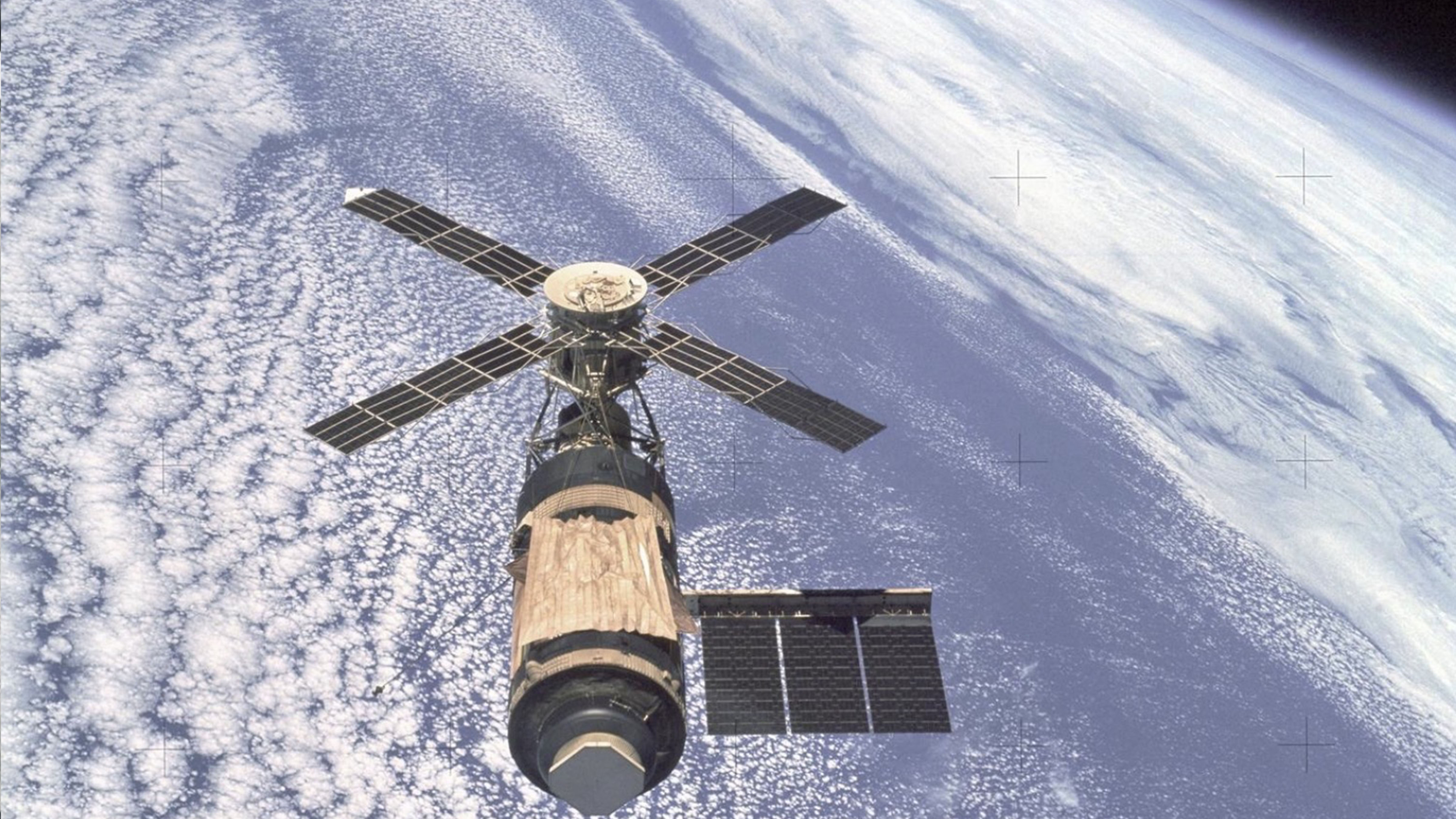
The launch of Skylab on May 14, 1973 marked a major turning point in human space exploration. More than five decades later, many of the technologies, research methods, and long-duration mission concepts first tested aboard Skylab continue influencing modern space stations, lunar planning, and preparations for future missions to Mars.
Skylab became the United States’ first space station and represented NASA’s first major step beyond short-duration Apollo missions. The launch demonstrated that humans could survive and work in space for extended periods while conducting scientific experiments, Earth observation, and solar research on a scale never attempted before.
The mission remains highly relevant today as NASA and international partners expand plans for permanent lunar operations and deep-space exploration. Many of the challenges faced during Skylab, including human health in microgravity, life-support systems, radiation exposure, and spacecraft maintenance, remain central issues for future missions.
Launched aboard a modified Saturn V rocket from Kennedy Space Center in Florida, Skylab weighed approximately 77 tons and became the largest space structure ever placed into orbit at that time. The station included living quarters, scientific laboratories, exercise equipment, solar observatories, and docking systems for astronaut crews.
The launch, however, was immediately followed by serious complications. During ascent, Skylab suffered major damage when part of its protective micrometeoroid shield tore away. One of the station’s solar panels was ripped off completely, while another became jammed. The damage caused dangerous overheating inside the station and raised fears the mission might fail before astronauts even arrived.
NASA engineers quickly developed emergency repair plans while astronauts trained for improvised space repairs. When the first Skylab crew arrived later that month, astronauts successfully deployed a temporary sunshade and freed the trapped solar panel, saving the station from catastrophic overheating and power shortages.
The dramatic rescue effort became one of the earliest major examples of astronauts performing complex in-space repairs under extreme conditions. The mission demonstrated the importance of adaptability, engineering problem-solving, and human decision-making in spaceflight operations.
Over the next several months, Skylab hosted three separate astronaut crews. The crews conducted hundreds of scientific experiments involving medicine, astronomy, materials science, and Earth observation. Astronauts also spent far longer in orbit than previous American missions, helping researchers better understand how extended spaceflight affects the human body.
The station’s Apollo Telescope Mount became one of Skylab’s most important scientific instruments. Using advanced solar observation equipment, astronauts captured unprecedented images and data involving solar flares, sunspots, and activity within the Sun’s atmosphere. The findings contributed significantly to solar physics research and improved scientific understanding of space weather.
Skylab crews also photographed Earth extensively from orbit. The station gathered data involving weather systems, environmental monitoring, agriculture, natural resources, and geological formations. Many of those early Earth observation concepts later became foundational to modern satellite imaging and climate-monitoring systems used today.
The mission also revealed both the physical and psychological challenges of long-duration human spaceflight. Astronauts experienced muscle loss, fatigue, and adaptation difficulties while spending weeks and months in orbit. NASA used the data collected aboard Skylab to improve exercise protocols, nutrition planning, and crew scheduling for future missions.
One of Skylab’s most lasting contributions was proving that humans could live and work productively in space for extended periods. The experience directly influenced later programs including the Space Shuttle, the International Space Station, and future Artemis mission planning.
The station remained in orbit until 1979 when it re-entered Earth’s atmosphere and broke apart over parts of the Indian Ocean and Western Australia. Despite its relatively short operational lifespan, Skylab is widely viewed as one of NASA’s most influential early space programs.
Today, as governments and private companies pursue lunar habitats, commercial space stations, and eventual crewed missions to Mars, many of the lessons first learned aboard Skylab remain highly relevant. Engineers continue studying long-duration habitation systems, radiation protection, closed-loop life support, and human adaptation to space environments — all areas explored during the Skylab era.
The launch of Skylab in 1973 therefore represented far more than a single NASA mission. Historians and space experts view it as a foundational moment in the transition from brief space exploration missions toward sustained human presence in orbit.
More than fifty years later, Skylab remains an enduring symbol of innovation, resilience, and humanity’s expanding ambitions beyond Earth.
About the Author Brad Socha is the founder of The Universal Record, focused on sourced, factual global reporting. Coverage includes international news, geopolitics, technology, and major developments.