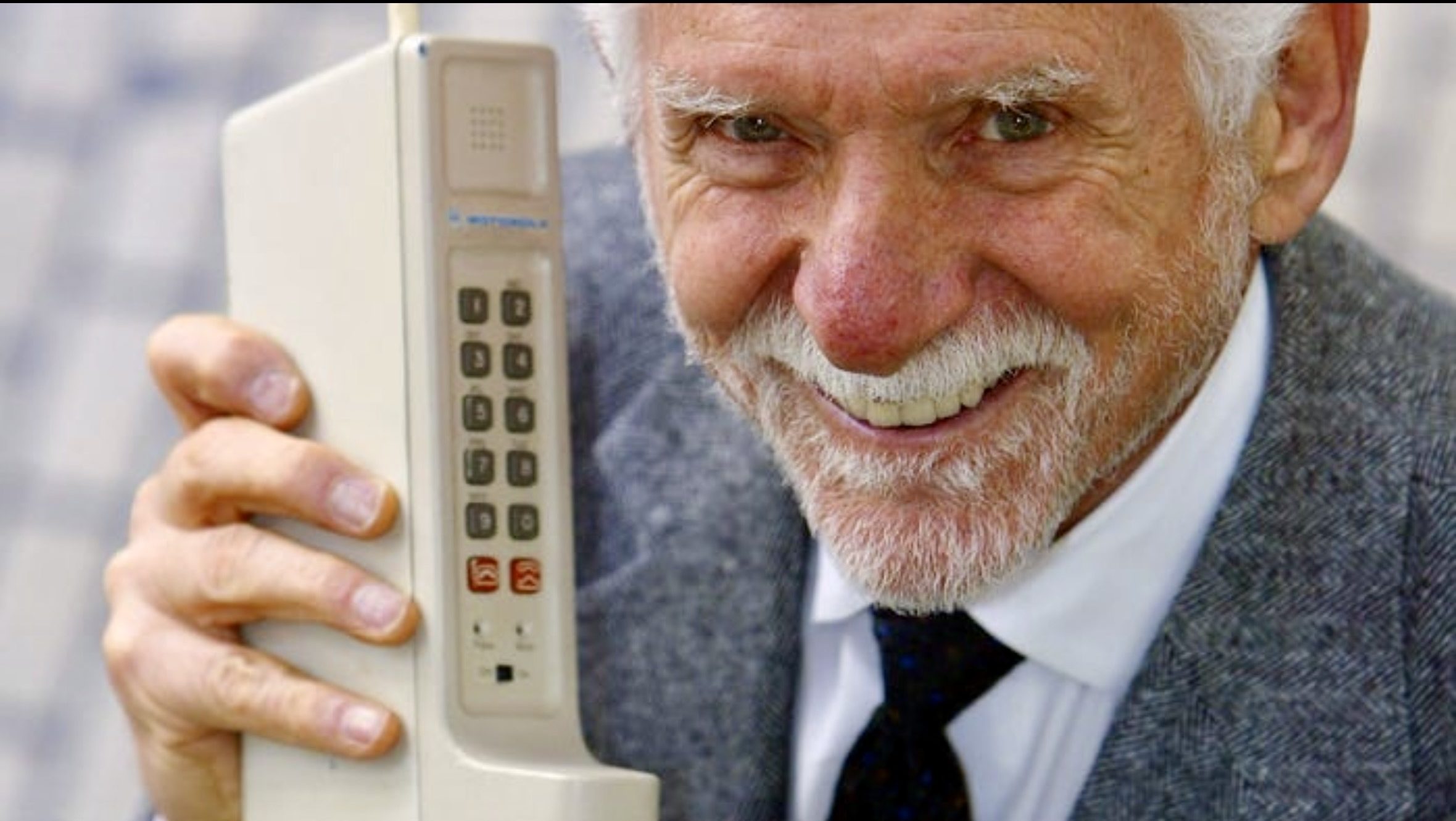
On March 19, 1973, a major technological milestone was reached when the first public handheld mobile phone call was successfully demonstrated in New York City. The call is widely credited to Martin Cooper, an engineer at Motorola, who used a prototype portable device to place the call while standing on a public street.
The device used in the demonstration was an early prototype of what would later become the Motorola DynaTAC. Unlike earlier communication systems, which were limited to fixed landlines or bulky car-installed mobile units, this handheld device represented a shift toward truly personal, portable communication. The prototype weighed over one kilogram and offered a short battery life, but it proved that mobile communication could be independent of vehicles or stationary infrastructure.
During the demonstration, Cooper placed a call to a competing telecommunications researcher, symbolizing a breakthrough in the race to develop cellular technology. At the time, companies were exploring different approaches to mobile communication, but Motorola’s handheld concept would ultimately become the dominant model.
The development of mobile phone technology was rooted in earlier research conducted throughout the mid-20th century. Car-based radiotelephone systems had been in use since the 1940s and 1950s, but these systems were limited in capacity and required manual switching. The introduction of cellular network concepts, which divide geographic areas into smaller coverage zones or “cells,” made it possible to support a much larger number of users.
Following the 1973 demonstration, it took a decade of further engineering, regulatory approval, and infrastructure development before handheld mobile phones became commercially available. In 1983, Motorola released the DynaTAC 8000X, the first commercially available handheld mobile phone. The device was large, expensive, and primarily used by professionals, but it marked the beginning of the consumer mobile phone market.
The expansion of mobile networks accelerated through the 1980s and 1990s, with the transition from analog to digital systems improving call quality, security, and network capacity. The introduction of second-generation (2G) networks enabled text messaging and more efficient data transmission, further transforming communication.
By the early 21st century, mobile phones had evolved into smartphones, integrating computing power, internet access, cameras, and a wide range of applications. This transformation reshaped nearly every aspect of modern life, including business, social interaction, media consumption, and global connectivity.
Today, billions of people rely on mobile devices as their primary means of communication. The first handheld call made in 1973 is widely recognized as the starting point of this global technological shift, demonstrating the feasibility of personal wireless communication and setting the stage for decades of innovation.
The impact of this breakthrough extends beyond communication alone. Mobile technology has influenced economic development, emergency response systems, access to information, and digital infrastructure worldwide. The evolution from a single experimental call to a globally interconnected network represents one of the most significant technological transformations in modern history.
About the Author Brad Socha is the founder of The Universal Record, an independent platform dedicated to sourced, factual reporting on global events. The publication focuses on delivering verified information without opinion or editorial bias. Based in Canada, the publication covers international news, geopolitics, technology, and global developments.



Leave a Reply