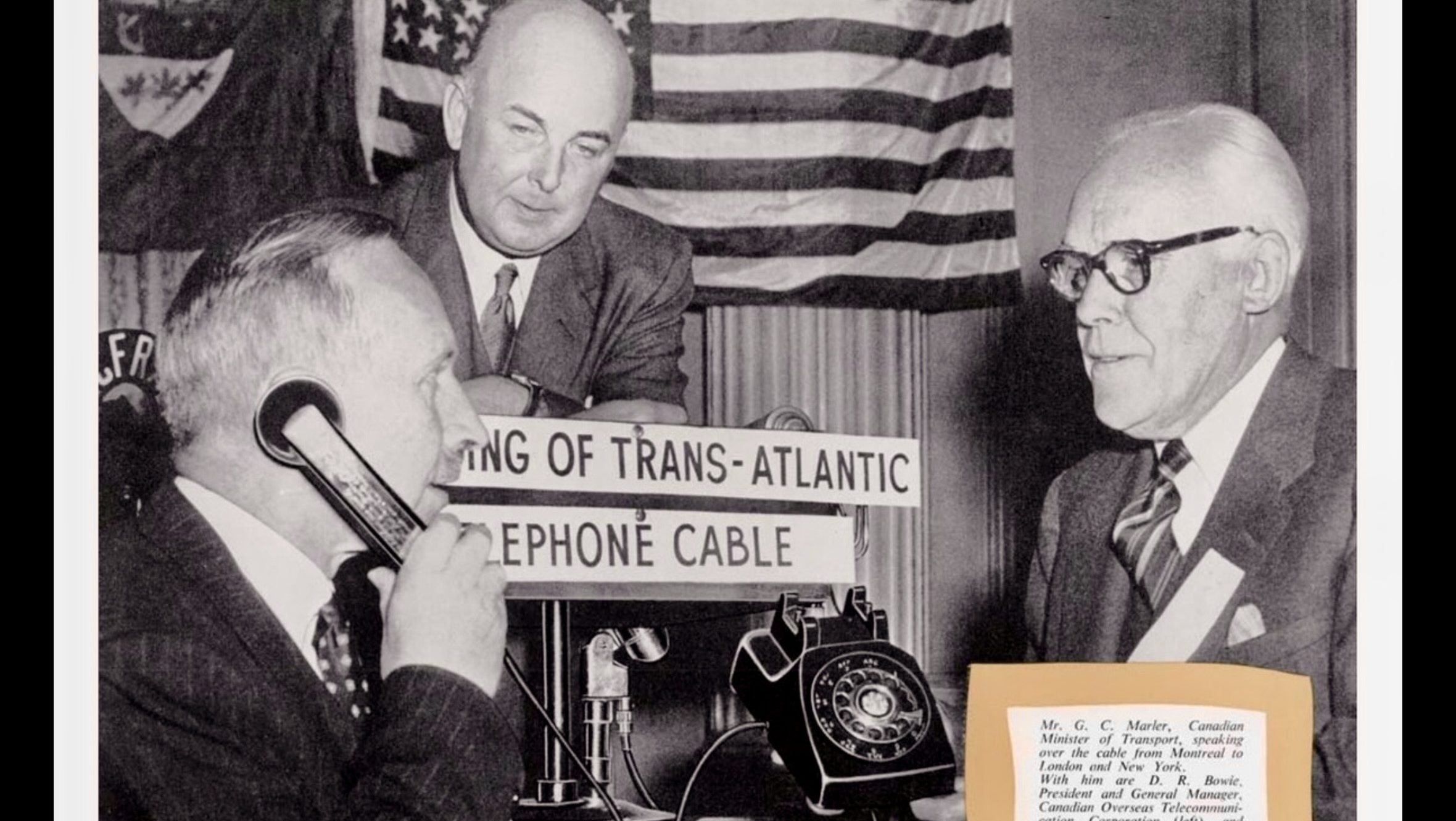
On March 7, 1927, the first commercial transatlantic telephone call took place between New York City and London, marking a major breakthrough in long-distance communication technology. The historic call connected AT&T’s headquarters in New York with officials at the British General Post Office in London, demonstrating the successful operation of transatlantic voice communication across the Atlantic Ocean.
The call represented the culmination of years of technological experimentation in radio communication and signal transmission. Prior to this moment, most transatlantic communication relied on telegraph cables, which transmitted text messages rather than real-time voice conversations.
Development of Transatlantic Communication
In the early 20th century, scientists and engineers were exploring ways to transmit voice signals over vast distances. Radio technology had begun to advance significantly during and after World War I, enabling wireless communication across oceans.
AT&T collaborated with the British Post Office and engineers on both sides of the Atlantic to develop a system capable of transmitting telephone signals via longwave radio transmission. The system used powerful radio transmitters located in the United States and receivers in Britain to carry voice signals across the Atlantic Ocean.
During the first demonstration call in March 1927, engineers successfully connected the two continents using this radio-based system. The call demonstrated that real-time voice communication between North America and Europe was now possible.
Early Service and Cost
Shortly after the initial demonstration, limited commercial telephone service began operating between the United States and the United Kingdom.
However, the service was extremely expensive by modern standards. A three-minute transatlantic call in 1927 cost approximately $75, equivalent to well over $1,000 in today’s currency when adjusted for inflation. Because of this high cost, early international telephone calls were primarily used by governments, businesses, and wealthy individuals.
Despite the cost, the system proved that international voice communication was technologically feasible and commercially viable.
Technological Progress
The early radio-based transatlantic telephone system was eventually replaced by undersea telephone cables beginning in the 1950s. These cables significantly improved call quality and reliability while lowering costs.
Later developments in satellite communications, followed by fiber-optic cables, transformed global communication even further. Today, billions of people communicate instantly across continents using internet-based technologies, mobile networks, and global fiber infrastructure.
The 1927 transatlantic call represents an important milestone in this progression, showing how early telecommunications breakthroughs helped create the connected global communication networks that exist today.
Historical Significance
The first transatlantic telephone call demonstrated that technology could overcome the geographic barriers separating continents. It marked the beginning of a new era in global communication, helping to bring countries, businesses, and individuals closer together through real-time conversation.
In many ways, the achievement foreshadowed the modern world of instant global connectivity made possible by digital communication networks.
About the Author Brad Socha is the founder of The Universal Record, focused on sourced, factual global reporting. Coverage includes international news, geopolitics, technology, and major developments.