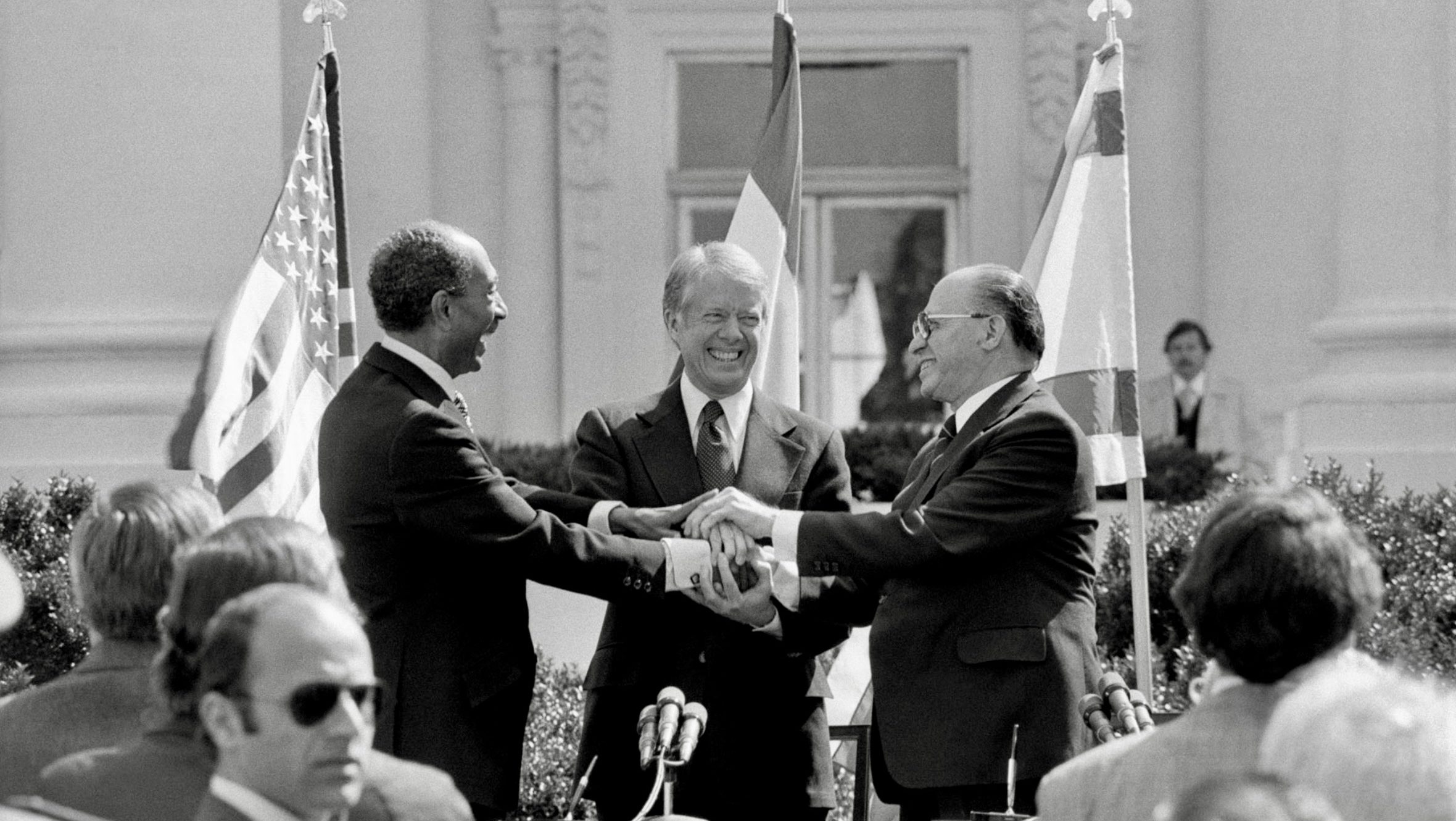
On March 26, 1979, Israel and Egypt signed a formal peace treaty in Washington, D.C., marking the first time an Arab country officially recognized Israel and agreed to end hostilities.
The agreement followed the 1978 Camp David Accords and was facilitated by United States President Jimmy Carter. The treaty was signed by Israeli Prime Minister Menachem Begin and Egyptian President Anwar Sadat after months of negotiations.
The treaty formally ended the state of war between the two countries that had existed since the founding of Israel in 1948. Egypt had previously participated in multiple conflicts with Israel, including the 1948 Arab–Israeli War, the 1967 Six-Day War, and the 1973 Yom Kippur War.
Under the terms of the agreement, Israel committed to a full withdrawal from the Sinai Peninsula, a territory it had occupied since 1967. The withdrawal was completed in stages and finalized in 1982. Israeli settlements in Sinai were dismantled as part of the agreement.
The treaty also established security arrangements in the region, including the limitation of military forces in designated zones within the Sinai Peninsula. A multinational peacekeeping force, later known as the Multinational Force and Observers (MFO), was created to monitor compliance with these provisions.
Egypt agreed to formally recognize Israel and establish diplomatic relations, including the exchange of ambassadors and the opening of borders for travel and trade. The agreement also guaranteed freedom of navigation through the Suez Canal and the Straits of Tiran, both strategically significant waterways.
The United States played a central role in supporting the treaty, providing economic and military assistance packages to both countries following the agreement. This support became a long-term component of U.S. foreign policy in the region.
The treaty had significant geopolitical consequences. Egypt became the first Arab nation to recognize Israel, which led to its temporary suspension from the Arab League and criticism from several other Arab states. Despite this, the agreement has remained in force and is considered one of the most enduring peace arrangements in the Middle East.
The signing of the treaty followed Egyptian President Anwar Sadat’s historic visit to Israel in 1977, the first by an Arab leader, which helped initiate direct negotiations between the two nations.
More than four decades later, the Israel–Egypt Peace Treaty continues to serve as a foundational agreement in regional diplomacy and has influenced subsequent peace efforts in the Middle East.
About the Author Brad Socha is the founder of The Universal Record, focused on sourced, factual global reporting. Coverage includes international news, geopolitics, technology, and major developments.