Human activity in Earth orbit is entering a transition period as existing government-run stations continue operations while multiple new commercial and national platforms move toward deployment. Current programs involve the United States, China, Europe, India, Russia, Japan, and several private aerospace companies, reflecting a shift toward diversified orbital infrastructure.
The following overview outlines verified operational stations and confirmed future projects based on official agency releases and aerospace industry reporting.
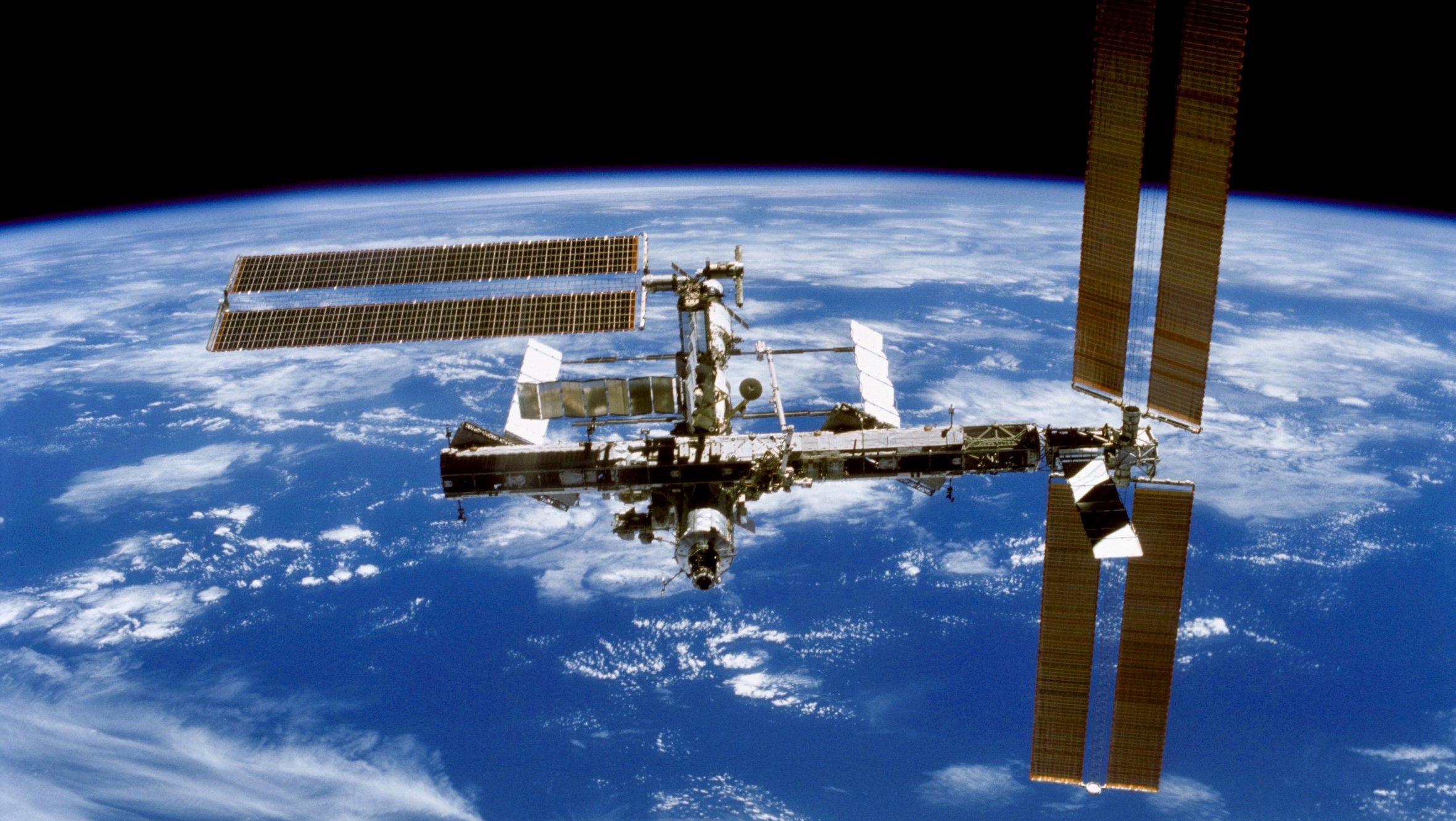
International Space Station (ISS)
Country/Agency: United States (NASA), Russia (Roscosmos), Europe (ESA), Japan (JAXA), Canada (CSA)
Operational Since: 1998
Primary Purpose: Scientific research, international cooperation, technology testing
The ISS remains the largest continuously inhabited space station in history. Orbiting roughly 400 kilometres above Earth, it supports experiments in microgravity, medical research, Earth observation, and advanced robotics. The station is expected to remain operational into the late 2020s, after which controlled deorbiting plans are being developed.
Key capabilities include long-duration human habitation, cargo resupply missions, and external experiments attached to the station’s truss structure.
Tiangong Space Station
Country/Agency: China (CNSA)
Operational Since: 2022
Primary Purpose: National research laboratory and independent crewed space platform
China’s Tiangong station consists of the Tianhe core module with Wentian and Mengtian science modules. The station supports three-person crews conducting physics, biology, and materials science experiments.
Tiangong represents China’s long-term orbital presence following earlier experimental stations and operates independently of ISS partnerships.
Lunar Gateway (Planned)
Country/Agency: NASA, ESA, JAXA, CSA
Projected Deployment: Late 2020s
Primary Purpose: Lunar orbit logistics hub for Artemis missions
Gateway will orbit the Moon rather than Earth, serving as a staging platform for lunar exploration. Modules such as HALO and PPE are under development, with contributions from multiple partner nations. Unlike ISS, crews will visit periodically rather than remain continuously onboard.
Axiom Station (Planned Commercial Platform)
Country/Company: United States — Axiom Space
Projected Deployment: Initial modules late 2020s
Primary Purpose: Commercial research, private astronaut missions, ISS successor infrastructure
Axiom plans to attach initial modules to the ISS before separating them into a free-flying station. The company aims to support government astronauts, private missions, and commercial manufacturing in microgravity.
Orbital Reef (Planned Commercial Station)
Country/Companies: United States — Blue Origin, Sierra Space, partners
Projected Deployment: Late 2020s
Primary Purpose: Mixed-use orbital “business park” for research, tourism, and manufacturing
Orbital Reef is designed as a commercially operated space habitat featuring inflatable modules and reusable spacecraft systems. NASA has provided development funding through commercial low-Earth-orbit initiatives.
Starlab Space Station (Planned)
Country/Companies: United States/Europe — Voyager Space, Airbus, partners
Projected Deployment: Late 2020s
Primary Purpose: Scientific research and microgravity manufacturing
Starlab is planned as a single large module capable of supporting astronauts and research payloads. European aerospace partners are contributing design and engineering expertise.
ROSS (Russian Orbital Service Station)
Country/Agency: Russia (Roscosmos)
Status: Proposed
Primary Purpose: Independent Russian orbital platform
Russia has announced plans for a future national station following ISS operations. Development timelines remain under review, and official launch schedules have not been finalized.
Bharatiya Antariksha Station (Proposed)
Country/Agency: India (ISRO)
Projected Deployment: Early 2030s
Primary Purpose: National human spaceflight and research program
India has confirmed long-term plans for an indigenous space station following its Gaganyaan human spaceflight missions. The project aims to expand scientific capabilities and establish sustained human presence in orbit.
Transition Toward Commercial Low-Earth Orbit
Space agencies have increasingly shifted funding toward commercial partnerships. NASA’s Commercial LEO Destinations program supports private station development to ensure continuity of research after ISS retirement.
Industry analysts describe the upcoming decade as a “multi-station era,” where national and commercial platforms operate simultaneously rather than relying on a single global station.
About the Author Brad Socha is the founder of The Universal Record, an independent platform dedicated to sourced, factual reporting on global events. The publication focuses on delivering verified information without opinion or editorial bias. Based in Canada, the publication covers international news, geopolitics, technology, and global developments.



Leave a Reply