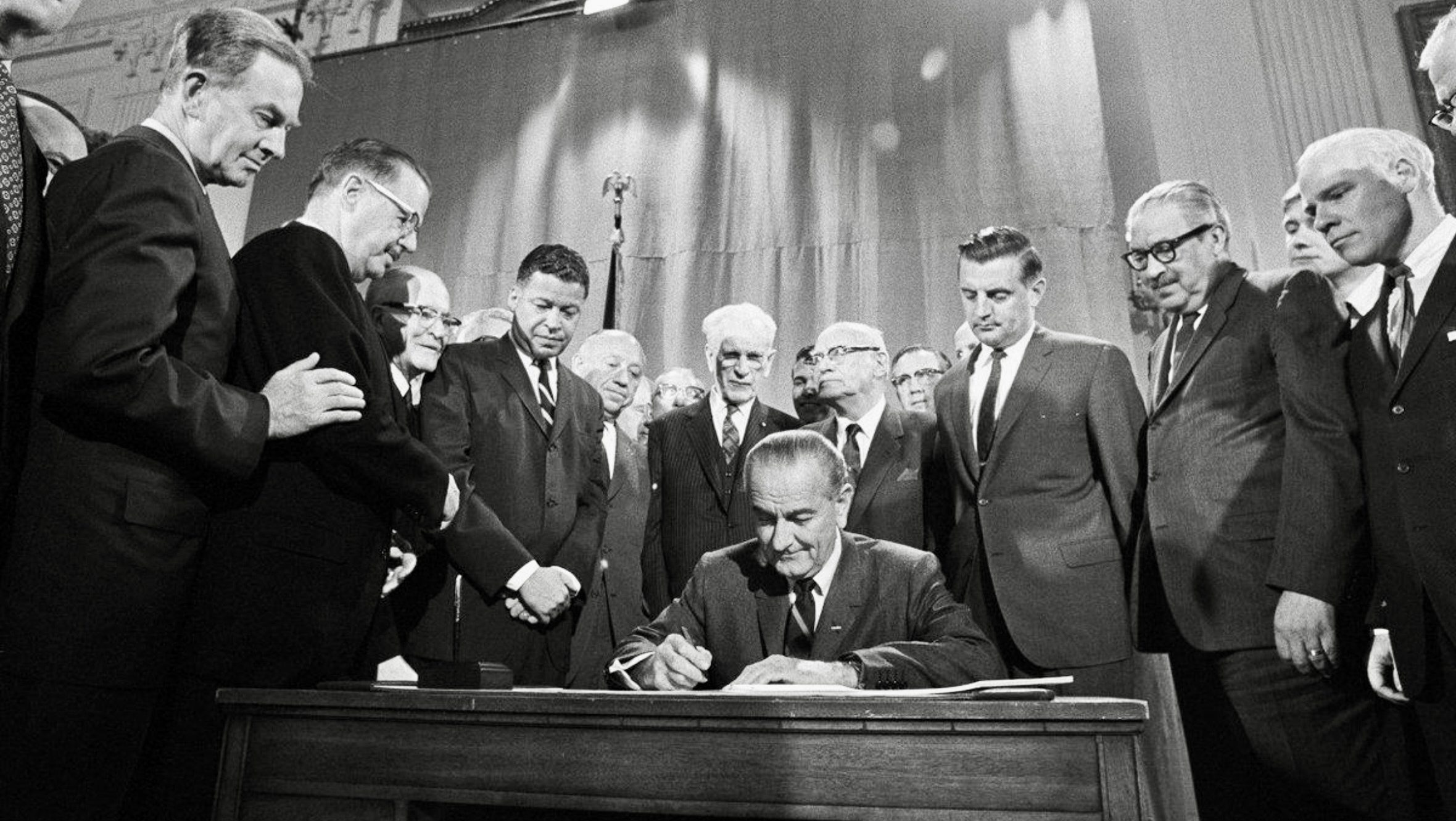
On April 11, 1968, the Civil Rights Act of 1968 was signed into law by U.S. President Lyndon B. Johnson, marking a major milestone in American civil rights legislation.
The law was passed during a period of heightened national tension following the assassination of Martin Luther King Jr. on April 4, 1968. The legislation was intended to expand protections against discrimination and address ongoing civil rights concerns across the United States.
A key component of the Act is commonly known as the Fair Housing Act. This section prohibited discrimination in the sale, rental, and financing of housing based on race, colour, religion, or national origin. Later amendments expanded protections to include sex, disability, and familial status.
The Act also included provisions addressing civil rights protections for Native Americans and strengthened federal enforcement mechanisms against racially motivated violence and intimidation.
The passage of the Civil Rights Act of 1968 represented the culmination of years of activism and legislative effort, following earlier civil rights laws passed in the 1960s. It remains a central piece of U.S. civil rights legislation and continues to shape housing policy and civil rights enforcement today.
About the Author Brad Socha is the founder of The Universal Record, an independent platform dedicated to sourced, factual reporting on global events. The publication focuses on delivering verified information without opinion or editorial bias. Based in Canada, the publication covers international news, geopolitics, technology, and global developments.



Leave a Reply