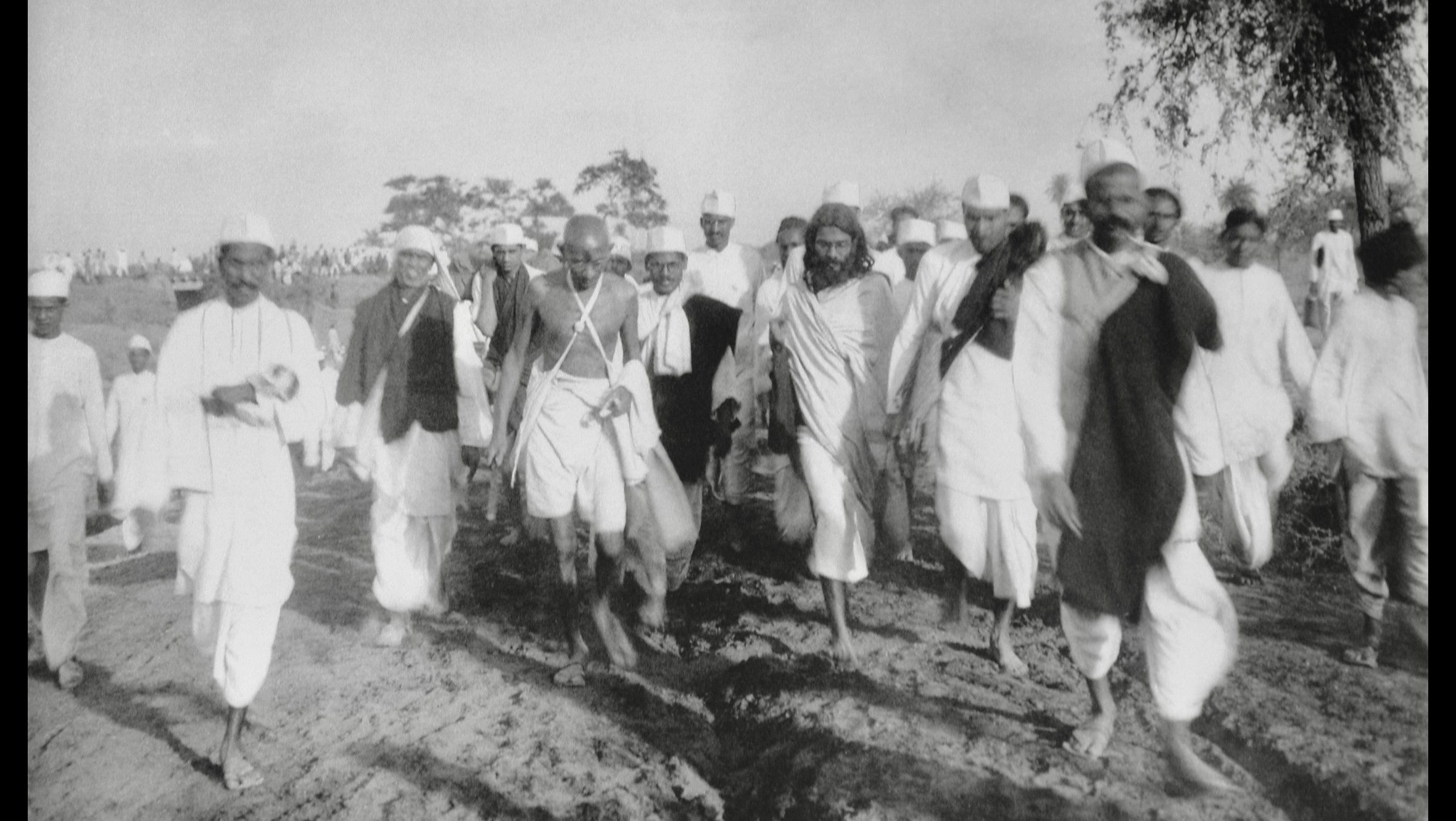
On March 12, 1930, Indian independence leader Mahatma Gandhi began the historic Salt March, a peaceful protest against British colonial rule in India. The march was designed to challenge British laws that prohibited Indians from producing or selling salt independently.
The protest quickly became one of the most powerful acts of civil disobedience in the global struggle for independence and helped galvanize widespread support for India’s freedom movement.
British Salt Laws
At the time, India was governed by the British Empire, which imposed strict regulations on salt production. The British government maintained a monopoly on salt, forcing Indians to purchase it from colonial authorities while also paying heavy taxes.
Salt was an essential commodity used daily by nearly all people, making the tax particularly burdensome for poor and rural communities.
Gandhi viewed the salt laws as a clear symbol of economic exploitation under colonial rule.
The March Begins
On March 12, 1930, Gandhi and 78 followers departed from his ashram near the city of Ahmedabad. Their destination was the coastal village of Dandi on the Arabian Sea.
The group walked approximately 390 kilometres (about 240 miles) over the course of 24 days. Along the way, thousands of people joined the movement, turning the march into a powerful symbol of resistance.
The protest remained peaceful, reflecting Gandhi’s philosophy of nonviolent civil disobedience, known as satyagraha.
Defying the Salt Law
On April 6, 1930, after reaching the coast at Dandi, Gandhi symbolically broke the British salt law by picking up natural salt from the shoreline.
This act openly defied colonial authority and inspired millions of Indians across the country to protest the salt tax and other British policies.
Many people began making their own salt or participating in demonstrations and boycotts.
British Response
The British colonial government responded with mass arrests of protest leaders and participants.
Gandhi himself was arrested in May 1930, along with tens of thousands of supporters involved in the civil disobedience movement.
Despite the arrests, the protests attracted widespread international attention and increased global support for India’s independence movement.
Historical Significance
The Salt March became one of the most famous acts of peaceful resistance in modern history.
It demonstrated the power of organized nonviolent protest and played a significant role in strengthening the campaign that eventually led to India gaining independence in 1947.
The event also influenced civil rights movements around the world, inspiring later leaders who adopted similar strategies of peaceful resistance.
About the Author Brad Socha is the founder of The Universal Record, focused on sourced, factual global reporting. Coverage includes international news, geopolitics, technology, and major developments.