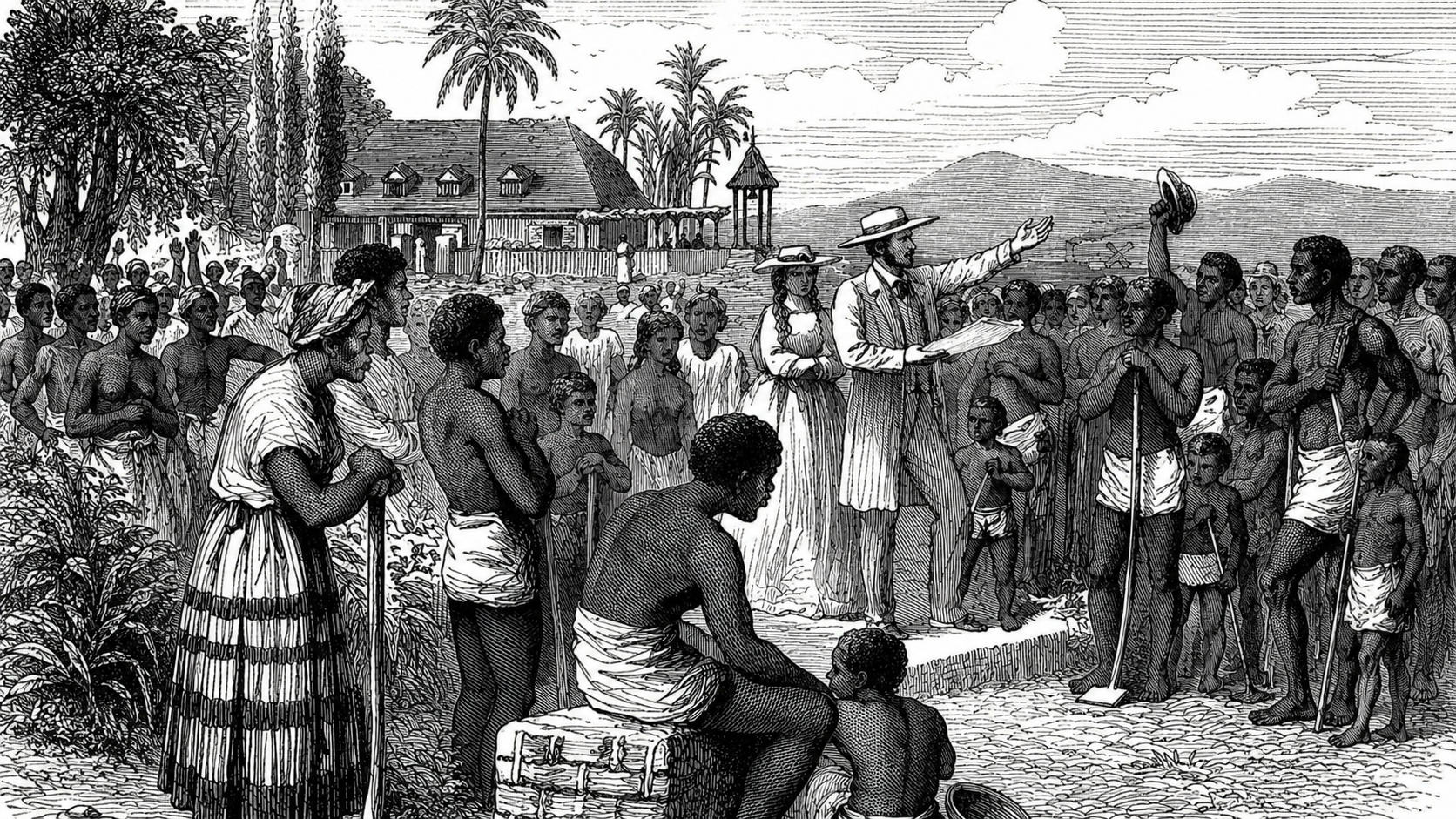
The Slavery Abolition Act came into force across most of the British Empire, legally freeing hundreds of thousands of enslaved people and reshaping the global fight for human rights.
The abolition of slavery across most of the British Empire on August 1, 1834, reshaped millions of lives and became one of the most influential legal milestones in the global struggle against slavery. Although it did not end human bondage worldwide, it accelerated abolition movements across continents and continues to influence discussions about human rights, historical justice, and equality today.
The change came when the Slavery Abolition Act of 1833 officially took effect on August 1, 1834. Passed by the British Parliament during the reign of King William IV, the law abolished slavery throughout most of the British Empire. It represented the culmination of decades of campaigning by abolitionists, religious leaders, formerly enslaved people, and political reformers who argued that slavery was incompatible with the principles of justice and human dignity.
The Act affected an estimated 800,000 enslaved people, the vast majority living on plantations in the Caribbean. It also applied across British territories in parts of Africa, South America, and Asia. Although Upper Canada had already limited the expansion of slavery through legislation passed in 1793, and slavery had become increasingly rare in British North America, the 1834 law eliminated the remaining legal framework for slavery throughout most of the Empire.
A Long Campaign for Change
The road to abolition stretched back decades. During the late eighteenth century, growing opposition to the transatlantic slave trade emerged in Britain. Activists such as William Wilberforce, Thomas Clarkson, Olaudah Equiano, Granville Sharp, and many others helped build one of history’s most influential human rights campaigns. Public meetings, petitions, published accounts from formerly enslaved people, and consumer boycotts of slave-produced sugar gradually shifted public opinion.
A major milestone came in 1807, when Britain prohibited the transatlantic slave trade. The Royal Navy subsequently established the West Africa Squadron to intercept slave ships, freeing thousands of captive Africans during patrols along the African coast.
Ending the slave trade, however, did not abolish slavery itself. Hundreds of thousands of people already enslaved throughout the Empire remained in bondage, and plantation economies continued to depend on forced labor. Calls for complete emancipation grew stronger throughout the following decades.
Freedom, With Significant Limits
Although August 1, 1834, legally ended slavery across most of the Empire, emancipation was not immediate or complete for everyone.
The Act introduced a controversial “apprenticeship” system, requiring many formerly enslaved people over the age of six to continue working for their former owners for several years. Supporters claimed the arrangement would ease the transition to a wage-based economy, but critics argued it simply prolonged forced labor under another name.
Public opposition, reports of continued abuses, and persistent activism eventually led Britain to abolish apprenticeship entirely in 1838, granting full legal freedom to most of those still subject to the system.
One of the Act’s most enduring controversies was its compensation policy. Parliament allocated £20 million, approximately 40 percent of Britain’s annual government budget at the time, to compensate slave owners for the loss of enslaved people who had been treated as property under the law. Those who had endured slavery, however, received no financial compensation.
The Impact on British North America
The anniversary also holds significance in Canada.
Slavery existed in parts of what is now Canada under both French and British colonial rule, although on a much smaller scale than in the Caribbean. In 1793, Lieutenant Governor John Graves Simcoe helped secure passage of the Act Against Slavery in Upper Canada, which prohibited the importation of additional enslaved people and established gradual emancipation for children born to enslaved mothers. Historians widely regard it as the first legislation within the British Empire to significantly restrict slavery.
Following abolition in 1834, British North America became an important destination for many people escaping slavery in the United States through the Underground Railroad. Communities established throughout present-day Ontario, Nova Scotia, and elsewhere became lasting parts of Canada’s social and cultural history.
A Lasting Global Legacy
The abolition of slavery throughout most of the British Empire influenced reform movements far beyond Britain’s borders. It demonstrated that sustained political activism, public advocacy, and legislative action could dismantle one of the world’s largest systems of legalized human bondage.
Other nations gradually followed, though at different times and under different circumstances. France permanently abolished slavery in 1848, the United States after the Civil War through the Thirteenth Amendment in 1865, Cuba in 1886, and Brazil in 1888.
Historians also emphasize that abolition did not eliminate discrimination, economic inequality, or racial injustice. Formerly enslaved communities frequently faced restricted economic opportunities, unequal political rights, and systemic discrimination that persisted for generations. Many of those issues continue to shape historical research and public discussion today.
Remembering August 1
August 1 is now widely observed as Emancipation Day in several countries, including Canada, where Parliament officially recognized the day in 2021. Ceremonies, educational events, museum exhibits, and community gatherings commemorate those who fought against slavery and honor the resilience of people who endured it.
The anniversary highlights that legal abolition represented an important beginning rather than the end of the struggle for equality and justice. The Slavery Abolition Act transformed the legal landscape of the British Empire, but its greatest legacy lies in demonstrating how determined citizens, courageous survivors, and sustained public advocacy can reshape history.
Nearly two centuries later, August 1 continues to stand as one of the defining milestones in the global movement for human rights. It serves as a reminder that while slavery persisted elsewhere for decades after 1834, the abolition of slavery across most of the British Empire became a catalyst for broader emancipation movements that helped reshape the modern world.
About the Author Brad Socha is the founder of The Universal Record, focused on sourced, factual global reporting. Coverage includes international news, geopolitics, technology, and major developments.