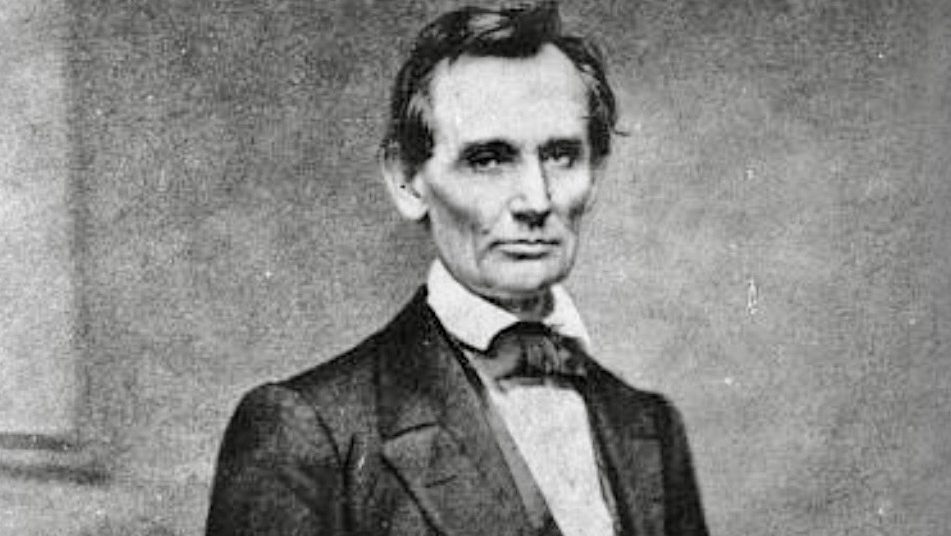
On February 12, 1809, Abraham Lincoln was born in a one-room log cabin near Hodgenville, Kentucky. He would go on to become the 16th President of the United States and one of the most influential political leaders in American history. Lincoln’s leadership during the American Civil War helped preserve the Union and permanently shaped the nation’s future.
Raised in a frontier farming family, Lincoln received limited formal education but developed a strong interest in reading and self-improvement. Before entering politics, he worked in a variety of occupations, including rail-splitter, store clerk, surveyor, and lawyer. His rise from modest beginnings became a defining part of his public image.
Lincoln was elected president in 1860 during a period of growing national division over slavery and states’ rights. Following his election, several southern states seceded from the Union, leading to the outbreak of the American Civil War in 1861. Throughout the conflict, Lincoln focused on preserving the United States while guiding the country through one of its most difficult periods.
In 1863, Lincoln issued the Emancipation Proclamation, which declared enslaved people in Confederate-controlled territories to be free. While the proclamation did not immediately end slavery, it transformed the war’s purpose and paved the way for the eventual adoption of the 13th Amendment, which abolished slavery throughout the United States.
Lincoln is also remembered for some of the most significant speeches in American history. His Gettysburg Address, delivered in November 1863, emphasized national unity, equality, and democratic government. The speech remains widely studied and quoted more than 160 years later.
The Civil War ended in April 1865 with Union victory. Just days later, Lincoln was assassinated while attending a play at Ford’s Theatre in Washington, D.C. His death shocked the nation during a critical period of reconstruction and recovery.
More than two centuries after his birth, Abraham Lincoln remains a prominent figure in American and world history. Historians continue to study his leadership, speeches, and decisions as examples of political leadership during times of national crisis. His legacy remains closely connected to the preservation of the United States, the expansion of civil rights, and the ongoing development of democratic institutions.
About the Author Brad Socha is the founder of The Universal Record, focused on sourced, factual global reporting. Coverage includes international news, geopolitics, technology, and major developments.