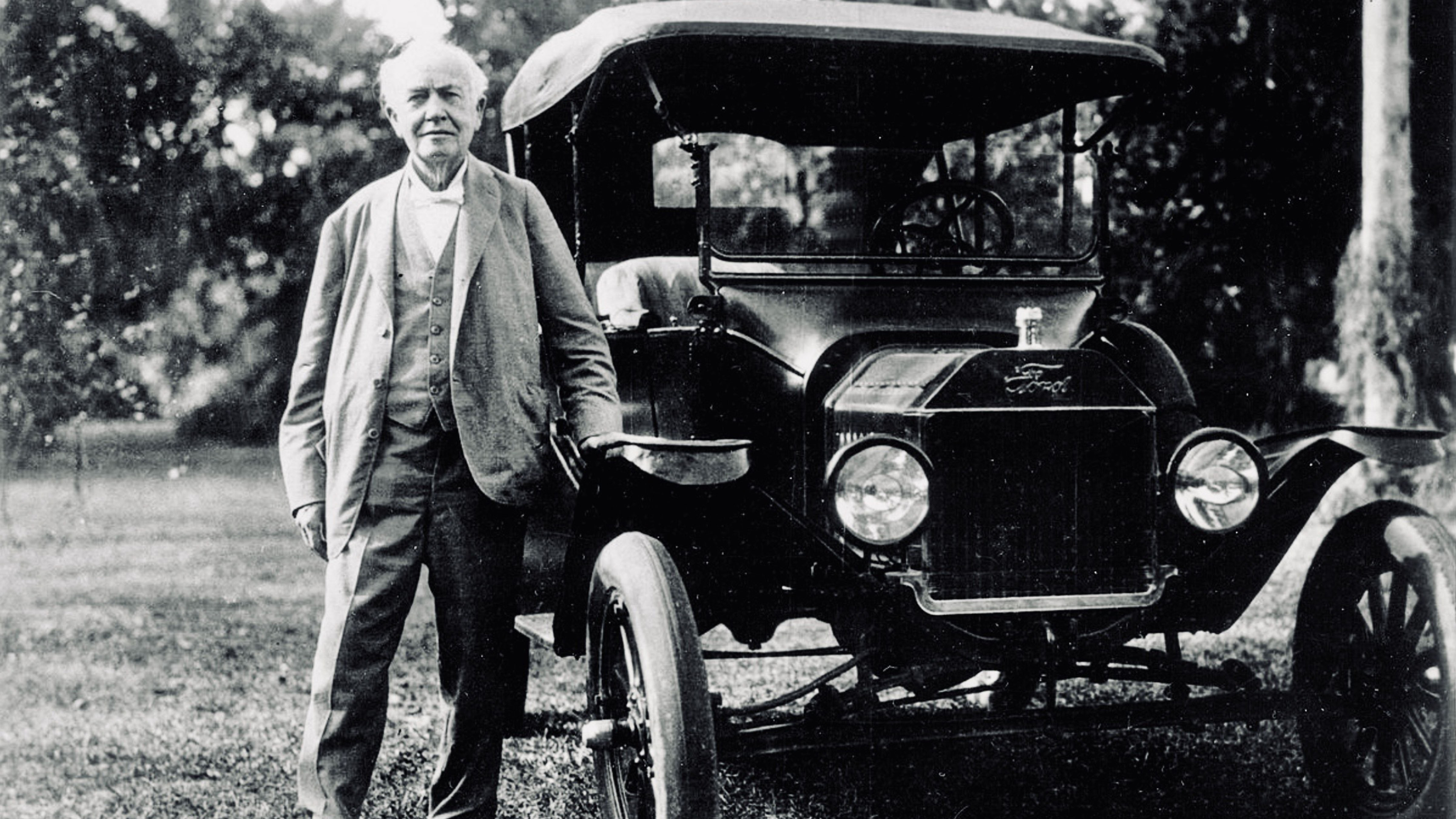
More than a century after its founding, Ford Motor Company remains one of the most influential businesses in history. Established on June 16, 1903, by Henry Ford and a group of investors in Detroit, Michigan, the company would help put automobiles within reach of ordinary families and fundamentally change how goods were manufactured around the world.
The impact of Ford extends far beyond automobiles. Techniques pioneered by the company influenced industries ranging from aviation and consumer electronics to food production and modern logistics. The principles introduced in Ford factories continue to shape global manufacturing today.
A New Company With a Bold Vision
Henry Ford had already experienced both success and failure before founding Ford Motor Company. Earlier ventures had struggled, and many investors remained skeptical about the future of automobiles. At the turn of the twentieth century, cars were expensive, unreliable, and largely considered luxury items.
Ford believed the automobile could become a practical tool for everyday people. On June 16, 1903, Ford Motor Company was incorporated with approximately $28,000 in capital from a group of twelve investors. The company established operations in Detroit, a city that would later become synonymous with the automotive industry.
The first Ford vehicle, the Model A, began production shortly after the company’s creation. Early sales provided the financial stability needed for expansion, allowing the young company to pursue larger ambitions.
The Model T Changes Everything
The event most closely associated with Ford’s rise came five years later with the introduction of the Model T in 1908.
Designed to be durable, affordable, and easy to repair, the vehicle appealed to farmers, workers, and families across the United States. Roads were often rough, fuel stations were rare, and mechanics could be difficult to find. The Model T was engineered to handle those challenges.
Demand grew rapidly. Millions of people who had never considered owning an automobile suddenly found the idea realistic.
By the early 1920s, the Model T dominated the American automobile market. More than 15 million units would eventually be sold, making it one of the most successful vehicles in history.
The automobile changed daily life in profound ways. People gained greater mobility, businesses expanded their reach, and communities became increasingly connected through improved transportation networks.
The Assembly Line Revolution
Ford’s greatest influence may have come not from the vehicles themselves but from the way they were built.
In 1913, the company introduced a moving assembly line that dramatically reduced production time. Tasks that once required many hours could now be completed in a fraction of the time.
The innovation increased efficiency, lowered manufacturing costs, and allowed Ford to reduce vehicle prices. As production expanded, automobiles became accessible to a much larger portion of society.
The company’s influence extended beyond factory floors. In 1914, Ford announced a wage of five dollars per day for many workers, an amount that attracted worldwide attention. The policy helped reduce employee turnover and contributed to broader discussions about wages, productivity, and industrial labour.
Manufacturers across multiple industries soon adopted similar production methods. The assembly line became one of the defining innovations of the Industrial Age.
A Legacy That Reaches Around the World
Ford Motor Company continued to expand throughout the twentieth century, becoming one of the world’s largest automakers. Its factories, supply chains, and manufacturing systems influenced economic development across North America, Europe, Asia, and beyond.
The company played significant roles during both World Wars, producing military equipment and supporting industrial mobilization efforts. In later decades, Ford became a major participant in global automotive competition and technological innovation.
Today, the automotive industry is undergoing another transformation as manufacturers invest heavily in electric vehicles, automation, artificial intelligence, and advanced manufacturing technologies. Yet many of the production principles used in modern factories can still be traced to innovations first developed by Ford more than a century ago.
The company’s founding on June 16, 1903, marked the beginning of a business that helped shape modern transportation and industrial production. What started as a small Detroit enterprise evolved into one of the most influential companies in economic history.
About the Author Brad Socha is the founder of The Universal Record, focused on sourced, factual global reporting. Coverage includes international news, geopolitics, technology, and major developments.