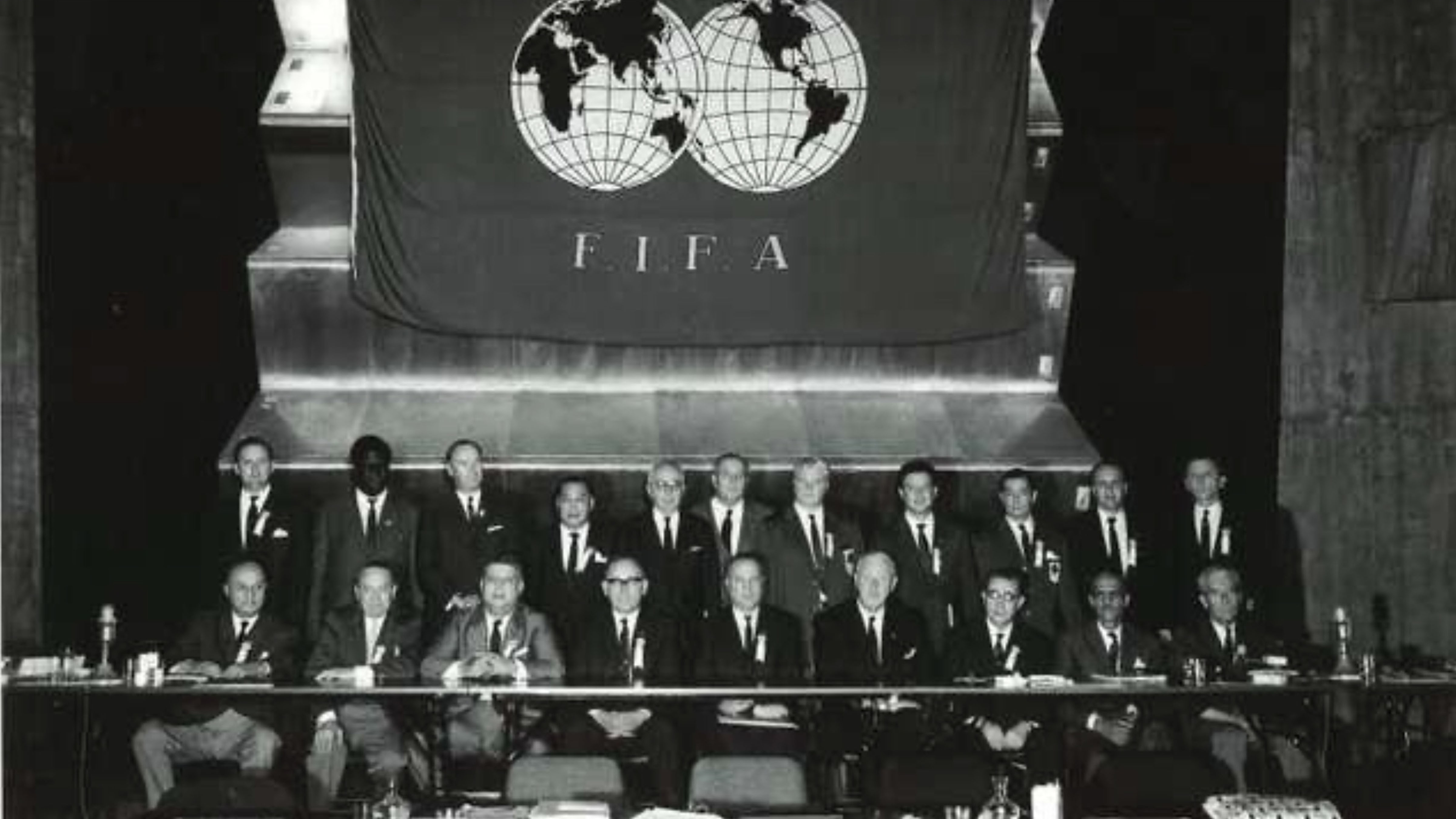
On May 21, 1904, representatives from several European football associations gathered in Paris to establish what would become one of the most influential organizations in sports history: FIFA. More than a century later, the Fédération Internationale de Football Association oversees the world’s most watched sporting events, governs international football competition across every continent, and plays a major role in the global business, politics, and culture of sport.
The anniversary matters today because FIFA remains central to some of the largest sporting developments on Earth. Preparations continue for the expanded 2026 FIFA World Cup across Canada, the United States, and Mexico, while debates surrounding governance, player welfare, tournament expansion, and financial influence continue shaping the organization’s future. From broadcasting rights and sponsorships to international diplomacy and national identity, FIFA’s reach now extends far beyond football itself.
The organization was officially founded in Paris by representatives from France, Belgium, Denmark, the Netherlands, Spain, Sweden, and Switzerland. At the time, international football was growing rapidly across Europe, but there was no unified global body capable of standardizing rules or organizing official international competition.
French sports administrator Robert Guérin became FIFA’s first president. Early organizers sought to create a structure that would allow national associations to cooperate while promoting international matches under a shared framework. England’s Football Association, which had helped codify many of the sport’s rules during the 19th century, initially remained outside the organization before later joining.
In its earliest years, FIFA operated on a relatively small scale. International travel remained difficult, communication between federations was slow, and football itself had not yet evolved into the massive commercial enterprise seen today. Even so, the foundation established in 1904 created the framework for what would eventually become a truly global sporting network.
The organization’s influence expanded significantly after World War I and World War II as football popularity surged worldwide. FIFA increasingly became responsible for coordinating international competition, eligibility rules, referee standards, and tournament administration across multiple continents.
A major turning point came with the launch of the FIFA World Cup in 1930. Hosted in Uruguay, the inaugural tournament transformed international football into a global spectacle. Over the decades that followed, the World Cup evolved into one of the largest recurring events in human society, attracting billions of viewers and generating enormous economic activity through sponsorships, tourism, broadcasting, and merchandising.
Modern FIFA now includes more national associations than the United Nations has member states. Countries from every inhabited continent participate in FIFA competitions, ranging from youth tournaments and women’s football to futsal and club championships.
The organization’s financial scale has also grown dramatically. Broadcasting agreements for recent World Cups have generated billions of dollars in revenue, while global sponsors view FIFA events as some of the most valuable advertising platforms in sports. Major infrastructure projects tied to FIFA tournaments have reshaped cities, airports, transit systems, and stadium construction around the world.
At the same time, FIFA’s history has not been without controversy. The organization has faced repeated scrutiny over governance practices, corruption investigations, voting procedures, and the awarding of tournament hosting rights. In 2015, U.S. and Swiss authorities launched major investigations into corruption allegations involving several FIFA officials, leading to arrests, suspensions, and leadership changes that affected the organization’s reputation worldwide.
Critics have also questioned the growing expansion of international tournaments, concerns surrounding player workload, labour practices connected to stadium construction, and the broader commercialization of football. Supporters, however, argue that FIFA has helped globalize the sport, increase investment in developing nations, expand women’s football, and create a common international structure that connects millions of athletes and fans.
Women’s football has become one of FIFA’s fastest-growing areas in recent decades. The FIFA Women’s World Cup now attracts global audiences and commercial partnerships at levels that were once unimaginable. Investment in youth academies, coaching development, and emerging football nations has also expanded under FIFA’s global development programs.
Technology has further transformed the organization’s operations. Modern FIFA competitions now incorporate advanced video review systems, goal-line technology, digital analytics, and global streaming infrastructure. Social media and online broadcasting have also changed how international football reaches audiences, turning major tournaments into worldwide cultural events that dominate digital conversation across continents.
Despite ongoing debates about governance and commercialization, FIFA’s creation in Paris in 1904 remains one of the defining moments in sports administration history. Few organizations founded in the early 20th century have gone on to shape global entertainment, economics, politics, and culture on such a massive scale.
More than 120 years after its founding, FIFA continues to influence how international sport is organized and consumed worldwide. The small meeting in Paris that brought together a handful of European football officials ultimately helped build the modern structure of global football itself.
About the Author Brad Socha is the founder of The Universal Record, focused on sourced, factual global reporting. Coverage includes international news, geopolitics, technology, and major developments.