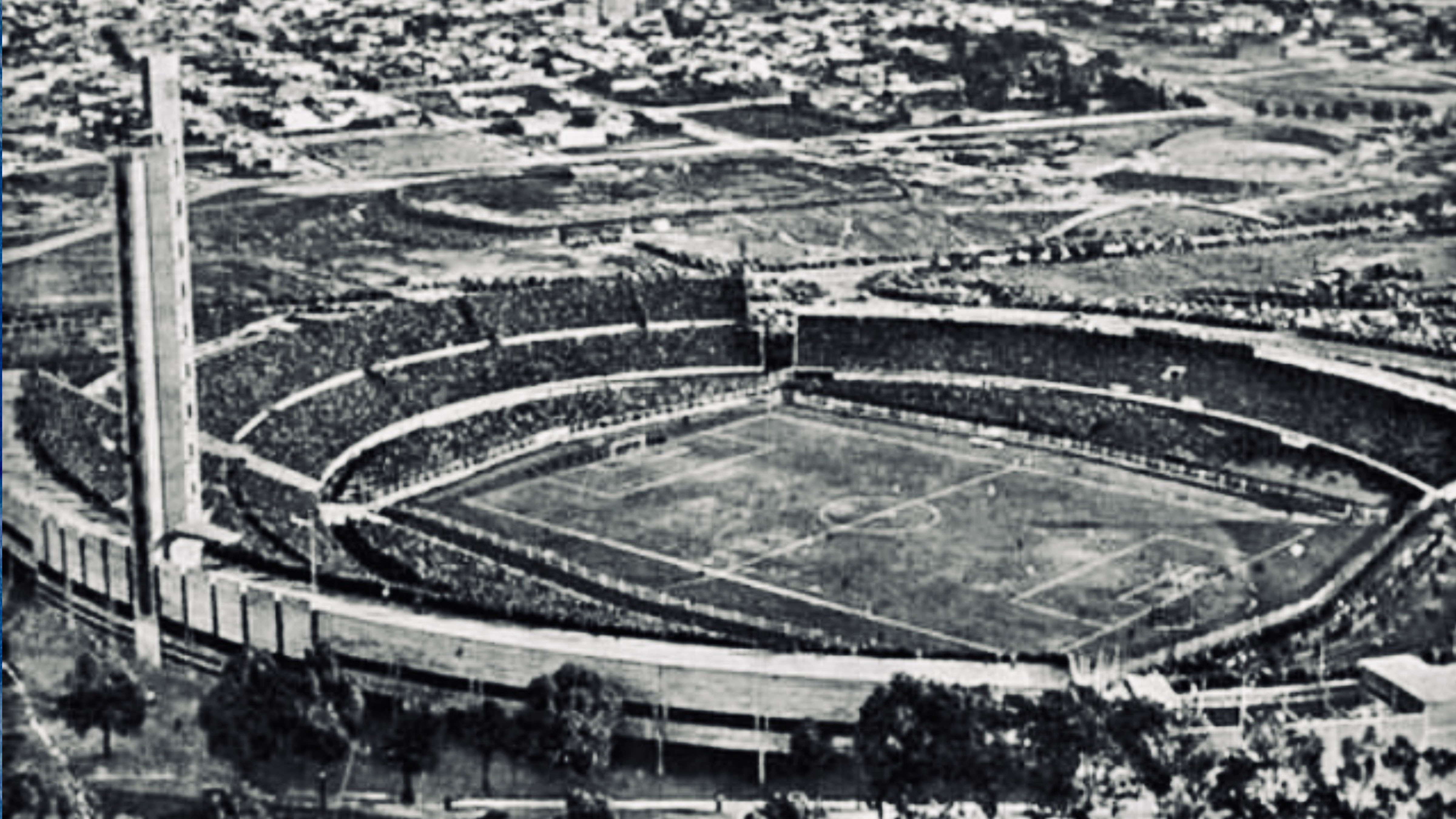
The inaugural tournament in Uruguay launched a global sporting tradition that would grow into the world’s most watched and celebrated football competition.
Nearly a century after the first match kicked off in Montevideo, the FIFA World Cup remains one of the most recognizable sporting events on Earth. Every four years, billions of people follow the tournament as nations compete for football’s highest honor. That global tradition began on July 13, 1930, when the inaugural FIFA World Cup opened in Uruguay, marking a historic turning point for international sport and creating a competition that continues to unite cultures across continents.
The idea of a standalone world championship emerged during the 1920s as football rapidly expanded beyond Europe. Although Olympic football tournaments had attracted international attention, FIFA sought an independent competition under its own authority. In 1928, delegates voted to establish a world championship, and Uruguay was selected as the first host nation.
Uruguay was a logical choice for several reasons. The country had won Olympic football gold medals in 1924 and 1928, making it one of the strongest teams in the world. It was also celebrating the centenary of its first constitution in 1930 and committed significant funding to host the event. The government financed construction of the massive Estadio Centenario in Montevideo, a stadium that quickly became one of football’s great landmarks.
Travel to South America in 1930 was neither fast nor inexpensive. Most European teams had to cross the Atlantic by ship, a journey that took more than two weeks. The expense and time commitment discouraged many national associations from participating. As a result, only 13 teams entered the tournament.
The competing nations included Uruguay, Argentina, Brazil, Chile, Bolivia, Paraguay, Peru, Mexico, the United States, Belgium, France, Romania, and Yugoslavia. Despite the relatively small field, the tournament represented four continents and introduced an international format that would evolve dramatically over the following decades.
The opening day featured two matches played simultaneously on July 13, 1930. France defeated Mexico 4–1, while the United States earned a 3–0 victory over Belgium. French forward Lucien Laurent scored the first goal in FIFA World Cup history, a milestone that remains part of football’s enduring legacy.
Construction delays meant the Estadio Centenario was not completed in time for the opening fixtures. Several early matches were instead held at smaller venues in Montevideo until the new stadium officially opened a few days later. Once completed, the Centenario became the centerpiece of the competition and symbolized Uruguay’s commitment to hosting the world’s first football championship.
As the tournament progressed, Uruguay demonstrated why it had entered as one of the favorites. The host nation advanced through the competition alongside neighboring Argentina, setting up an all-South American final on July 30, 1930.
More than 68,000 spectators packed the Estadio Centenario for the championship match, although some estimates place the attendance even higher. Argentina led 2–1 at halftime before Uruguay mounted an impressive comeback, scoring twice in the second half to secure a 4–2 victory and become the first FIFA World Cup champion.
The victory sparked nationwide celebrations across Uruguay and cemented football’s place as a defining element of the country’s national identity. July 30 was declared a national holiday, reflecting the significance of the achievement for a nation of fewer than two million people.
Although modest by modern standards, the inaugural tournament laid the foundation for what would become the world’s largest sporting competition. The first World Cup established many of the traditions that continue today, including national qualification, international group competition, knockout rounds, and a championship final watched around the globe.
The tournament also demonstrated football’s remarkable ability to transcend language, politics, and geography. Even during an era marked by economic hardship following the onset of the Great Depression, teams and supporters traveled great distances to participate in an event built around international competition rather than conflict.
Over the decades, the FIFA World Cup expanded dramatically. What began with 13 teams has grown into a tournament featuring 48 nations beginning in 2026, reflecting the global growth of the sport. Television transformed the competition during the second half of the twentieth century, while digital streaming and social media have further expanded its worldwide reach.
Today, the FIFA World Cup attracts audiences measured in billions. According to FIFA, the 2022 FIFA World Cup in Qatar generated a cumulative global audience exceeding five billion viewers, making it one of the most watched sporting events in history.
The competition has also become a showcase for some of football’s greatest players, including Pelé, Diego Maradona, Zinedine Zidane, Marta, Lionel Messi, and many others whose performances have inspired generations of athletes around the world.
The tournament’s influence extends well beyond the pitch. Host nations invest billions in transportation, stadiums, tourism, and infrastructure. Advances in broadcasting technology, sports science, officiating, including Video Assistant Referee (VAR), and global media coverage have all shaped the modern World Cup experience.
Looking back nearly a century later, the first FIFA World Cup appears remarkably ambitious. Organizers could not have known that the small tournament held in Montevideo would evolve into one of humanity’s most widely shared cultural events.
Every World Cup traces its origins to those opening matches on July 13, 1930. What began as an experiment in international football became a celebration of competition, national pride, and global connection that continues to captivate audiences across every continent.
About the Author Brad Socha is the founder of The Universal Record, focused on sourced, factual global reporting. Coverage includes international news, geopolitics, technology, and major developments.