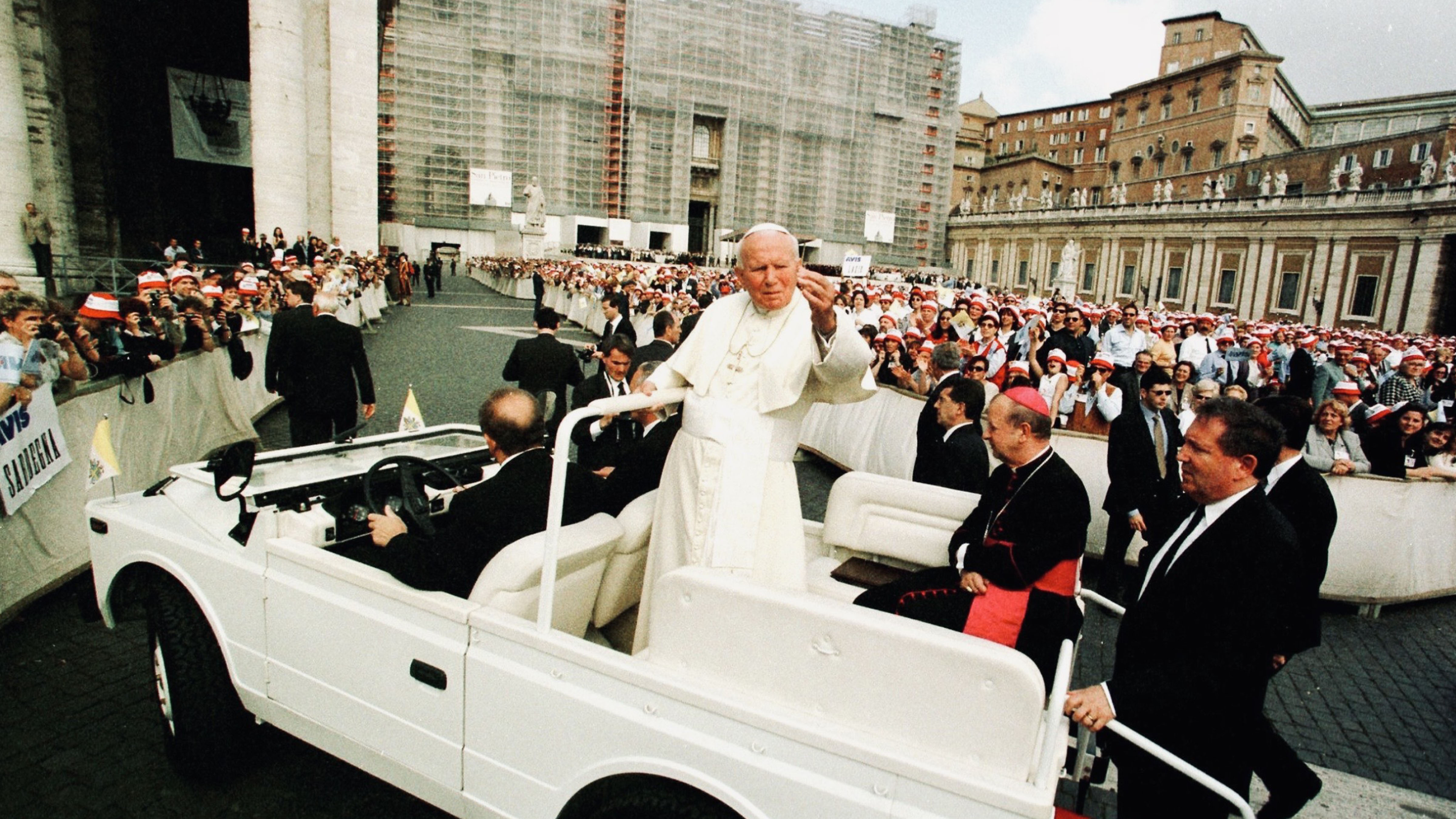
On May 13, 1981, millions around the world watched in shock as Pope John Paul II was shot and critically wounded in St. Peter’s Square in Vatican City during a public appearance attended by thousands of pilgrims. The assassination attempt immediately became one of the defining moments in modern religious and political history, triggering global concern, emergency security responses, and decades of investigation surrounding the motive behind the attack.
More than four decades later, the event remains historically significant because of its global religious impact, Cold War-era political implications, and the remarkable survival and recovery of one of the most influential figures of the 20th century.
The attack occurred during the pope’s weekly general audience in St. Peter’s Square. As Pope John Paul II greeted crowds from an open vehicle, gunman Mehmet Ali Ağca fired multiple shots into the crowd, striking the pope in the abdomen, hand, and arm. Chaos quickly spread across the square as security personnel and bystanders reacted to the shooting.
The pontiff was rushed to Rome’s Gemelli Hospital, where he underwent emergency surgery lasting several hours. Doctors later stated that the pope had narrowly survived after suffering severe internal injuries and significant blood loss.
The assassination attempt stunned not only Catholics, but governments and world leaders globally. Pope John Paul II had become one of the most recognizable and politically influential religious leaders in the world during a period of heightened Cold War tensions between the Soviet Union and Western nations.
Born Karol Józef Wojtyła in Poland, Pope John Paul II became the first non-Italian pope in more than 450 years when elected in 1978. His papacy rapidly gained international attention due to his outspoken defense of human rights, religious freedom, and opposition to authoritarian communist governments in Eastern Europe.
Historians widely regard his influence in Poland as an important factor in the rise of the Solidarity movement, which challenged communist rule and eventually contributed to major political changes across Eastern Europe.
Because of this political backdrop, speculation immediately emerged over whether the assassination attempt may have involved broader geopolitical motivations beyond the gunman himself.
Mehmet Ali Ağca, a Turkish national linked to extremist groups, was arrested at the scene shortly after the shooting. Over the years, multiple investigations explored possible international connections, including allegations involving Bulgarian intelligence services and Soviet-linked interests during the Cold War era. However, many aspects surrounding the attack remain debated decades later, and no definitive international conspiracy has ever been universally proven.
The event also transformed Vatican security permanently. Prior to the shooting, popes frequently appeared publicly with relatively limited visible protection compared to modern standards. After the attack, security around the pope increased dramatically, including expanded intelligence coordination, tighter crowd controls, armoured transportation, and enhanced screening measures during public appearances.
One of the most widely remembered aspects of the story came after the pope’s recovery. In 1983, Pope John Paul II visited Ağca in prison and publicly forgave him during a private meeting that became one of the most symbolic acts of forgiveness in modern religious history.
Images of the pope speaking directly with his attacker inside the prison cell circulated globally and reinforced his message surrounding reconciliation, compassion, and forgiveness even after surviving an assassination attempt.
The date of the shooting also held personal spiritual meaning for the pope. The attack occurred on May 13, the anniversary of the first reported apparition of Our Lady of Fatima in Portugal in 1917. Pope John Paul II later stated he believed divine intervention helped save his life during the assassination attempt.
One of the bullets removed after the shooting was eventually placed in the crown of the statue of Our Lady of Fatima at the Sanctuary of Fátima in Portugal, further connecting the event to Catholic religious symbolism.
The assassination attempt remains one of the most significant moments in Vatican history because it combined religion, geopolitics, terrorism, and Cold War tensions into a single dramatic event witnessed by the entire world.
Pope John Paul II would continue leading the Catholic Church for nearly 24 more years after surviving the attack, becoming one of the longest-serving popes in modern history. During that time, he traveled extensively, met with world leaders, and remained one of the most influential religious voices on the global stage.
Today, historians continue studying the assassination attempt not only for its religious significance, but also for its broader political implications during one of the most tense periods of the 20th century.
The events of May 13, 1981 remain a reminder of how a single moment in St. Peter’s Square reverberated across governments, religions, intelligence agencies, and millions of people worldwide.
About the Author Brad Socha is the founder of The Universal Record, focused on sourced, factual global reporting. Coverage includes international news, geopolitics, technology, and major developments.