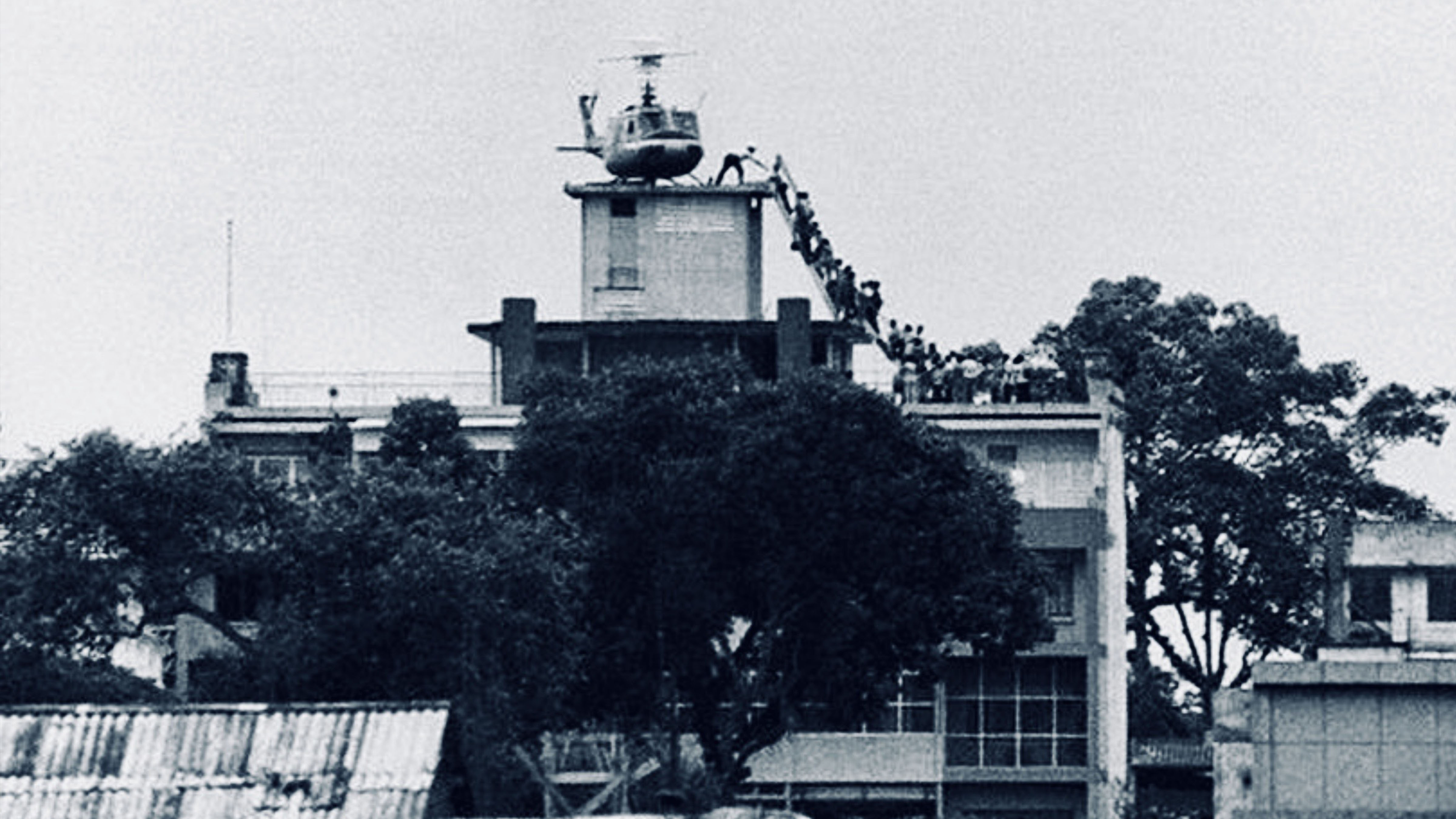
The Fall of Saigon on April 30, 1975, marked the end of the Vietnam War and the collapse of the South Vietnamese government, bringing one of the most consequential conflicts of the 20th century to a dramatic close. North Vietnamese forces entered the capital city of Saigon, leading to the reunification of Vietnam under communist control and reshaping global geopolitics during the Cold War era.
In the final days leading up to the fall, North Vietnamese troops advanced rapidly toward Saigon, overwhelming South Vietnamese defenses. The United States, which had been deeply involved in the conflict for over a decade, initiated a large-scale evacuation effort known as Operation Frequent Wind. Helicopters transported thousands of American personnel and South Vietnamese civilians from the U.S. Embassy and other key locations as the city came under imminent threat.
Images of helicopters lifting evacuees from rooftops became some of the most recognizable symbols of the war’s end. The evacuation highlighted the urgency and chaos of the moment, as thousands sought to escape advancing forces. Many South Vietnamese citizens who had supported the U.S. or worked with its military feared reprisals under the incoming regime.
As North Vietnamese tanks entered Saigon, they moved toward the Presidential Palace, where the South Vietnamese government formally surrendered. The city was soon renamed Ho Chi Minh City, reflecting the leadership of the North Vietnamese revolutionary movement and the country’s transition to a unified socialist state.
The Vietnam War had spanned nearly two decades and resulted in significant loss of life, with millions of Vietnamese civilians and soldiers killed, along with more than 58,000 American service members. The conflict also had lasting economic, political, and social impacts across Southeast Asia and within the United States, where public opinion had increasingly turned against the war in its later years.
Globally, the Fall of Saigon represented a major shift in Cold War dynamics. It underscored the limits of U.S. military intervention and influenced foreign policy decisions in the decades that followed. The event also reinforced the spread of communist influence in Southeast Asia during that period, contributing to broader geopolitical tensions between the United States and the Soviet Union.
In the years following the war, Vietnam faced the challenges of rebuilding a unified nation while dealing with economic hardship and international isolation. Over time, the country gradually reintegrated into the global economy, eventually normalizing relations with the United States in 1995. Today, Vietnam plays an increasingly significant role in global trade and regional diplomacy.
The legacy of the Fall of Saigon continues to shape historical understanding of the Vietnam War and serves as a powerful reminder of the complexities of international conflict, political ideology, and the human cost of war. The event remains one of the most studied and remembered moments of the Cold War era.
About the Author Brad Socha is the founder of The Universal Record, focused on sourced, factual global reporting. Coverage includes international news, geopolitics, technology, and major developments.