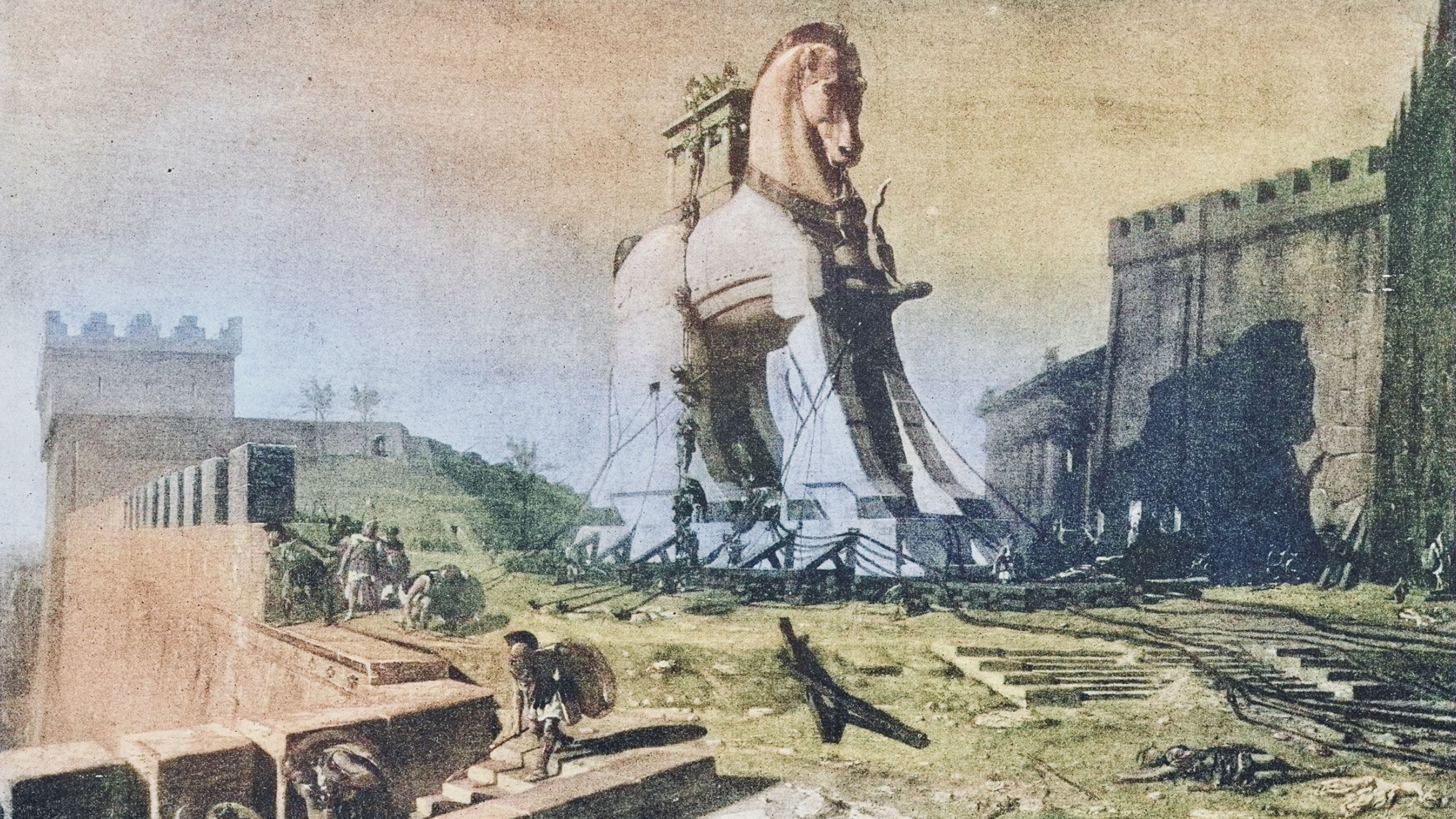
The traditional date of the Fall of Troy is widely recognized as April 24, 1184 BC, marking the legendary end of the Trojan War, a story that has shaped literature, history, and cultural identity for centuries. While the exact historical accuracy of this date remains debated, the fall of the ancient city of Troy continues to hold a powerful place in both mythological tradition and archaeological study.
The Trojan War itself is best known through epic Greek works such as Homer’s Iliad and Odyssey, which describe a prolonged conflict between the city of Troy and Greek forces. According to these accounts, the war was sparked by the abduction of Helen of Sparta, leading to a decade-long siege that ultimately ended with the destruction of Troy.
Although these stories are rooted in mythology, many historians and archaeologists believe they may reflect real events or conflicts that occurred during the Late Bronze Age. The traditional date of 1184 BC was calculated by ancient Greek scholars, including Eratosthenes, who attempted to align mythological events with historical timelines.
The Fall of Troy in Myth and Tradition
The most famous account of the Fall of Troy centres on the story of the Trojan Horse. According to legend, Greek forces constructed a large wooden horse and left it outside the city as a deceptive offering. Believing it to be a symbol of surrender, the Trojans brought the structure inside their walls. Hidden within were Greek soldiers who later emerged, opened the city gates, and allowed their forces to invade, leading to Troy’s destruction.
While there is no direct archaeological evidence confirming the Trojan Horse event, the story has become one of the most enduring symbols of strategic deception in history. It continues to influence modern language, culture, and military theory.
Archaeological Evidence and Historical Debate
The ancient city believed to be Troy is located in modern-day Turkey, at a site known as Hisarlik. Excavations beginning in the 19th century uncovered multiple layers of settlements, indicating that the location was inhabited and destroyed several times over thousands of years.
One particular layer, often referred to as Troy VIIa, shows signs of destruction by fire and conflict around the approximate time traditionally associated with the Trojan War. This has led some researchers to suggest that the mythological account may be based on a real historical event, though definitive proof remains elusive.
Historians continue to debate the extent to which the Fall of Troy reflects actual events versus literary creation. While Homer’s works were composed centuries after the supposed conflict, they may preserve elements of earlier oral traditions passed down through generations.
Cultural and Literary Impact
The Fall of Troy has had a lasting influence far beyond ancient Greece. It has inspired countless works of literature, theatre, and art throughout history. Roman poet Virgil expanded the story in the Aeneid, linking the aftermath of Troy’s destruction to the founding myths of Rome.
The narrative has also become a foundational story in Western education, representing themes of heroism, betrayal, fate, and the consequences of war. Characters such as Achilles, Hector, and Odysseus remain central figures in classical storytelling and continue to appear in modern adaptations.
The phrase “Trojan Horse” has entered common usage as a metaphor for hidden threats, particularly in fields such as cybersecurity and military strategy, demonstrating the enduring relevance of the story.
Legacy of the Fall of Troy
Today, the Fall of Troy is understood as a blend of myth and possible history, reflecting the complexities of interpreting ancient events. While the traditional date of April 24, 1184 BC cannot be confirmed with certainty, it continues to serve as a symbolic reference point for one of the most influential stories ever told.
Ongoing archaeological research at Hisarlik and advancements in historical analysis continue to provide new insights into the ancient world, keeping the story of Troy relevant in modern scholarship. Whether viewed as legend or history, the Fall of Troy remains a defining narrative that bridges the gap between mythology and the early foundations of recorded history.
About the Author Brad Socha is the founder of The Universal Record, focused on sourced, factual global reporting. Coverage includes international news, geopolitics, technology, and major developments.