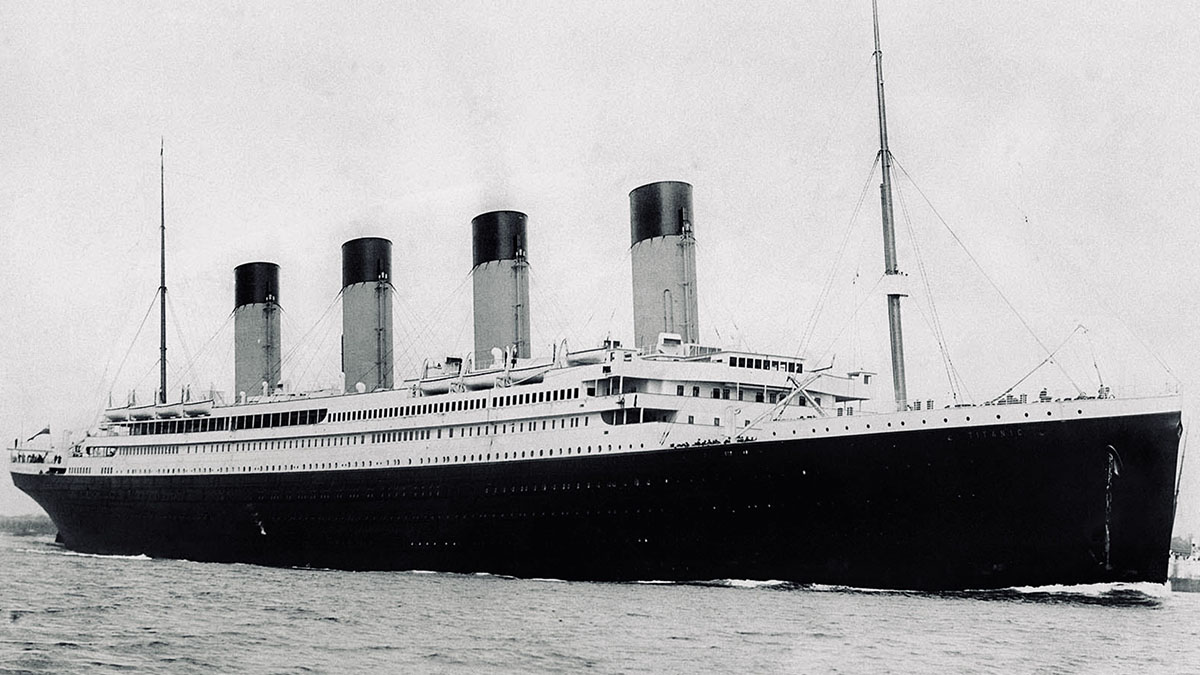
On April 14, 1912, the British passenger liner RMS Titanic struck an iceberg in the North Atlantic Ocean during its maiden voyage from Southampton to New York City, setting in motion one of the most tragic and widely remembered disasters in maritime history.
The collision occurred late in the evening, just before midnight, approximately 400 nautical miles south of Newfoundland. The iceberg punctured the ship’s hull, causing water to flood multiple compartments. Although the Titanic had been designed with advanced safety features for its time, including watertight compartments, the damage proved too extensive to contain.
Over the next several hours, the ship began to sink, ultimately breaking apart and disappearing beneath the surface in the early hours of April 15, 1912. More than 1,500 passengers and crew lost their lives, while approximately 700 survived, many rescued by the nearby ship RMS Carpathia.
The disaster exposed critical shortcomings in maritime safety practices, including an insufficient number of lifeboats, limited emergency preparedness, and gaps in communication protocols. In the aftermath, international maritime regulations were significantly strengthened, leading to the establishment of improved safety standards and the creation of the International Ice Patrol to monitor iceberg dangers in the North Atlantic.
The sinking of the Titanic quickly became a global story, symbolizing both the technological ambition of the early 20th century and the vulnerabilities that remained despite modern engineering advancements. The event has since been the subject of extensive historical study, cultural works, and continued public interest.
More than a century later, the Titanic disaster remains one of the most well-known tragedies in modern history, remembered for its human impact and its lasting influence on maritime safety worldwide.
About the Author Brad Socha is the founder of The Universal Record, focused on sourced, factual global reporting. Coverage includes international news, geopolitics, technology, and major developments.