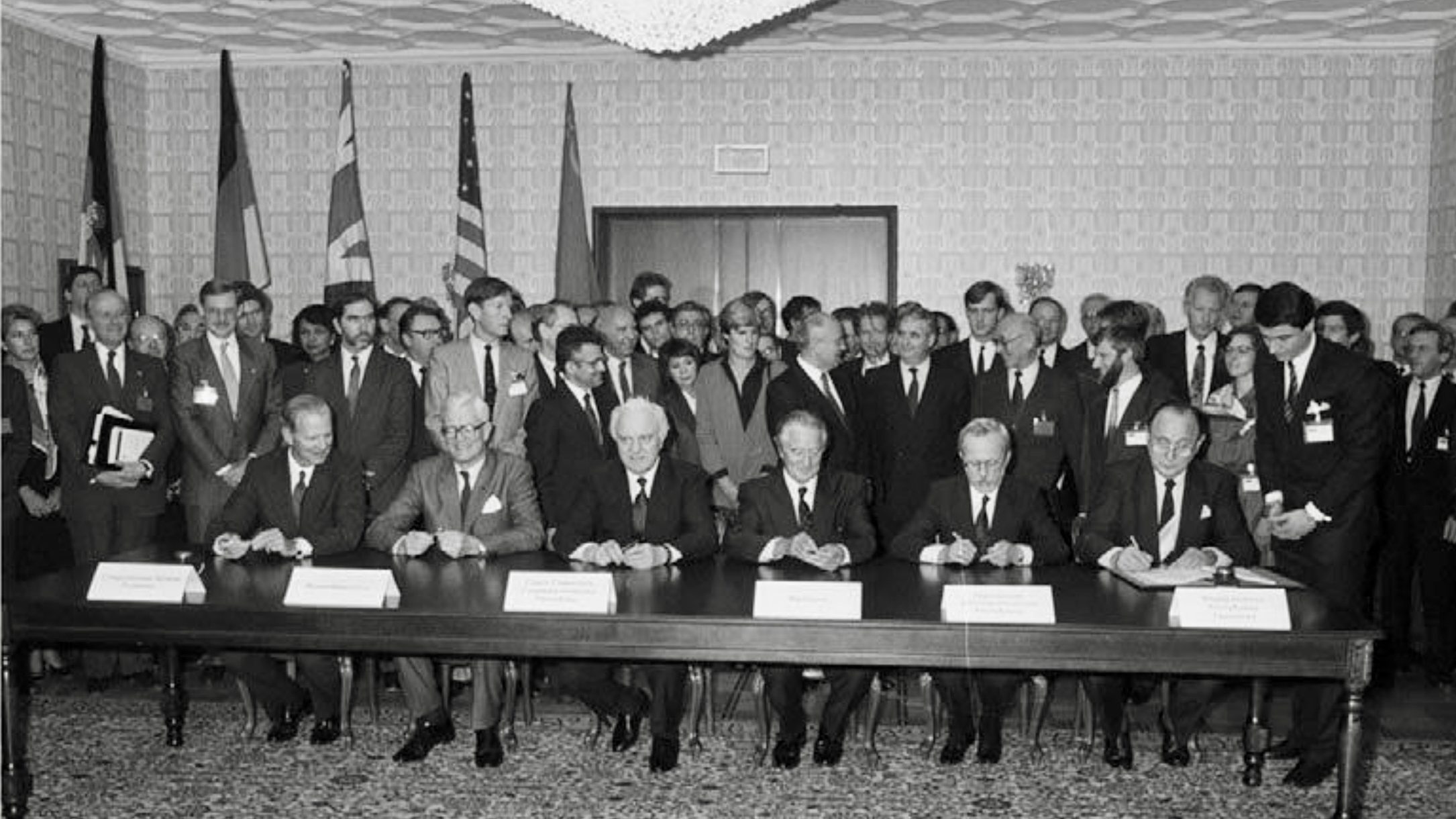
The Warsaw Pact was officially dissolved on March 31, 1991, marking a major turning point in global geopolitics and bringing an end to one of the Cold War’s most significant military alliances.
Formed in 1955, the Warsaw Pact was a collective defence agreement between the Soviet Union and seven Eastern European nations, including Poland, East Germany, Czechoslovakia, Hungary, Romania, Bulgaria, and Albania. The alliance was created in response to the formation of NATO and served as the Eastern Bloc’s primary military structure during decades of Cold War tensions.
By the late 1980s, political and economic changes across Eastern Europe began to weaken the alliance. Democratic movements, reforms within the Soviet Union, and the fall of communist governments reduced the need for a unified military bloc. The collapse of the Berlin Wall in 1989 further accelerated the shift in regional dynamics.
In early 1991, member states formally agreed to disband the alliance, ending decades of coordinated military strategy under Soviet leadership. The dissolution marked a significant reduction in East–West military confrontation and signalled the closing phase of the Cold War.
The end of the Warsaw Pact contributed to a major restructuring of European security. Many former member states later moved toward integration with Western institutions, including NATO and the European Union, reshaping the continent’s political and military landscape.
The legacy of the Warsaw Pact remains relevant in modern geopolitics, particularly in discussions surrounding NATO expansion and ongoing tensions between Russia and Western nations.
About the Author Brad Socha is the founder of The Universal Record, focused on sourced, factual global reporting. Coverage includes international news, geopolitics, technology, and major developments.