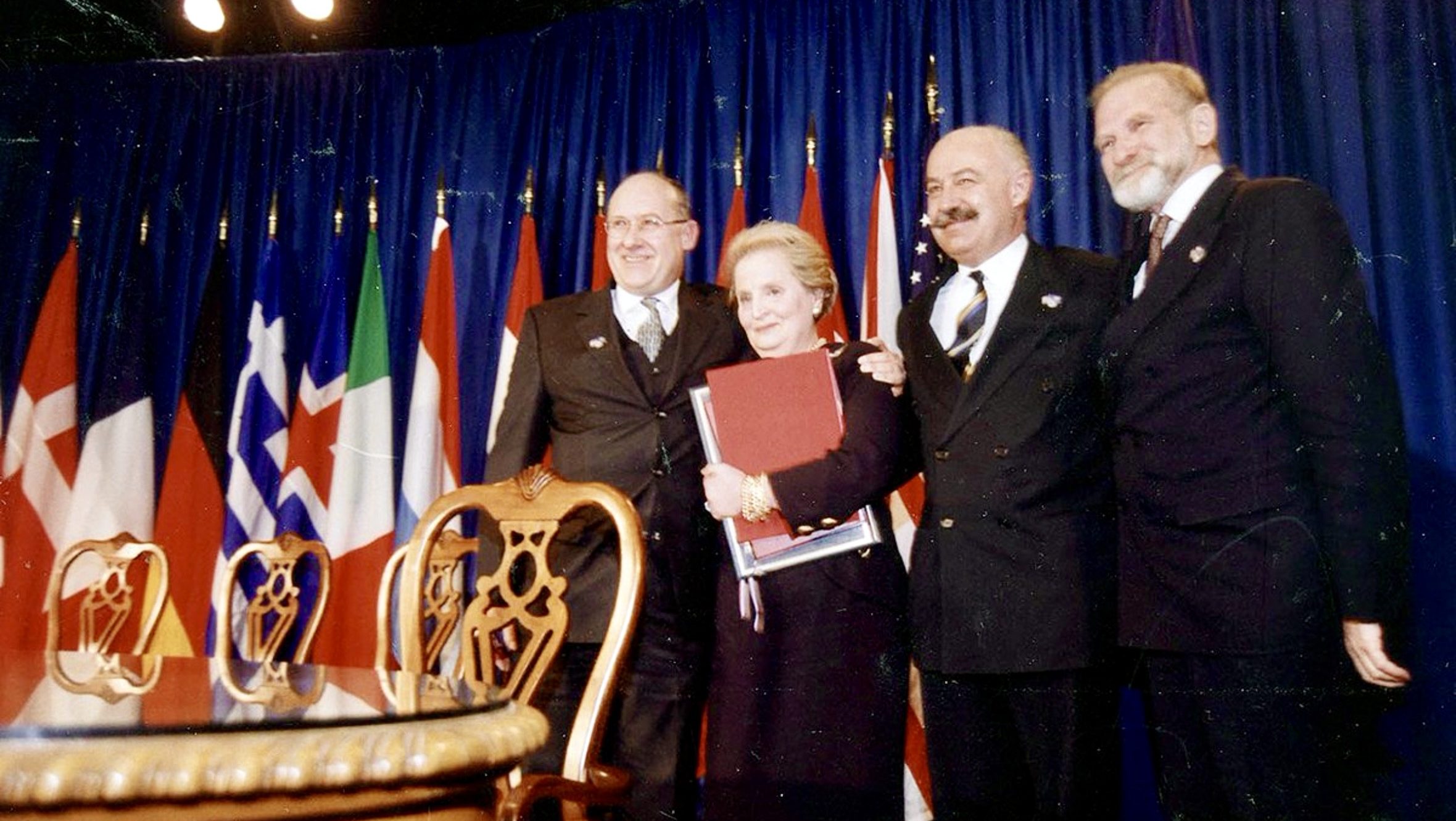
On March 12, 1999, the country of Poland officially became a member of the North Atlantic Treaty Organization (NATO). Poland joined the alliance alongside the Czech Republic and Hungary in the first expansion of NATO after the end of the Cold War.
The accession marked a significant geopolitical milestone in Europe, symbolizing the integration of former Eastern Bloc nations into Western security institutions following the collapse of the Soviet sphere of influence.
End of the Cold War Order
During the Cold War, Poland had been part of the Soviet-aligned Warsaw Pact. The alliance served as the Eastern counterpart to NATO from 1955 until its dissolution in 1991.
After the collapse of the Soviet Union and the fall of communist governments across Eastern Europe, many countries in the region began pursuing closer ties with Western institutions, including NATO and the European Union.
Poland’s membership in NATO represented a major shift in the country’s security orientation.
The Accession Process
The formal accession ceremony took place in Independence, Missouri, where the instruments of accession were deposited in accordance with NATO’s founding treaty.
The expansion followed several years of negotiations and preparation under NATO’s Partnership for Peace program, which had been created to build cooperation between NATO and former Soviet-aligned states.
By joining the alliance, Poland became covered by NATO’s collective defense principle under Article 5, which states that an attack against one member is considered an attack against all members.
Strategic Significance
Poland’s membership strengthened NATO’s presence in Central Europe and contributed to the alliance’s broader strategy of stabilizing the region following decades of Cold War division.
The expansion also reflected a wider transformation of European security architecture during the 1990s, as former communist states increasingly integrated into Western political, economic, and military institutions.
NATO has continued to expand since 1999, eventually including additional Eastern European and Baltic nations.
Historical Significance
Poland’s accession to NATO symbolized the end of Europe’s Cold War divisions and the beginning of a new security framework for Central and Eastern Europe.
The event remains a defining moment in post–Cold War geopolitics and continues to influence discussions about NATO expansion, European security, and relations between Western nations and Russia.
About the Author Brad Socha is the founder of The Universal Record, focused on sourced, factual global reporting. Coverage includes international news, geopolitics, technology, and major developments.