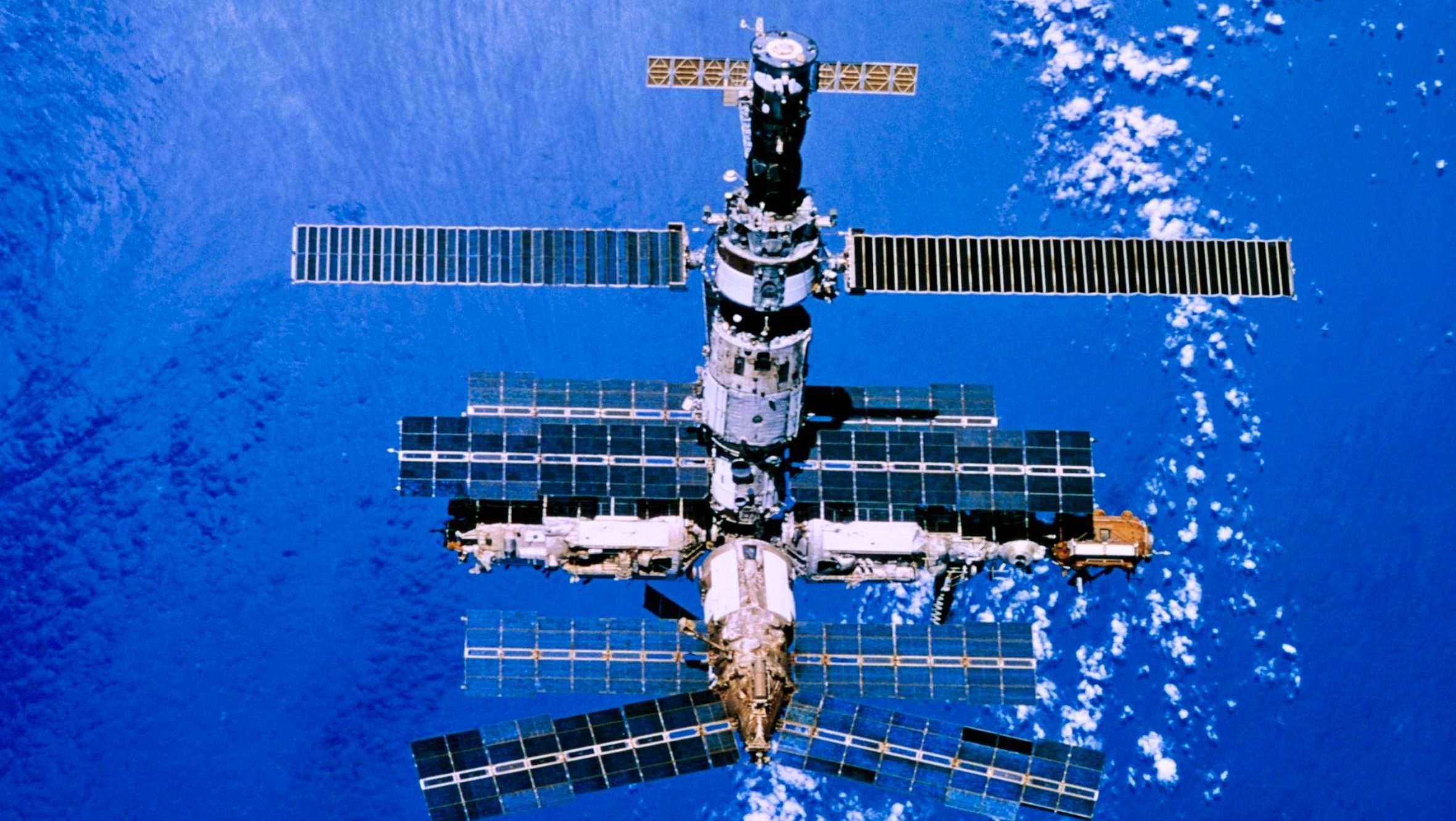
On March 23, 2001, Mir, the world’s first long-term modular space station, was deliberately deorbited after 15 years in orbit. The station re-entered Earth’s atmosphere in a controlled operation, with most of its structure burning up before remaining debris fell into the South Pacific Ocean.
Originally launched in 1986 by the Soviet Union, Mir represented a major advancement in space exploration. It was the first space station designed to support long-duration human habitation, serving as a continuous orbital laboratory where astronauts and cosmonauts could live and work for extended periods.
Mir played a critical role in advancing scientific research in microgravity. Over its operational life, it hosted numerous international crews and facilitated experiments in physics, biology, medicine, and materials science. The station provided valuable insight into how humans adapt to long-term spaceflight, laying the groundwork for future missions.
Following the dissolution of the Soviet Union, Mir continued operating under Russian management and became a symbol of international cooperation in space. Through joint missions involving the United States and other countries, the station helped strengthen partnerships that would later contribute to the development of the International Space Station.
Despite its success, Mir faced increasing challenges in its later years. Aging systems, technical failures, and rising maintenance costs made continued operation difficult. Several incidents, including onboard fires and collisions with supply spacecraft, highlighted the risks associated with keeping the station in orbit beyond its intended lifespan.
By the late 1990s, Russian space authorities determined that it was no longer practical to maintain Mir. The decision was made to safely deorbit the station, ensuring that its re-entry would occur over a remote ocean area to minimize risk to people and property.
The deorbit operation was carried out using controlled engine burns, gradually lowering the station’s orbit until it entered Earth’s atmosphere. The majority of the structure disintegrated due to intense heat, with remaining fragments falling into a designated zone in the Pacific Ocean.
The end of Mir marked the conclusion of a significant chapter in space history. Its legacy lives on through the knowledge gained from long-duration missions and the international collaboration it helped foster. Many of the lessons learned from Mir directly influenced the design, construction, and operation of modern space stations.
Today, Mir is remembered as a pioneering achievement that demonstrated the feasibility of sustained human presence in space and helped shape the future of orbital research and exploration.
About the Author Brad Socha is the founder of The Universal Record, an independent platform dedicated to sourced, factual reporting on global events. The publication focuses on delivering verified information without opinion or editorial bias. Based in Canada, the publication covers international news, geopolitics, technology, and global developments.



Leave a Reply