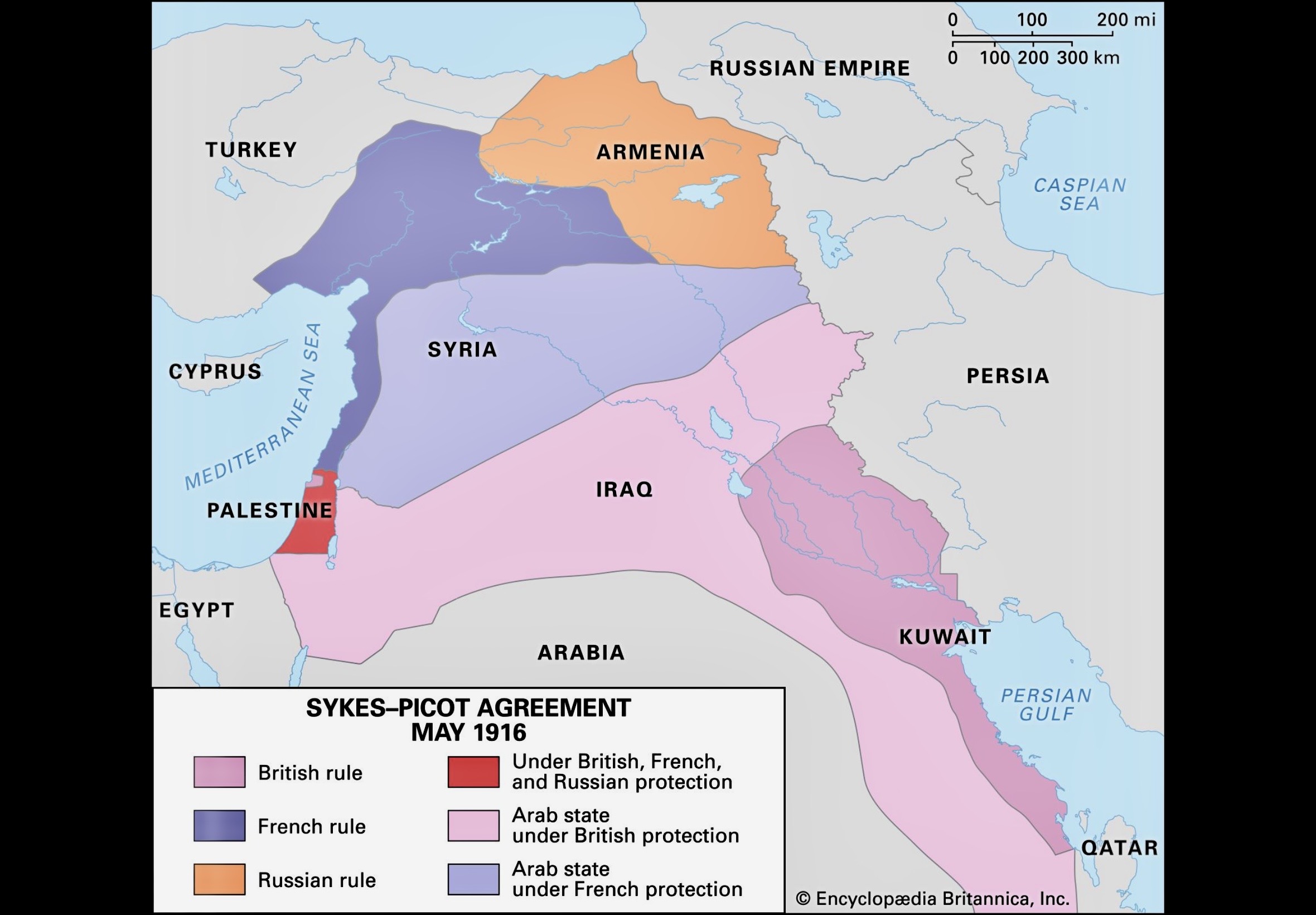
On March 16, 1916, Britain and France finalized the secret agreement now known as the Sykes-Picot Agreement, a wartime arrangement that set out how much of the Ottoman Empire’s Arab territories would be divided if the Allies defeated the Ottomans in the First World War. Imperial Russia assented to the arrangement, which became one of the most consequential diplomatic deals in modern Middle Eastern history.
The agreement proposed direct and indirect zones of British and French control across a vast region that included Syria, Iraq, Lebanon and Palestine. Under its terms, France was to receive control or influence over areas in the north, while Britain was to receive control or influence over areas farther south, including southern Mesopotamia and the ports of Haifa and Acre. Palestine was to be placed under an international arrangement because of its religious significance.
Although negotiated during the war, the agreement quickly became controversial because it conflicted with broader Arab expectations of independence that had been encouraged during the same period. When the contents later became public, the arrangement was widely seen as evidence that the Allied powers were planning imperial division rather than genuine self-rule for Arab populations emerging from Ottoman rule.
The full postwar settlement did not follow the agreement exactly, especially after Russia left the war and later political and military developments reshaped the region. Even so, the Sykes-Picot framework became a lasting symbol of outside powers drawing lines of control across the Middle East, and it remains closely tied to later mandate systems, border disputes and debates over the origins of the modern regional order.
More than a century later, the agreement is still frequently referenced in discussions about colonial legacy, state formation and the long-term geopolitical consequences of First World War diplomacy in the Middle East.
About the Author Brad Socha is the founder of The Universal Record, an independent platform dedicated to sourced, factual reporting on global events. The publication focuses on delivering verified information without opinion or editorial bias. Based in Canada, the publication covers international news, geopolitics, technology, and global developments.



Leave a Reply