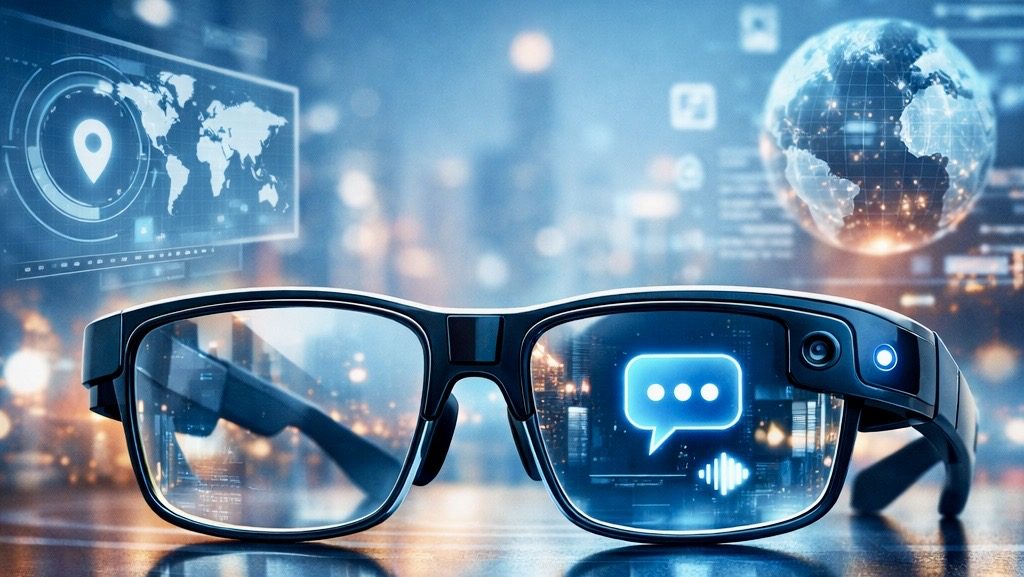
Smart glasses are quickly becoming one of the fastest-growing wearable technology categories. Instead of immersive virtual reality, these devices focus on real-world usage with AI assistants, cameras, audio, or wearable displays.
Major companies are positioning smart glasses as everyday AI companions, combining fashion eyewear with hands-free digital interaction. (https://www.meta.com/ca/ai-glasses)
Below is a popularity-ranked comparison based on adoption trends, visibility, and real-world usage.
Ranked by Popularity and Adoption
#1 — Ray-Ban Meta Smart Glasses (Most Popular)
Price Range: approx. $500 to $800 CAD
Primary Focus: AI assistant, camera, everyday wearable tech
Best For: Everyday AI interaction and social media capture.
#2 — XREAL Air 2 / Air 2 Pro
Price Range: approx. $400 to $1000 CAD
Primary Focus: Virtual display and entertainment
Key Features
• Micro-OLED display creating a large floating screen
• Up to 120Hz refresh rate visuals
• Connects to phones, PCs, and gaming devices
Unlike AI-focused glasses, XREAL Air 2 projects a virtual display for movies, gaming, and productivity, offering a portable alternative to traditional screens. (https://www.xreal.com)
Best For: Portable cinema and wearable work screens.
#3 — Even Realities G1 Smart Glasses
Price Range: approx. $200 to $1300 CAD depending on model
Primary Focus: Minimalist AI and discreet notifications
Key Features
• Lightweight everyday design
• Notification overlays and translation tools
• Subtle smart functionality
This category reflects a growing trend toward smart glasses that resemble normal eyewear while providing limited digital assistance.
Best For: Minimal technology integrated into daily life.
#4 — Google Glass Enterprise Edition 2
Price Range: approx. $450 to $1500 CAD (enterprise resale)
Primary Focus: Industrial and professional workflows
Key Features
• Heads-up display for work instructions
• Hands-free voice operation
• Used in healthcare, logistics, and manufacturing
Enterprise smart glasses remain important in professional environments and continue to influence wearable design trends.
Best For: Workplace productivity and industrial use.
Quick Comparison Table
Rank
Device
Price Range (CAD)
Primary Use
Camera
Standalone AI
#1
Ray-Ban Meta
$500 to $800
AI and media capture
Yes
Yes
#2
XREAL Air 2
$400 to $1000
Virtual display
No
No
#3
Even G1
$200 to $1300
Minimal AI tools
Some models
Limited
#4
Google Glass Enterprise
$450 to $1500
Industrial workflows
Yes
Yes
Market Insights
Smart glasses are increasingly positioned as AI-first wearable devices rather than entertainment hardware. Fashion-focused smart eyewear is gaining popularity because it blends technology with everyday use. New models are expected to focus on lighter frames, longer battery life, and stronger AI integration. (https://www.tomsguide.com/computing/vr-ar/best-smart-glasses)
What Matters Most When Choosing
Want AI assistant and camera: Ray-Ban Meta
Want giant floating screens: XREAL Air 2
Want subtle wearable tech: Even G1
Need work-focused smart glasses: Google Glass Enterprise
Conclusion
Smart glasses are moving toward AI-first design, shifting away from bulky headsets toward lightweight everyday eyewear. Current adoption shows lifestyle AI glasses leading popularity, while AR display glasses dominate entertainment and productivity.
Future generations are expected to introduce deeper AI interaction, more advanced displays, and thinner designs.
About the Author Brad Socha is the founder of The Universal Record, focused on sourced, factual global reporting. Coverage includes international news, geopolitics, technology, and major developments.