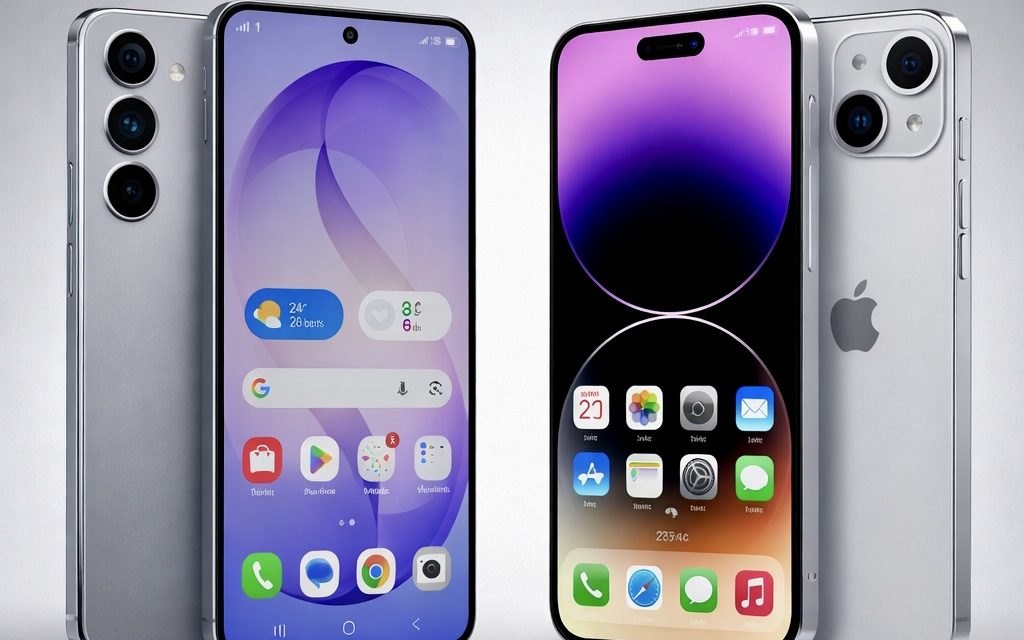
The 2026 flagship smartphone market is led by two dominant devices: the Samsung Galaxy S26 series and the Apple iPhone 17 lineup. Both manufacturers continue to prioritize performance efficiency, artificial intelligence integration, camera enhancements, and ecosystem expansion.
Below is a structured comparison based on confirmed manufacturer specifications and industry reporting.
Design and Display
Samsung Galaxy S26 Series
Samsung’s S26 lineup continues its AMOLED leadership with a Dynamic AMOLED 2X display. The device supports adaptive refresh rates up to 120Hz and high peak brightness levels designed for improved outdoor visibility. Samsung maintains slim bezels and a refined aluminium frame.
Display sizes vary across models, typically ranging between approximately 6.2 inches and 6.8 inches depending on configuration.
Apple iPhone 17 Lineup
Apple’s iPhone 17 models feature Super Retina XDR OLED displays with ProMotion technology (adaptive refresh rate up to 120Hz on Pro models). Apple maintains a flat-edge titanium or aluminium design depending on tier.
Apple continues incremental refinements to durability and display efficiency rather than major redesign changes.
Processor and Performance
Samsung Galaxy S26
The S26 series uses the latest Qualcomm Snapdragon flagship processor in North America, paired with high RAM configurations. Samsung emphasizes on-device AI processing for photography, language translation, and system optimization.
Apple iPhone 17
Apple’s A-series chip continues its custom silicon approach. The A17-generation chip focuses on neural engine performance, power efficiency, and machine learning acceleration. Apple typically leads in single-core benchmark performance.
Both devices support advanced 5G connectivity and Wi-Fi 7 compatibility depending on market.
Artificial Intelligence Integration
AI features are now central to flagship competition.
Samsung
Samsung promotes Galaxy AI tools including:
• Real-time call translation
• AI image editing
• On-device summarization
• Smart text rewriting
• Generative photo adjustments
Samsung’s AI features are integrated deeply within Android.
Apple
Apple integrates AI primarily through:
• On-device Siri improvements
• Predictive system optimization
• Smart photo classification
• AI-assisted writing tools
• Privacy-focused machine learning
Apple emphasizes on-device processing and data privacy.
Camera Systems
Samsung Galaxy S26
Samsung typically maintains a multi-lens system featuring:
• High-resolution primary sensor
• Ultra-wide lens
• Telephoto lens with optical zoom
• Advanced night photography
Samsung often leads in zoom capabilities and image processing flexibility.
Apple iPhone 17
Apple continues its multi-lens approach with:
• Refined computational photography
• Consistent colour accuracy
• Advanced video stabilization
• Cinematic video features
Apple traditionally leads in video quality consistency and processing realism.
Battery and Charging
Samsung:
• Larger battery capacities
• Fast wired charging
• Wireless charging support
• Reverse wireless charging
Apple:
• Optimized battery efficiency through hardware-software integration
• MagSafe wireless charging
• Improved battery lifespan management
Samsung generally offers faster charging speeds, while Apple emphasizes battery health longevity.
Software Ecosystem
Samsung (Android)
• Open customization
• Google ecosystem integration
• Compatibility with a wide range of devices
• Expanded AI-based features
Apple (iOS)
• Tight hardware-software integration
• Seamless continuity with Mac, iPad, Apple Watch
• Long-term software support
• Controlled ecosystem security
Apple maintains longer software update consistency across devices.
Pricing Range
Flagship pricing remains in the premium category:
• Base models typically begin around the USD $800–$1,000 range
• Pro models exceed USD $1,200 depending on storage configuration
Pricing varies by region and storage tier.
Market Position
Samsung and Apple continue to dominate global premium smartphone market share. The competition reflects broader technology themes:
• AI-driven device functionality
• Efficiency improvements over radical redesign
• Increased focus on software ecosystem lock-in
• Incremental camera advancements
Both companies prioritize refinement over disruptive structural changes in 2026.
About the Author Brad Socha is the founder of The Universal Record, focused on sourced, factual global reporting. Coverage includes international news, geopolitics, technology, and major developments.