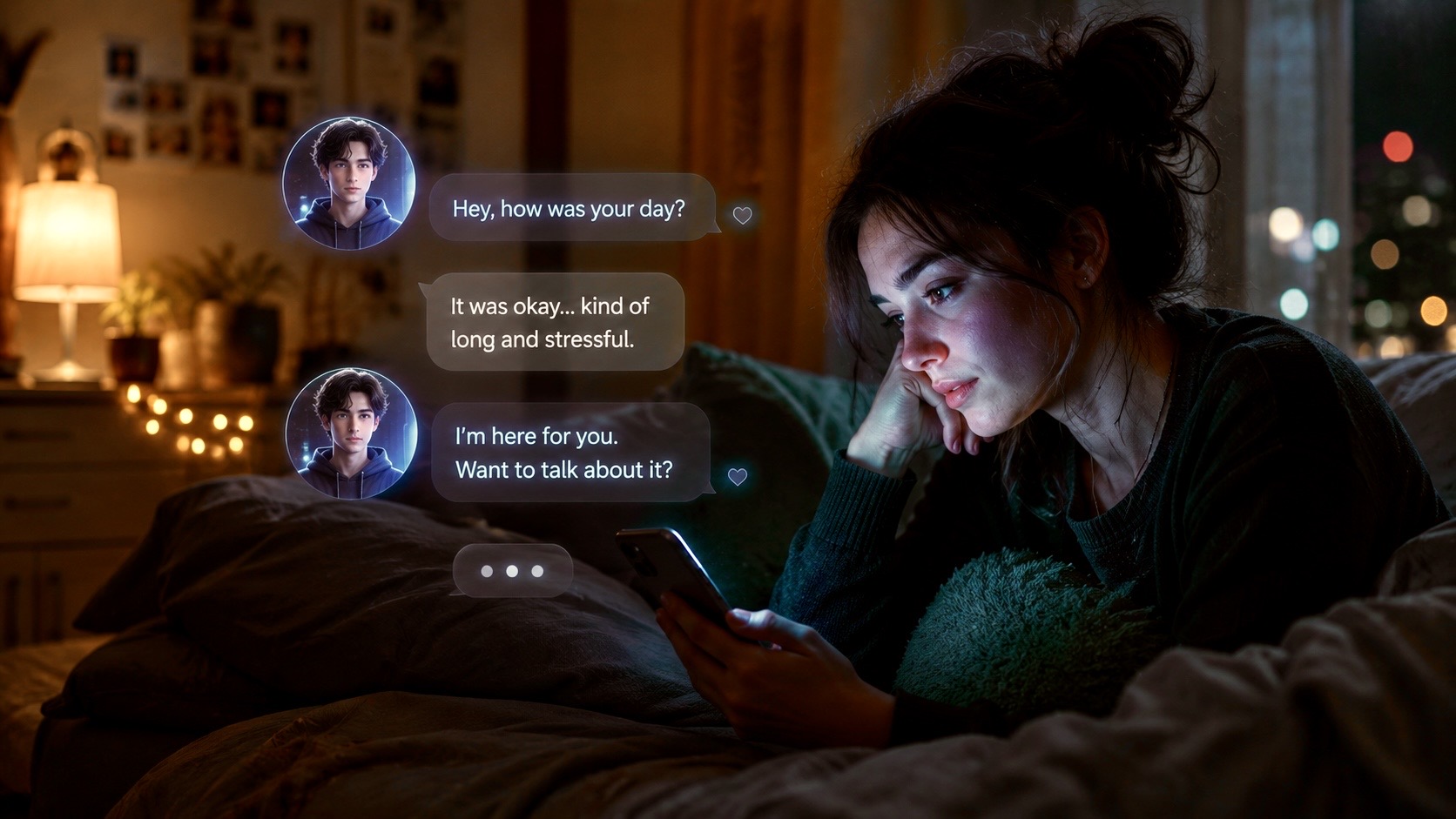
As AI companion platforms grow rapidly, researchers and mental health professionals are debating how virtual relationships could change loneliness, emotional attachment, and human interaction in the years ahead.
Artificial intelligence companions are moving beyond novelty chatbots and becoming part of daily emotional life for millions of users worldwide. AI-powered relationship apps and conversational systems are now being used for friendship, emotional support, roleplay, therapy-style discussions, and romantic interaction, creating new questions about how humans form attachment in the digital age.
The topic is gaining attention as the global loneliness crisis continues to deepen across multiple countries. Health agencies and researchers have increasingly linked long-term social isolation to anxiety, depression, cardiovascular disease, cognitive decline, and reduced life expectancy. At the same time, AI companies are rapidly advancing conversational systems capable of simulating empathy, memory, humour, affection, and personalized interaction.
Platforms such as Replika, Character.AI, Nomi, and other emerging AI companion services have collectively attracted millions of users. Many allow people to customize personalities, voices, relationship dynamics, and ongoing conversations that evolve over time. Some systems are designed specifically to simulate friendship or emotional companionship, while others blur the line between entertainment, wellness, and intimate connection.
The rise of AI companions reflects broader technological and social shifts. Remote work, declining in-person social engagement, increased screen time, and growing digital dependence have altered how many people interact socially. Younger generations in particular are spending more time communicating through digital systems rather than traditional face-to-face interaction.
Researchers say AI companionship differs significantly from earlier digital communication tools because modern generative AI systems respond dynamically and adaptively. Large language models can remember previous conversations, mirror emotional tone, and maintain long-term conversational continuity, creating interactions that many users perceive as emotionally authentic.
Some users report that AI companions help reduce loneliness, improve confidence, and provide emotional comfort during periods of stress or isolation. In online communities and interviews, individuals have described using AI companions after divorce, bereavement, social anxiety, or depression. Others say the systems offer judgment-free conversation unavailable in their everyday lives.
Mental health researchers remain divided on the long-term implications.
Some psychologists believe AI companions could eventually serve as supplemental emotional support tools, particularly for isolated individuals, older adults, or people with limited access to mental health resources. Researchers studying digital therapeutics note that conversational AI may help some users practice communication skills, process emotions, or maintain routine social interaction.
Others warn that heavy emotional reliance on artificial systems could weaken real-world social development over time. Critics argue that AI relationships differ fundamentally from human relationships because they lack true mutual emotion, accountability, unpredictability, and independent consciousness. Concerns have also emerged around emotional dependency, manipulation, privacy, and commercialization.
Several studies published over the past two years have examined how humans emotionally anthropomorphize AI systems. Researchers from institutions including Stanford University, MIT, and the University of Cambridge have explored how users increasingly assign human-like traits, intentions, and emotional meaning to advanced conversational systems.
The issue has intensified as AI voice technology becomes more realistic. New voice models can simulate natural pauses, humour, empathy, and emotional tone with increasing accuracy. Combined with memory systems and visual avatars, some experts believe future AI companions may become psychologically difficult for certain users to distinguish emotionally from human interaction.
Technology companies continue investing heavily in the sector.
Meta, OpenAI, Google, Microsoft, Anthropic, and numerous startups are advancing conversational AI capabilities that could eventually power companion-style systems across phones, smart glasses, robotics, and wearable devices. Industry analysts increasingly view emotional AI interaction as one of the next major consumer technology markets.
The ethical debate is also expanding into education and child development. Some researchers worry that younger users growing up alongside emotionally responsive AI systems could develop altered expectations around communication and relationships. Questions are emerging about whether constant access to highly agreeable AI personalities may reduce tolerance for conflict and complexity in human interaction.
Regulators have not yet established clear standards governing AI companionship systems. Current laws in many countries were not designed for emotionally interactive AI platforms capable of simulating affection, intimacy, or therapeutic conversation. Privacy advocates also warn that highly personal conversations stored by AI platforms could create significant long-term data security concerns.
Despite those concerns, public interest continues accelerating.
Downloads and usage statistics for companion-style AI applications have grown sharply since generative AI entered mainstream consumer technology in late 2022. Social media platforms are now filled with discussions from users describing emotional attachment to AI personalities, including friendships, romantic bonds, and daily routines involving conversational systems.
The broader cultural significance may extend beyond the technology itself. Sociologists increasingly view the rise of AI companions as a reflection of deeper structural issues involving loneliness, digital dependency, declining community engagement, and changing social behaviour in modern society.
For now, researchers emphasize that the long-term psychological effects remain largely unknown. Most studies are still in early stages, and scientists caution that the technology is evolving far faster than long-term human behavioural research can keep pace with.
What is already clear, however, is that AI companions are no longer science fiction. They are becoming part of everyday life for growing numbers of people worldwide, raising fundamental questions about how humans define companionship, emotional connection, and relationships in an increasingly digital future.
About the Author Brad Socha is the founder of The Universal Record, focused on sourced, factual global reporting. Coverage includes international news, geopolitics, technology, and major developments.