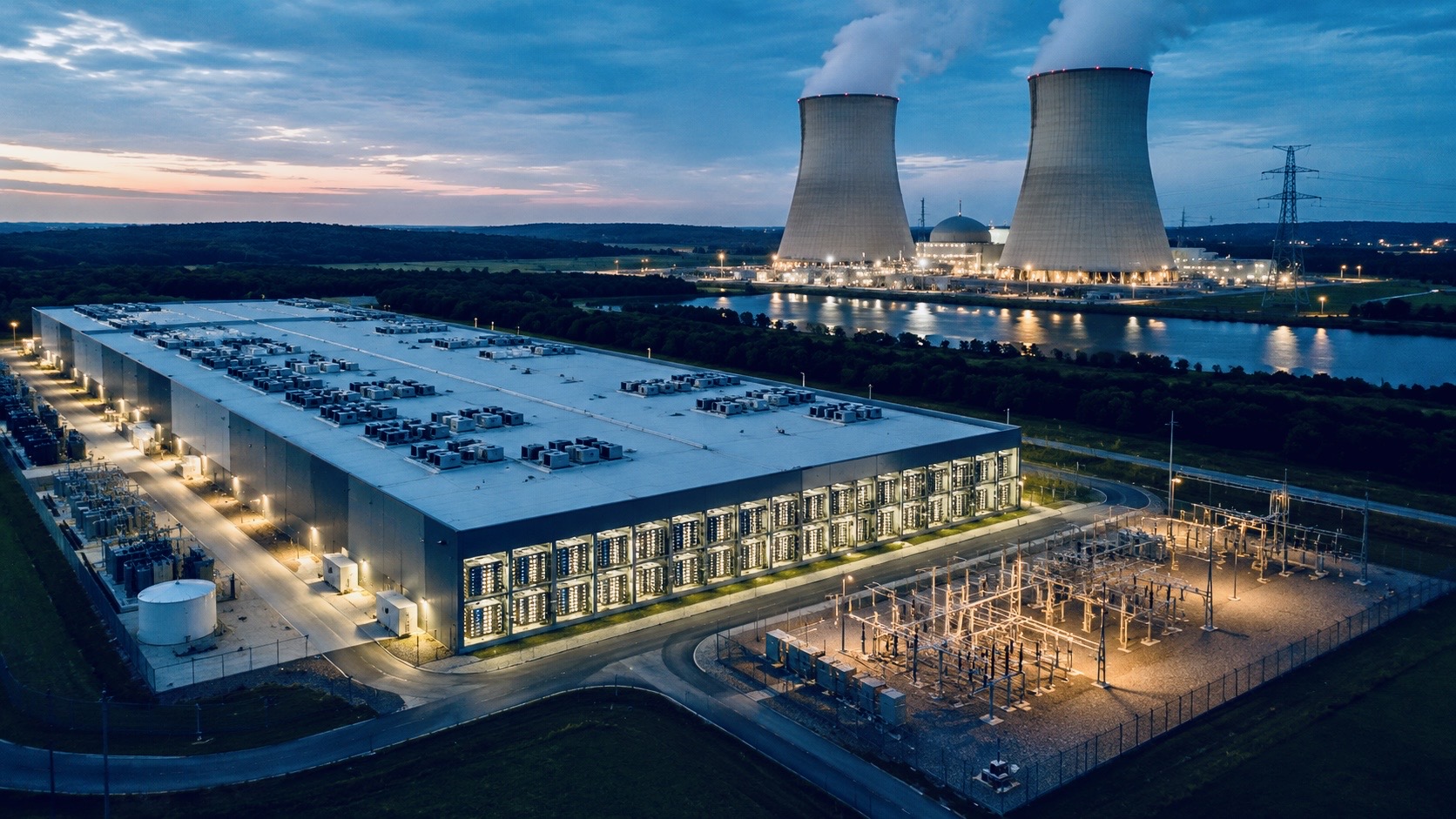
Artificial intelligence is rapidly becoming one of the most transformative technologies of the modern era. Governments are investing in it. Businesses are integrating it into daily operations. Consumers are using AI tools for everything from research to content creation. Yet behind the excitement surrounding AI’s capabilities lies a growing challenge that receives far less attention: the enormous amount of electricity, water, and physical infrastructure required to power the world’s expanding network of AI data centres.
As AI systems become larger and more powerful, the resources needed to operate them are increasing at an unprecedented pace. Technology companies, utilities, governments, and energy providers are now grappling with a question that may shape the future of AI adoption: how can society meet the technology’s growing energy demands without overwhelming existing infrastructure?
The New Industrial Race
Training and operating advanced AI models requires massive computing power. Unlike traditional software applications, modern AI systems rely on specialized processors running continuously across thousands of servers.
The International Energy Agency (IEA) estimates that electricity consumption from data centres worldwide could more than double by the end of the decade. A significant portion of that growth is expected to come from artificial intelligence workloads.
The scale of this expansion is enormous. Major technology companies are investing tens of billions of dollars in new AI infrastructure. Data centre construction is accelerating across North America, Europe, Asia, and the Middle East as governments compete to attract technology investment.
What was once a niche sector has become a critical piece of national infrastructure.
Following the Electricity
Electricity is emerging as one of the biggest constraints on AI growth.
A single large AI-focused data centre can consume as much power as a medium-sized city. Clusters of facilities are increasingly being planned near major power generation sources because existing electrical grids often lack the capacity to support them.
Utilities across the United States have reported surging requests for new power connections from data centre operators. Similar trends are emerging in Canada, Europe, and parts of Asia.
In some regions, electricity demand projections that were previously expected decades into the future are now being reached years ahead of schedule.
Grid planners face a difficult balancing act. Residential customers, manufacturers, transportation systems, and growing populations all require electricity. AI infrastructure is becoming a major new competitor for those resources.
The Water Question
Electricity is only part of the story.
Most large data centres rely on cooling systems to prevent servers from overheating. Those cooling systems often require substantial quantities of water.
While water consumption varies significantly depending on location, climate, and technology used, researchers have found that AI-related computing can require considerable water resources indirectly through cooling and electricity generation.
Communities in drought-prone regions have increasingly questioned whether large-scale data centre developments are placing additional pressure on local water supplies.
Technology companies argue that newer cooling technologies and water recycling systems are improving efficiency. Nevertheless, concerns remain about cumulative impacts as hundreds of new facilities are planned worldwide.
For many municipalities, the debate is no longer simply about economic development. It is also becoming a discussion about long-term resource management.
Why Nuclear Energy Is Suddenly Back in the Conversation
One of the most significant developments in the AI industry is the growing interest in nuclear energy.
Several major technology companies have announced partnerships, investments, or agreements involving nuclear power generation. The reason is straightforward: AI systems require enormous amounts of reliable electricity around the clock.
Unlike solar and wind power, which depend on weather conditions, nuclear facilities provide continuous baseload generation.
Technology firms are increasingly exploring agreements with existing nuclear plants while also investing in next-generation small modular reactor technologies.
The shift represents a notable change in energy strategy. Just a few years ago, many discussions focused primarily on renewable energy procurement. Today, the conversation increasingly includes nuclear energy as a potential solution to AI’s expanding power needs.
What Was Promised?
Supporters of AI infrastructure expansion often highlight economic benefits.
Data centres can generate construction jobs, increase local tax revenues, and attract technology investment. Governments frequently view these projects as strategic assets capable of strengthening national competitiveness.
Many jurisdictions offer incentives to attract data centre operators, including tax benefits, infrastructure support, and expedited permitting processes.
The promise is clear: economic growth, technological leadership, and future innovation.
However, critics argue that the long-term costs are not always fully understood when projects are approved. Questions often emerge regarding electricity demand, water consumption, land use, and the extent of permanent employment created once construction is complete.
The debate is becoming increasingly relevant as communities evaluate proposals for ever-larger facilities.
Who Benefits Financially?
The financial beneficiaries are relatively easy to identify.
Major technology companies gain access to the computing capacity needed to develop and monetize AI systems. Semiconductor manufacturers benefit from surging demand for advanced processors. Construction firms, utilities, and infrastructure providers also see significant opportunities.
Global spending on AI-related infrastructure is projected to reach hundreds of billions of dollars over the coming years.
Investors have responded accordingly. Companies involved in semiconductors, power generation, cooling systems, transmission equipment, and data centre construction have experienced significant growth as AI adoption accelerates.
The broader question is whether public investments and incentives produce sufficient long-term benefits to justify their costs.
What Could Be the Economic Impact?
The economic implications extend well beyond technology companies.
Electricity prices, infrastructure investments, grid upgrades, and energy planning decisions could all be influenced by rising AI demand.
Insurance providers are monitoring potential risks associated with concentrated infrastructure development. Municipal planners are evaluating transportation, water, and utility requirements. Governments are examining national competitiveness and energy security concerns.
Commodity markets could also be affected.
Demand for copper, transformers, rare earth materials, steel, and electrical equipment is already rising as new facilities are built. Some analysts believe AI-related infrastructure expansion could become one of the largest industrial buildouts of the twenty-first century.
No one knows exactly how much computing power future AI systems will require. Technological breakthroughs could improve efficiency and reduce energy demand per calculation. Alternatively, increasingly sophisticated AI models could continue pushing infrastructure requirements higher.
Questions also remain regarding future regulations, environmental standards, water use restrictions, and energy market developments.
Governments worldwide are attempting to balance innovation with infrastructure realities. The challenge is complicated by the pace of AI development, which often moves much faster than utility planning and public infrastructure projects.
A Technology Boom With Real-World Costs
Artificial intelligence is often discussed in terms of software, algorithms, and digital transformation. Yet the physical reality behind AI is becoming impossible to ignore.
Every chatbot response, image generation request, scientific simulation, and AI-assisted search depends on a vast network of power plants, transmission lines, cooling systems, servers, and data centres operating continuously behind the scenes.
The benefits of AI may prove substantial. Its potential to accelerate scientific research, improve productivity, enhance healthcare, and support economic growth remains significant.
But as investment accelerates, a parallel conversation is emerging. The future of artificial intelligence may depend not only on advances in software, but also on society’s ability to provide the electricity, water, and infrastructure needed to sustain it.
The race to build smarter machines is increasingly becoming a race to power them.
About the Author Brad Socha is the founder of The Universal Record, focused on sourced, factual global reporting. Coverage includes international news, geopolitics, technology, and major developments.