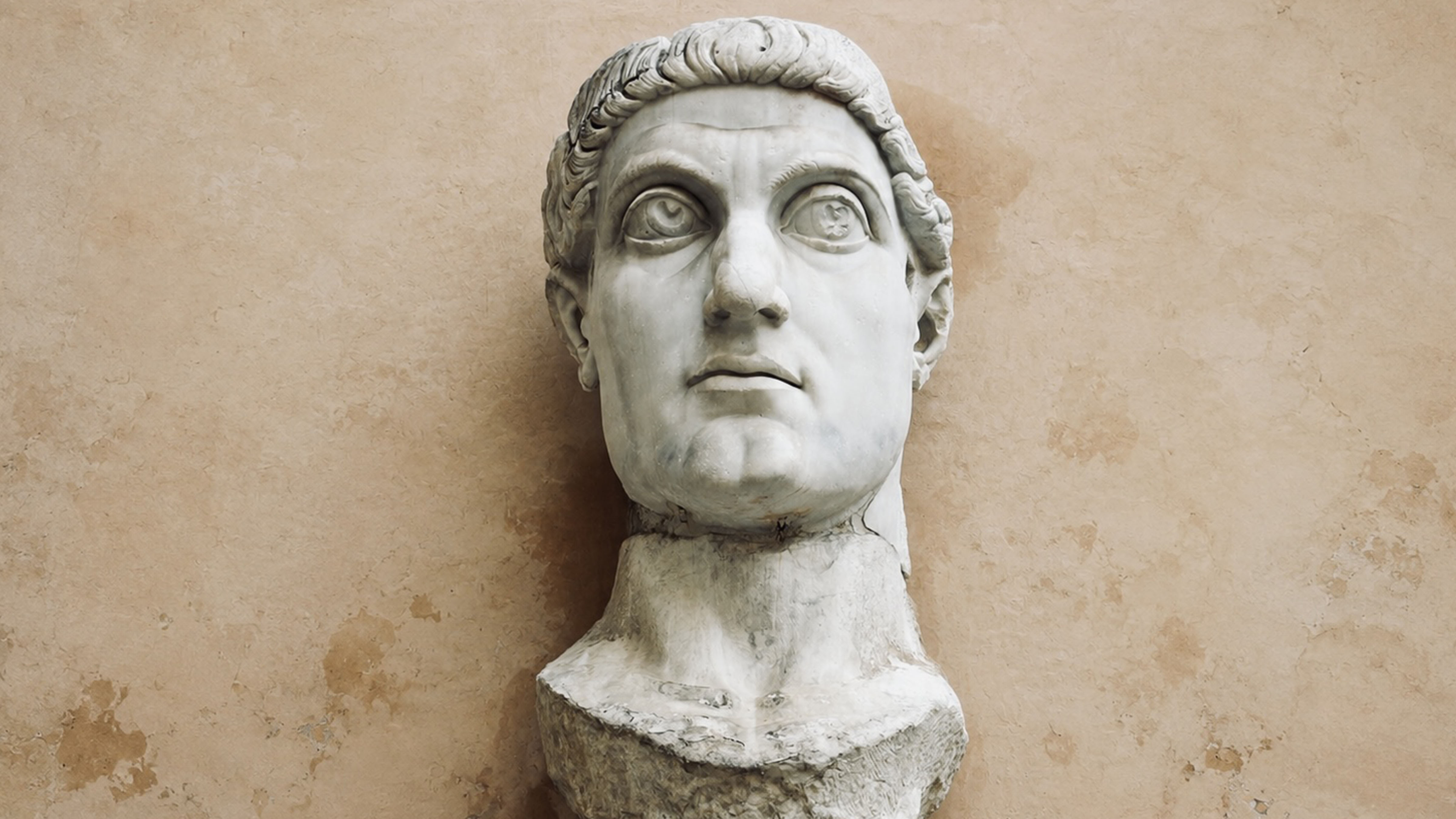
The death of Constantine marked a turning point for the Roman Empire and helped shape the future of Christianity, European civilization, and the political structure of the Western world
More than 1,600 years after his death, Constantine the Great remains one of the most consequential figures in world history. His rule transformed the Roman Empire during a period of political instability and civil war, while his support for Christianity permanently altered the religious direction of Europe and the Mediterranean world. When Constantine died on May 22, 337 AD, he left behind not only a vast empire, but a legacy that would influence governments, churches, and civilizations for centuries.
Constantine died near Nicomedia, in present-day Türkiye, after ruling as emperor for more than three decades. Ancient sources indicate he became ill while preparing for a military campaign against the Persian Empire. He was baptized shortly before his death, an event widely viewed by historians as symbolically significant given his role in legitimizing Christianity within the Roman state.
At the time of Constantine’s rise, the Roman Empire was fractured by internal rivalries, economic pressures, and repeated military conflicts. The empire had endured decades of political instability known as the Crisis of the Third Century, during which emperors were frequently overthrown or assassinated. Constantine emerged from this turbulent environment through a series of military victories that gradually consolidated his power.
One of the defining moments of his career came in 312 AD during the Battle of the Milvian Bridge near Rome. According to historical accounts recorded by writers including Eusebius, Constantine reportedly experienced a vision before battle involving a Christian symbol and the phrase often translated as “In this sign, conquer.” After defeating his rival Maxentius, Constantine increasingly aligned himself with Christianity, though the precise nature of his personal beliefs continues to be debated among historians.
The following year, Constantine and co-emperor Licinius issued the Edict of Milan, granting religious tolerance throughout the empire and ending large-scale persecution of Christians. For centuries, Christians had periodically faced imprisonment, torture, and execution under Roman authorities. Constantine’s policies dramatically changed their position within imperial society.
The shift reshaped not only religion but politics, law, architecture, and culture throughout the empire. Churches began receiving imperial support, Christian bishops gained influence, and theological disputes increasingly became matters of state concern.
Constantine also played a central role in convening the First Council of Nicaea in 325 AD, one of the most important events in early Christian history. The council was called to address growing divisions within Christianity, particularly debates surrounding the nature of Christ and the teachings of Arius. The gathering produced the Nicene Creed, which became a foundational statement of Christian doctrine still recognized by many churches today.
Beyond religion, Constantine transformed the structure of the empire itself. He reorganized parts of the military and bureaucracy while introducing administrative reforms intended to strengthen imperial authority. He also established a new imperial capital at Byzantium, which he renamed Constantinople in 330 AD.
The city, strategically positioned between Europe and Asia, would eventually become one of the most influential urban centres in world history. Constantinople later served as the capital of the Byzantine Empire for more than a thousand years and became a major centre of commerce, politics, and Christianity.
Historians widely view Constantine’s founding of Constantinople as one of the most consequential geopolitical decisions of the ancient world. The city helped shift the centre of imperial power eastward and preserved Roman political traditions long after the fall of the Western Roman Empire in the fifth century.
Constantine’s reign also reflected the complex realities of imperial politics. Despite his association with Christianity, his rule included brutal actions common among Roman emperors of the era. Historical records describe executions within his own family, including the deaths of his eldest son Crispus and his wife Fausta under circumstances that remain debated by scholars.
These events continue to shape discussions about Constantine’s legacy. Some historians portray him as a visionary reformer who stabilized the empire and advanced religious tolerance, while others emphasize the authoritarian nature of his rule and the political motivations behind his support for Christianity.
The long-term consequences of Constantine’s reign extended far beyond the Roman Empire itself. His policies accelerated Christianity’s rise from a persecuted minority faith into the dominant religion of Europe. Over the following centuries, Christian institutions became deeply intertwined with political authority, influencing law, education, philosophy, art, and governance across multiple civilizations.
The relationship between church and state that emerged after Constantine would shape medieval Europe, the Byzantine Empire, and later global history through colonization, missionary activity, and cultural expansion. Many historians refer to this transformation as the “Constantinian shift,” reflecting the enormous historical change associated with his reign.
Archaeological evidence, Roman records, coins, inscriptions, and surviving writings from historians such as Eusebius and Lactantius continue to provide insight into Constantine’s era. Modern historians, however, still debate many aspects of his life, including the sincerity of his religious beliefs and the extent to which political strategy influenced his decisions.
Even so, few dispute the scale of his impact.
The Roman Empire Constantine ruled would eventually divide permanently into eastern and western halves. Yet many of the systems, religious structures, and political traditions strengthened during his reign survived long after the empire itself fragmented.
Today, Constantine remains a major historical figure in both secular and religious scholarship. He is recognized as a saint in parts of Eastern Christianity and continues to be studied as one of the most influential rulers of late antiquity.
His death in 337 AD marked the end of a transformative chapter in Roman history, but the world shaped by his decisions would continue evolving for centuries afterward.
About the Author Brad Socha is the founder of The Universal Record, focused on sourced, factual global reporting. Coverage includes international news, geopolitics, technology, and major developments.