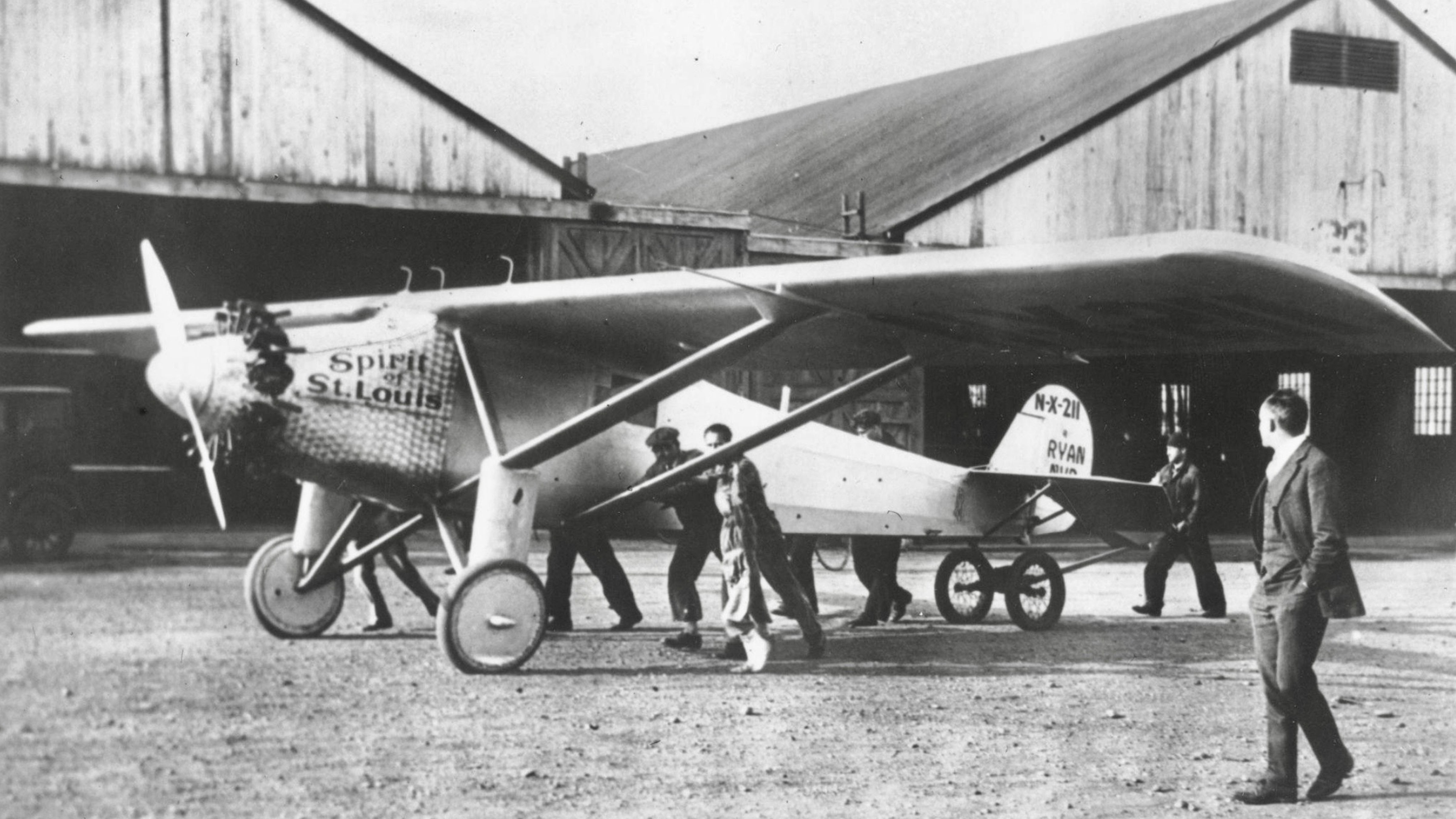
Charles Lindbergh’s departure aboard the Spirit of St. Louis marked the beginning of the first solo nonstop flight across the Atlantic Ocean and transformed modern aviation history.
On May 20, 1927, 25-year-old pilot Charles Lindbergh departed Roosevelt Field in New York aboard a custom-built monoplane known as the Spirit of St. Louis, beginning what would become one of the most famous flights in aviation history. More than 33 hours later, Lindbergh landed in Paris after completing the first solo nonstop transatlantic flight, instantly becoming an international celebrity and helping accelerate global interest in commercial aviation.
Nearly a century later, the achievement continues to be studied as one of the defining moments of early flight. The journey demonstrated the growing reliability and range of aircraft technology during a period when long-distance air travel remained highly dangerous and largely experimental. Historians and aviation experts still point to Lindbergh’s flight as a turning point that reshaped public confidence in aviation and influenced the rapid expansion of international air travel throughout the 20th century.
The flight began amid intense international competition. Throughout the 1920s, several pilots and aviation teams attempted to complete nonstop crossings between New York and Paris in pursuit of the Orteig Prize, a $25,000 reward offered by hotel owner Raymond Orteig for the first successful nonstop flight between the two cities. Multiple attempts ended in crashes or mechanical failures, reinforcing the enormous risks associated with long-distance aviation at the time.
Lindbergh’s aircraft was specifically designed for endurance rather than comfort. Built largely by Ryan Airlines in San Diego, the Spirit of St. Louis featured an enlarged fuel capacity and limited visibility in order to maximize range. The plane carried approximately 450 gallons of fuel, leaving little room for navigation equipment or pilot amenities. Lindbergh flew alone without radio communication, relying primarily on maps, a compass, dead reckoning, and visual navigation techniques across the Atlantic Ocean.
Weather conditions during the journey were difficult and at times dangerous. Lindbergh encountered fog, icing conditions, turbulence, and exhaustion during the overnight flight. Historians note that he remained awake for more than 55 consecutive hours by the time he reached Paris, fighting fatigue throughout much of the crossing.
When the Spirit of St. Louis arrived at Le Bourget Airport near Paris on May 21, 1927, an estimated crowd of more than 100,000 people gathered to witness the landing. News coverage spread rapidly across Europe and North America, turning Lindbergh into one of the most recognized public figures of the era almost overnight.
The successful flight had immediate effects on aviation investment and public perception. Air mail services expanded rapidly, aircraft manufacturers received increased financial backing, and passenger interest in commercial air travel surged in the years that followed. Aviation historians frequently cite Lindbergh’s crossing as a major factor in transforming aircraft from experimental machines into a viable transportation industry.
The achievement also influenced international relations and cultural perceptions of technology during the interwar period. Governments increasingly viewed aviation as strategically important for commerce, military planning, and national prestige. Several nations accelerated aircraft research and airport development after witnessing the global attention surrounding the transatlantic crossing.
Despite the celebration surrounding the accomplishment, modern historians often examine Lindbergh’s later public life separately from the historic flight itself. While the 1927 crossing remains widely admired as a technical and aviation milestone, Lindbergh later became a controversial figure due to his political views and isolationist positions before the Second World War. Scholars continue debating how his later activities should influence public interpretation of his earlier aviation achievement.
The Spirit of St. Louis itself became one of the most important artifacts in aviation history. The aircraft is now preserved at the Smithsonian National Air and Space Museum in Washington, D.C., where it remains one of the museum’s most visited exhibits. Aviation researchers continue studying the plane’s design as an example of early long-range engineering innovation.
Modern transatlantic travel bears little resemblance to the conditions Lindbergh faced in 1927. Flights that once required extraordinary endurance and risk are now routine commercial operations completed in several hours by highly advanced aircraft equipped with sophisticated navigation systems, weather tracking, and automated controls. Still, aviation experts argue that Lindbergh’s solo journey represented a critical bridge between early experimental flight and the modern global airline industry.
The anniversary of the flight continues to attract attention from historians, aviation museums, aerospace organizations, and researchers studying the evolution of transportation technology. The story also remains embedded in broader American cultural history as a symbol of innovation, ambition, and the rapid technological transformation of the early 20th century.
Nearly 100 years after takeoff from Roosevelt Field, Lindbergh’s Atlantic crossing remains one of the most recognized and influential achievements in aviation history.
About the Author Brad Socha is the founder of The Universal Record, focused on sourced, factual global reporting. Coverage includes international news, geopolitics, technology, and major developments.