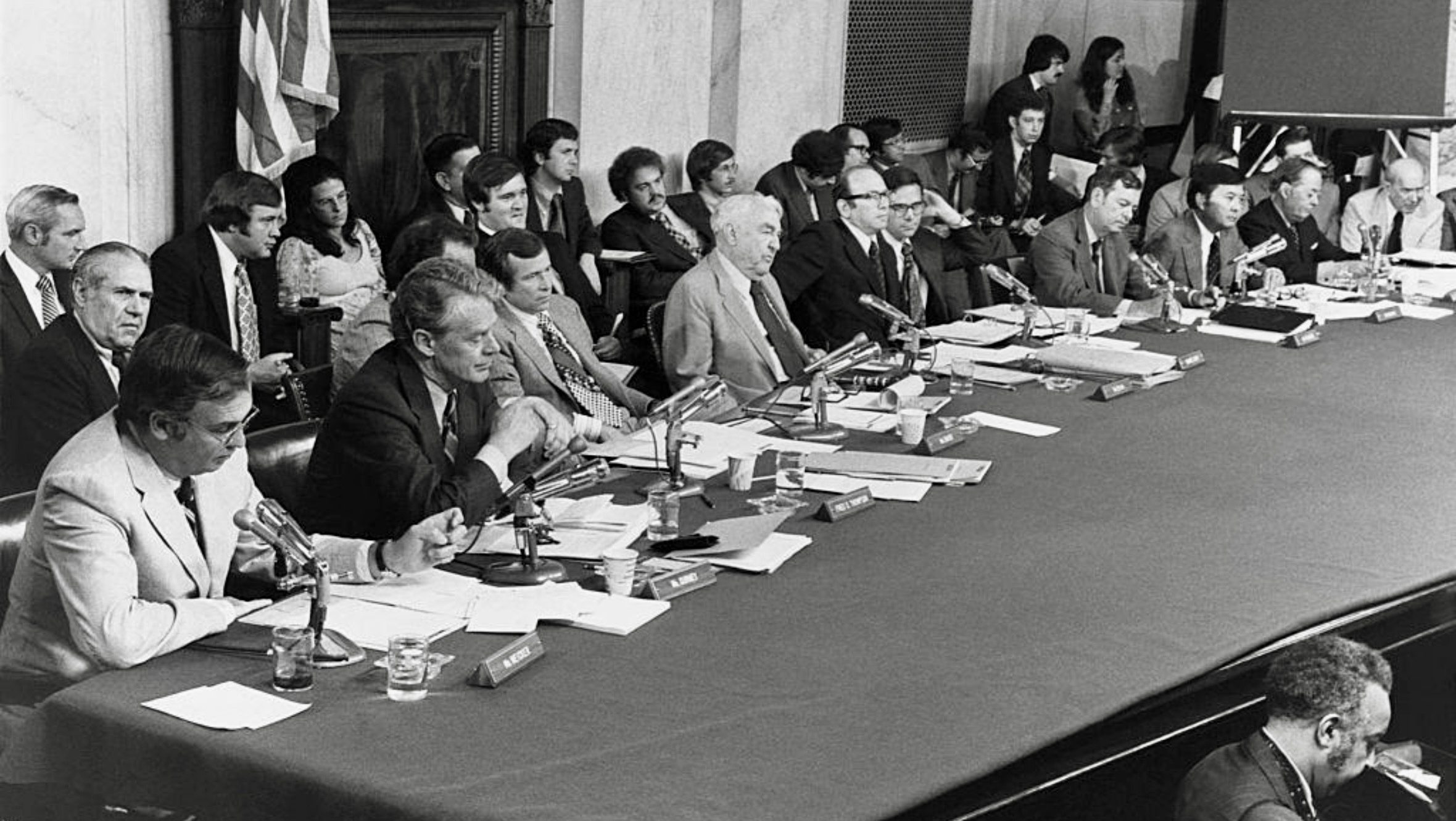
On May 17, 1973, the United States Senate opened nationally televised hearings into what would become one of the most consequential political scandals in modern history. The Watergate hearings transformed a burglary investigation into a constitutional crisis that ultimately led to the resignation of U.S. President Richard Nixon and permanently altered public trust in government institutions.
More than five decades later, the hearings continue to influence political investigations, media coverage, campaign oversight, and public expectations surrounding accountability and executive power. Historians and political analysts still point to Watergate as a defining moment in modern democratic governance.
The hearings began after months of growing questions surrounding a break-in at the Democratic National Committee headquarters located inside the Watergate office complex in Washington, D.C. The burglary occurred during the 1972 presidential campaign and initially appeared to be a limited criminal operation. However, investigative reporting, FBI inquiries, and congressional scrutiny gradually revealed a wider network involving political espionage, covert operations, illegal surveillance activities, and attempts to obstruct investigations.
The Senate Watergate Committee, formally known as the Select Committee on Presidential Campaign Activities, launched public hearings to investigate what government officials knew about the incident and whether there had been efforts to conceal involvement from federal investigators and the American public.
The hearings quickly became a national television event. Millions of Americans watched live testimony from former White House aides, campaign officials, legal advisers, and investigators. The televised format brought unprecedented visibility to congressional investigations and dramatically increased public engagement with political oversight proceedings.
One of the most significant moments came when former White House counsel John Dean testified that senior administration officials had participated in efforts to cover up aspects of the scandal. His testimony intensified scrutiny surrounding the Nixon administration and raised broader questions regarding abuse of executive authority.
The hearings later uncovered the existence of a secret White House taping system that recorded conversations inside the Oval Office and other areas of the executive branch. The revelation triggered a prolonged legal and constitutional battle over presidential privilege and access to evidence.
As investigations expanded, prosecutors, congressional committees, and courts sought access to the recordings. The dispute eventually reached the United States Supreme Court, which ruled unanimously in 1974 that the president was required to release the tapes.
The release of key recordings severely damaged political support for Nixon. The tapes appeared to demonstrate attempts to interfere with federal investigations following the original break-in. Facing near-certain impeachment and removal from office, Nixon resigned on August 8, 1974, becoming the first U.S. president in history to step down from office.
The Watergate scandal extended beyond the presidency itself. Numerous administration officials and political operatives were charged or convicted in connection with obstruction of justice, conspiracy, illegal campaign activities, and related offences. The scandal also led to sweeping reforms involving campaign finance laws, government ethics rules, congressional oversight powers, and transparency measures.
Media organizations played a major role throughout the investigation. Reporting by journalists at major newspapers, particularly investigative work that uncovered links between the burglary and political operations tied to Nixon’s reelection campaign, helped sustain national attention on the scandal during its early stages.
The hearings also marked a turning point for television journalism. Many Americans followed testimony daily through live broadcasts, introducing a new era in which congressional investigations became highly visible public events rather than largely procedural government matters.
Political historians continue debating the long-term impact of Watergate on public trust. Some scholars argue the scandal strengthened democratic accountability by demonstrating that constitutional systems could function during periods of political crisis. Others contend the scandal accelerated growing public cynicism toward political institutions and government leadership.
The term “Watergate” itself has since become synonymous worldwide with political scandal and government misconduct. Numerous controversies in later decades adopted the “-gate” suffix as shorthand for allegations involving secrecy, corruption, or abuse of power.
Modern political investigations are still frequently compared to Watergate, particularly when issues involving executive authority, classified information, political surveillance, or obstruction allegations emerge. Analysts say the hearings established enduring expectations regarding congressional oversight, investigative journalism, and institutional checks on executive power.
The historical significance of Watergate remains especially relevant today as democracies worldwide continue confronting debates surrounding transparency, accountability, media credibility, and political polarization. Universities, legal scholars, and historians regularly revisit the hearings as case studies in constitutional law, separation of powers, and democratic resilience.
More than half a century later, the Watergate hearings remain one of the most studied political investigations in modern history. What began as a break-in at a Washington office complex ultimately reshaped American politics, redefined investigative journalism, and changed public expectations of political leadership for generations to come.
About the Author Brad Socha is the founder of The Universal Record, focused on sourced, factual global reporting. Coverage includes international news, geopolitics, technology, and major developments.