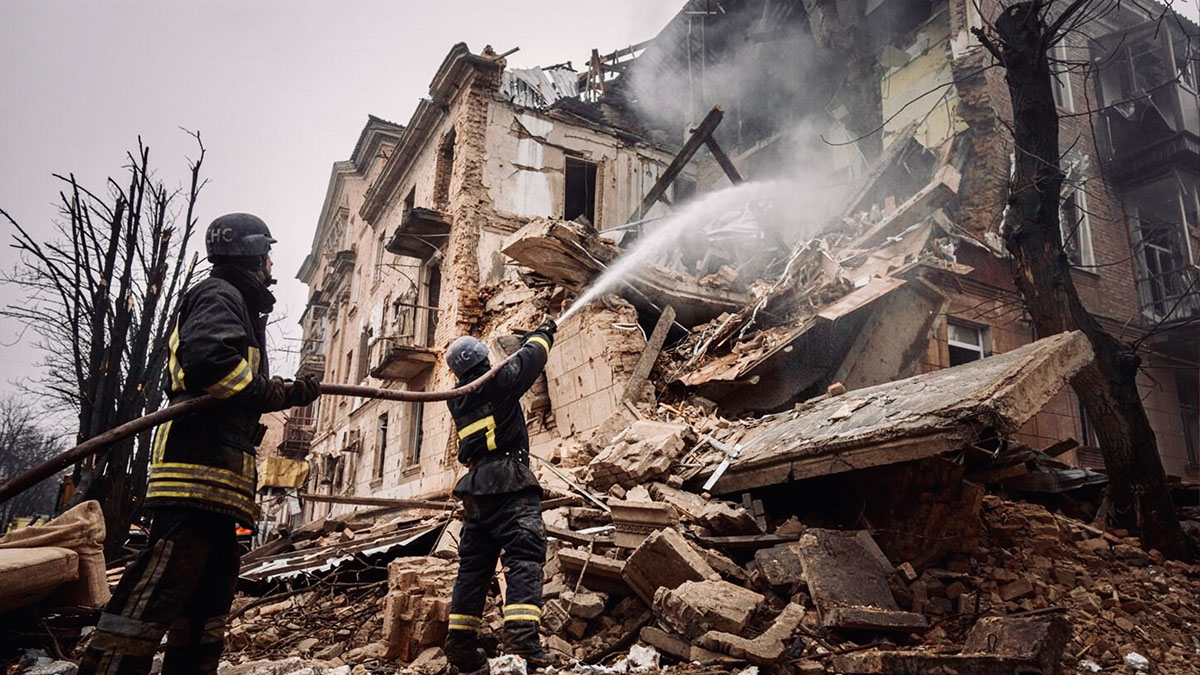
The Russia–Ukraine war has entered a renewed phase of escalation over the past 24–48 hours, with large-scale missile and drone attacks, continued frontline battles, and increasing geopolitical tensions between Russia and Western nations.
Russia launched one of its most intense attacks of 2026, firing dozens of missiles and hundreds of drones across multiple Ukrainian cities, including Kyiv, Odesa, and Dnipro. At least 17 people were killed and more than 100 injured in what officials described as the deadliest assault of the year so far. Residential buildings, energy infrastructure, and urban areas were heavily damaged, with some air defense systems intercepting a significant portion of incoming strikes, though several penetrated defenses.
Ukraine responded with counterstrikes targeting Russian-controlled and domestic infrastructure, including oil depots in Crimea and facilities inside Russia. These strikes are part of a broader strategy aimed at weakening Russia’s logistics and energy revenues, which continue to fund the war effort.
On the battlefield, fighting remains intense along a front line stretching roughly 1,200 kilometres. Ukrainian forces have reported localized gains, reclaiming limited territory in recent operations while adapting new tactics that integrate drones with infantry units. This evolving approach reflects a broader shift toward modern, technology-driven warfare, with drones playing a central role in both reconnaissance and offensive operations.
At the same time, Russian forces continue to press offensives in eastern and southeastern Ukraine, making incremental advances in contested regions such as Donetsk and Kharkiv. The war remains largely one of attrition, with neither side achieving a decisive breakthrough, and territorial changes measured in small, costly gains.
Diplomatic efforts remain stalled. Proposed peace talks have yet to materialize, with disagreements between Ukraine, Russia, and international mediators over timing and location. Ukrainian leadership has signaled readiness for further negotiations, but progress remains uncertain amid ongoing military escalation.
Meanwhile, tensions between Russia and Western countries continue to rise. Moscow has issued warnings that increased military aid to Ukraine, particularly drone production and supply from European nations, could draw those countries deeper into the conflict. Russian officials have also suggested that foreign facilities supporting Ukraine could become potential targets, further raising concerns about broader escalation beyond Ukraine’s borders.
The war’s human and economic toll continues to grow. Estimates suggest that combined casualties on both sides may approach or exceed 1.8 million, underscoring the scale of the conflict and its prolonged nature.
Beyond the battlefield, the war is reshaping global security and economic dynamics. Continued attacks on energy infrastructure, combined with Ukraine’s strikes on Russian oil facilities, are contributing to volatility in global energy markets. The conflict is increasingly interconnected with other geopolitical tensions, including instability in the Middle East, amplifying its global impact.
As of mid-April 2026, the Russia–Ukraine war shows no clear path to resolution. Instead, it is evolving into a technologically advanced, prolonged conflict defined by drone warfare, infrastructure strikes, and mounting geopolitical risk.
About the Author Brad Socha is the founder of The Universal Record, focused on sourced, factual global reporting. Coverage includes international news, geopolitics, technology, and major developments.