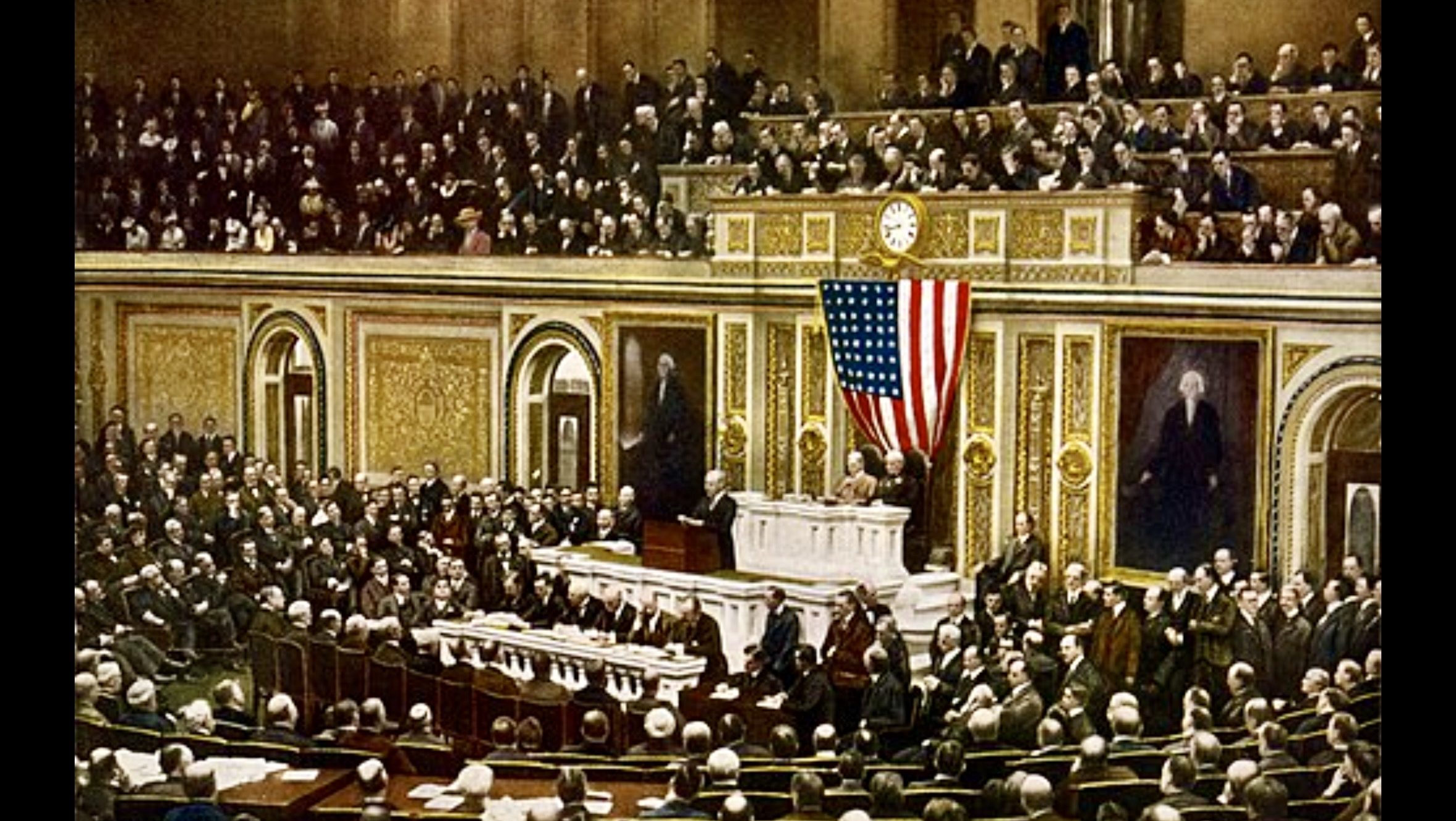
On April 2, 1917, U.S. President Woodrow Wilson asked Congress to declare war on Germany, marking a historic turning point in World War I and ending years of American neutrality.
In a formal address delivered in Washington, Wilson argued that Germany’s continued use of unrestricted submarine warfare against international shipping had made neutrality impossible. He stated that the world must be made “safe for democracy,” framing the conflict as a defence of global stability and democratic principles.
At the time, the United States had remained officially neutral since the outbreak of World War I in 1914, despite increasing tensions and economic ties with Allied nations including Britain and France. However, repeated attacks on civilian and commercial vessels, along with the interception of the Zimmermann Telegram—an attempt by Germany to encourage Mexico to join the war against the United States—shifted public and political opinion.
Congress formally approved the declaration of war on April 6, 1917. The entry of the United States introduced fresh troops, industrial capacity, and financial resources that significantly strengthened the Allied war effort.
American involvement is widely regarded as a decisive factor in the eventual defeat of the Central Powers in 1918. The shift also marked the emergence of the United States as a major global military and political force, shaping international relations throughout the 20th century and beyond.
About the Author Brad Socha is the founder of The Universal Record, an independent platform dedicated to sourced, factual reporting on global events. The publication focuses on delivering verified information without opinion or editorial bias. Based in Canada, the publication covers international news, geopolitics, technology, and global developments.



Leave a Reply