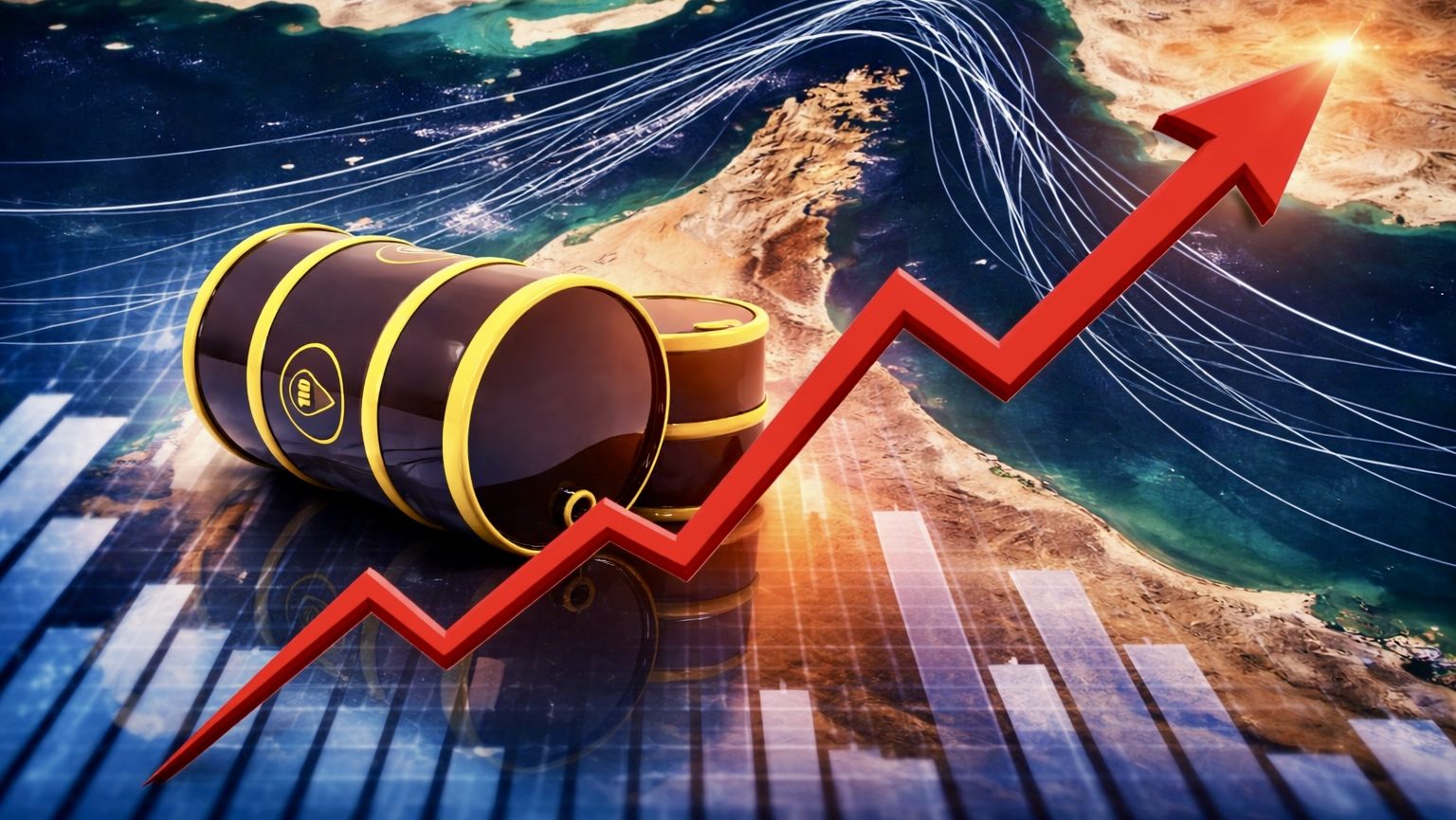
Global oil prices have risen sharply as escalating tensions in the Middle East disrupt confidence in energy supply stability, increasing concerns about inflation and economic pressure worldwide. The situation reflects a growing link between geopolitical conflict and financial markets, as investors and policymakers react to the risk of prolonged instability.
Recent developments involving attacks on key energy infrastructure across the Gulf region have intensified fears of supply disruptions. Critical oil and natural gas facilities have been affected, raising concerns that further escalation could impact production capacity and transportation routes. The potential for instability in major exporting regions has contributed to immediate volatility in global energy markets.
The Strait of Hormuz remains central to these concerns. As one of the world’s most important energy corridors, a significant portion of global oil and liquefied natural gas shipments pass through this narrow waterway. Any threat to its security has the potential to disrupt supply chains on a global scale, influencing prices and market stability.
As energy prices rise, the economic impact is being felt across multiple sectors. Higher oil and gas costs contribute directly to increased transportation expenses, manufacturing costs, and consumer prices. This creates inflationary pressure that can slow economic growth and reduce purchasing power.
Central banks are closely monitoring the situation as they assess the broader economic implications. Rising energy costs complicate efforts to control inflation, particularly in economies that are already managing price stability challenges. Policymakers must balance the need to support growth while addressing inflation driven in part by external geopolitical factors.
Financial markets have responded with increased volatility, as uncertainty surrounding energy supply influences investor sentiment. Energy-dependent industries are particularly sensitive to price fluctuations, while governments are evaluating contingency measures to manage potential disruptions.
The situation also highlights the interconnected nature of global systems. Events in one region can quickly influence markets, economies, and policy decisions worldwide. The combination of geopolitical tension and economic impact underscores the importance of stable energy supply in maintaining global financial stability.
While diplomatic efforts continue, the trajectory of the conflict remains uncertain. Further escalation could lead to additional disruptions, while de-escalation may help stabilize markets. For now, energy prices and inflation risks remain closely tied to developments in the Middle East.
About the Author Brad Socha is the founder of The Universal Record, an independent platform dedicated to sourced, factual reporting on global events. The publication focuses on delivering verified information without opinion or editorial bias. Based in Canada, the publication covers international news, geopolitics, technology, and global developments.



Leave a Reply