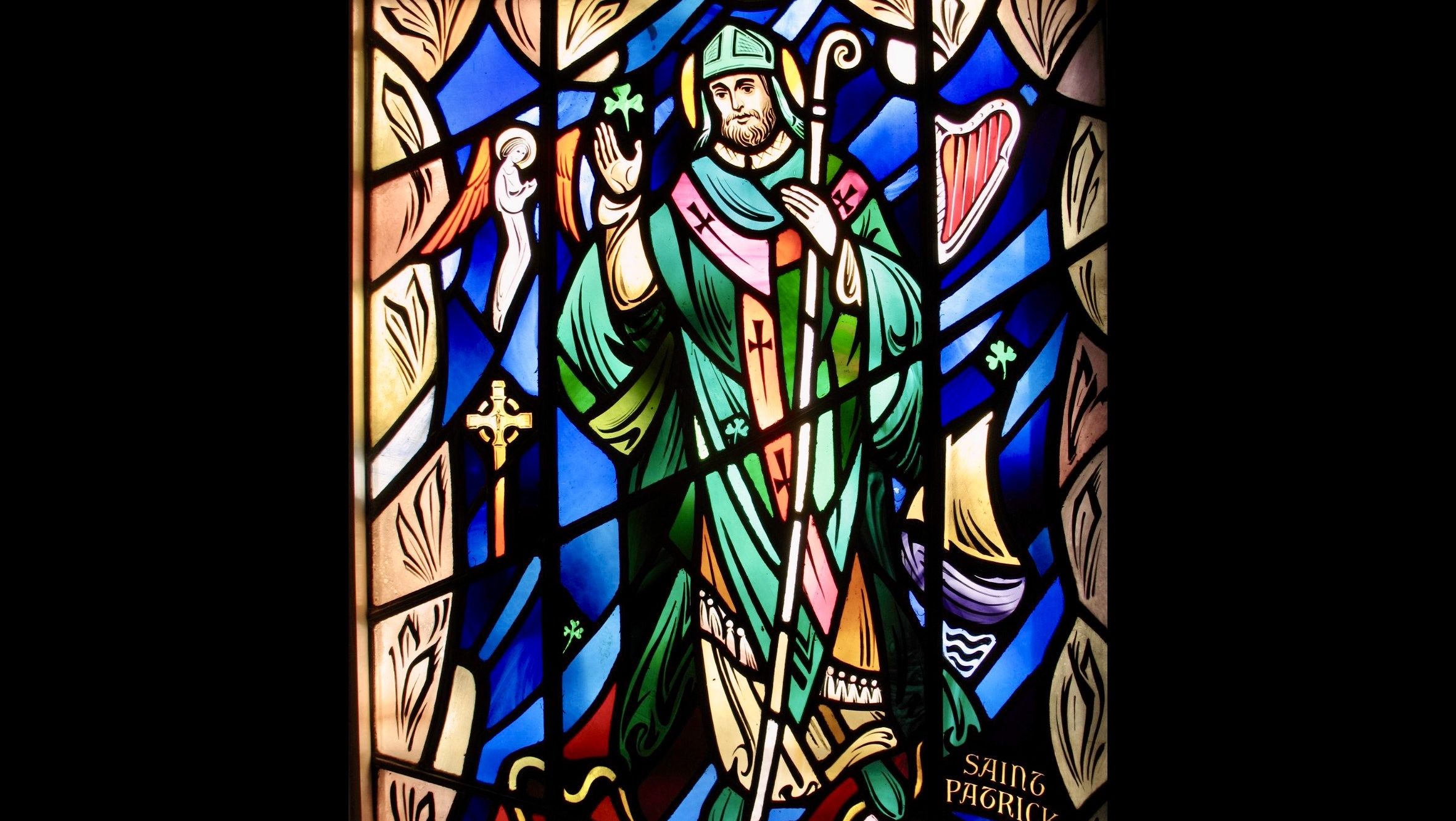
Saint Patrick, the missionary traditionally credited with spreading Christianity throughout Ireland, is believed to have died on March 17, 461 CE. Over the centuries, his life and teachings became central to Irish religious history and identity, and the date of his death is widely recognized as the origin of what later became St. Patrick’s Day.
Patrick was born in Roman Britain in the late 4th century, most commonly believed around 385 CE. According to early accounts written by Patrick himself, including his Confessio, he was captured by Irish raiders as a teenager and taken to Ireland as a slave. During several years of captivity, he worked as a shepherd and began to develop a strong Christian faith.
Patrick eventually escaped and returned to Britain. Later, after studying Christianity and becoming ordained, he chose to return to Ireland as a missionary. His goal was to preach Christianity among the Irish people, many of whom followed various pagan traditions at the time.
Historical traditions describe Patrick travelling across large parts of Ireland, establishing Christian communities, ordaining clergy, and founding churches. Although Christianity had already reached Ireland through earlier contacts with Roman Britain and Europe, Patrick’s missionary work is widely credited with accelerating its spread throughout the island.
Over time, Patrick became the most prominent figure associated with Irish Christianity. Legends surrounding him grew in the centuries following his death, including stories about explaining the concept of the Holy Trinity using a three-leaf clover, or shamrock. Another well-known legend claims he drove snakes from Ireland, though historians generally interpret this symbolically rather than literally.
By the early Middle Ages, Patrick was venerated as the patron saint of Ireland. March 17, believed to be the date of his death, became a religious feast day in the Christian calendar. The observance gradually expanded beyond religious services to include broader cultural celebrations of Irish heritage.
Today, St. Patrick’s Day is celebrated around the world with parades, cultural festivals, and gatherings highlighting Irish history and traditions. Cities across Ireland, Europe, North America, and other regions mark the occasion each year, making it one of the most widely recognized cultural holidays associated with a historical figure.
Despite the many legends that developed around his life, historians generally agree that Patrick was a real historical figure whose writings survive and whose missionary work played a significant role in the development of Christianity in Ireland.
About the Author Brad Socha is the founder of The Universal Record, focused on sourced, factual global reporting. Coverage includes international news, geopolitics, technology, and major developments.