THE UNIVERSAL RECORD
Sourced reporting. No opinions.
Louise Brown’s birth on July 25, 1978, proved that fertilization outside the human body could lead to a healthy child, transforming infertility treatment and opening a new era in reproductive medicine.
By Brad Socha | July 25, 2026 | 9:15 AM EST
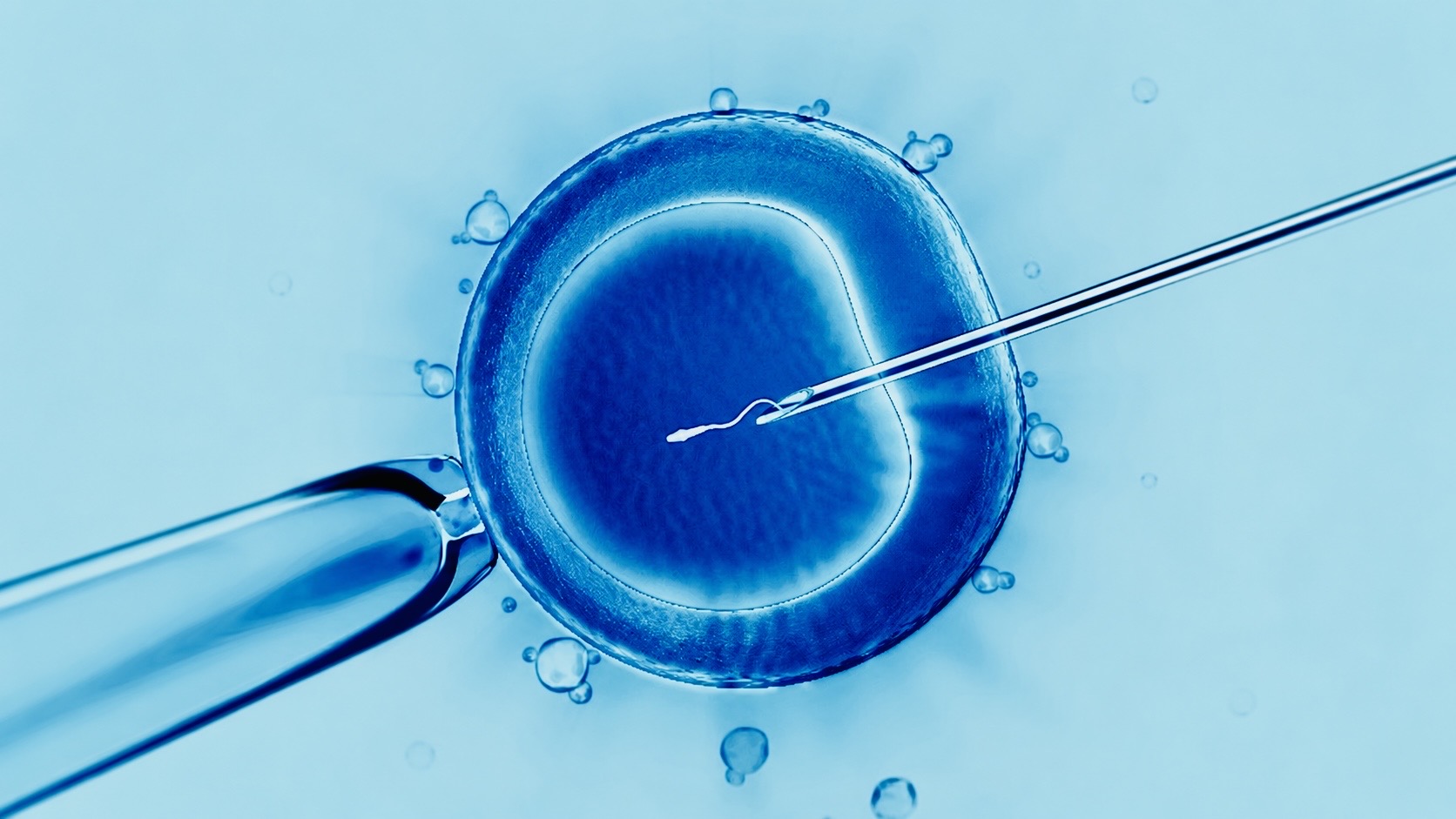
The birth of Louise Joy Brown changed what medicine could offer people unable to conceive naturally. When she was delivered in northern England on July 25, 1978, she became the first child born following successful in vitro fertilization, proving that a human egg could be fertilized outside the body, transferred to the uterus, and develop through a full-term pregnancy. The breakthrough laid the foundation for treatments that have since helped millions of children enter the world.
Louise was born at Oldham and District General Hospital shortly before midnight. Delivered by Caesarean section at 11:47 p.m., she weighed 5 pounds, 12 ounces and was reported to be healthy.
Her arrival was the result of years of work by physiologist Robert Edwards, gynecologist Patrick Steptoe, and nurse and embryologist Jean Purdy. Their achievement was not a sudden laboratory success. It followed repeated disappointments, limited funding, scientific uncertainty, and intense public debate over whether human conception should be attempted outside the body.
The Long Road to a Successful Birth
Edwards had studied the biology of fertilization since the 1950s. He believed infertility could sometimes be overcome by removing a mature egg from a woman, fertilizing it with sperm in a laboratory, and returning the resulting embryo to the uterus.
The concept required scientific advances that did not yet exist. Researchers needed to understand how human eggs matured, determine the correct conditions for fertilization, keep an early embryo alive outside the body, and identify the safest moment for transfer.
Edwards eventually began working with Steptoe, who had developed expertise in laparoscopy, a minimally invasive procedure that allowed doctors to see inside the abdomen and retrieve eggs directly from the ovaries. Purdy managed crucial laboratory work, observed developing embryos, maintained records, and participated throughout the experimental program.
The team worked at Dr. Kershaw’s Cottage Hospital in Oldham. Progress came slowly. Early embryo transfers did not produce lasting pregnancies, and one pregnancy implanted outside the uterus and had to be ended. In 1971, Britain’s Medical Research Council rejected an application to fund their work, forcing the researchers to rely heavily on private support.
Lesley and John Brown approached the team after trying to have a child for approximately nine years. Lesley’s fallopian tubes were blocked, preventing her egg and her husband’s sperm from meeting naturally.
In November 1977, Steptoe retrieved one of her eggs during a natural menstrual cycle. The egg was fertilized in the laboratory and developed into an early embryo before being transferred to Lesley’s uterus. Unlike earlier attempts involving fertility hormones, the natural-cycle approach reduced the risk of hormonal complications.
The pregnancy continued normally. Because the procedure had never previously resulted in a live birth, doctors closely monitored Lesley and arranged a Caesarean delivery to limit uncertainty near the end of the pregnancy.
Louise’s birth confirmed that the technique worked.
The phrase “test-tube baby” quickly spread through international headlines, although it gave a misleading impression of the process. Louise had not developed in laboratory glassware. Only fertilization and the earliest stage of embryonic development occurred outside her mother’s body; the pregnancy itself proceeded in the uterus.
A Revolution in Reproductive Medicine
The birth generated worldwide attention and raised questions that extended beyond medicine. Religious leaders, ethicists, lawmakers, and members of the public debated embryo research, parenthood, laboratory fertilization, and the possibility that reproductive technology might one day be misused.
There were also immediate questions about Louise’s health. Her normal development provided early reassurance, and the later health and fertility of children conceived through IVF helped the procedure gain wider acceptance.
Edwards and Steptoe established Bourn Hall Clinic near Cambridge in 1980. It became the world’s first dedicated IVF centre and trained specialists who carried the technique to clinics internationally. Purdy, who helped establish the clinic, remained an important member of the program until her death in 1985.
IVF gradually became more effective. Improvements in hormone treatment, ultrasound monitoring, embryo culture, freezing techniques, sperm injection, genetic testing, and single-embryo transfer expanded its uses while reducing some risks. The technology now supports people facing blocked fallopian tubes, low sperm counts, unexplained infertility, genetic conditions, cancer treatment, and other barriers to conception.
By 2018, international monitoring organizations estimated that more than eight million children had been born through IVF and related assisted reproductive technologies. The total has continued to rise as treatment has expanded worldwide.
Access, however, remains unequal. The World Health Organization estimates that roughly one in six people of reproductive age experiences infertility during their lifetime, yet IVF remains unavailable or unaffordable for many. Treatment is often paid for privately, and costs, regulations, insurance coverage, and eligibility requirements vary widely between countries.
In 2010, Robert Edwards received the Nobel Prize in Physiology or Medicine for developing IVF. Steptoe and Purdy had died years earlier and could not share the award because Nobel Prizes are not awarded posthumously. Historical accounts have since given greater recognition to Purdy’s essential scientific and clinical contributions.
Louise Brown’s birth was ultimately more than an isolated medical first. It demonstrated that a previously untreatable cause of infertility could be addressed through carefully developed science. What began with one successful birth in Oldham became a global field of reproductive medicine, and permanently changed the possibilities of parenthood.
Sources:
The Nobel Prize — Popular Information: The 2010 Nobel Prize in Physiology or Medicine — https://www.nobelprize.org/prizes/medicine/2010/popular-information/
The Nobel Prize — Robert G. Edwards and the Development of IVF — https://www.nobelprize.org/prizes/medicine/2010/press-release/
The Nobel Prize — Advanced Information on Human In Vitro Fertilization — https://www.nobelprize.org/prizes/medicine/2010/advanced-information/
Bourn Hall Clinic — Milestones in IVF: The Birth of the World’s First IVF Baby — https://www.bournhall.co.uk/fertilityblog/worlds-first-ivf-baby/
History — World’s First “Test-Tube” Baby Born — https://www.history.com/this-day-in-history/july-25/worlds-first-test-tube-baby-born
World Health Organization — Infertility Fact Sheet — https://www.who.int/news-room/fact-sheets/detail/infertility
European Society of Human Reproduction and Embryology — More Than Eight Million Babies Born from IVF — https://www.eshre.eu/Annual-Meeting/Barcelona-2018/ESHRE-2018-Press-releases/De-Geyter
About the Author
Brad Socha is the founder of The Universal Record, focused on sourced, factual global reporting. Coverage includes international news, geopolitics, technology, and major developments.