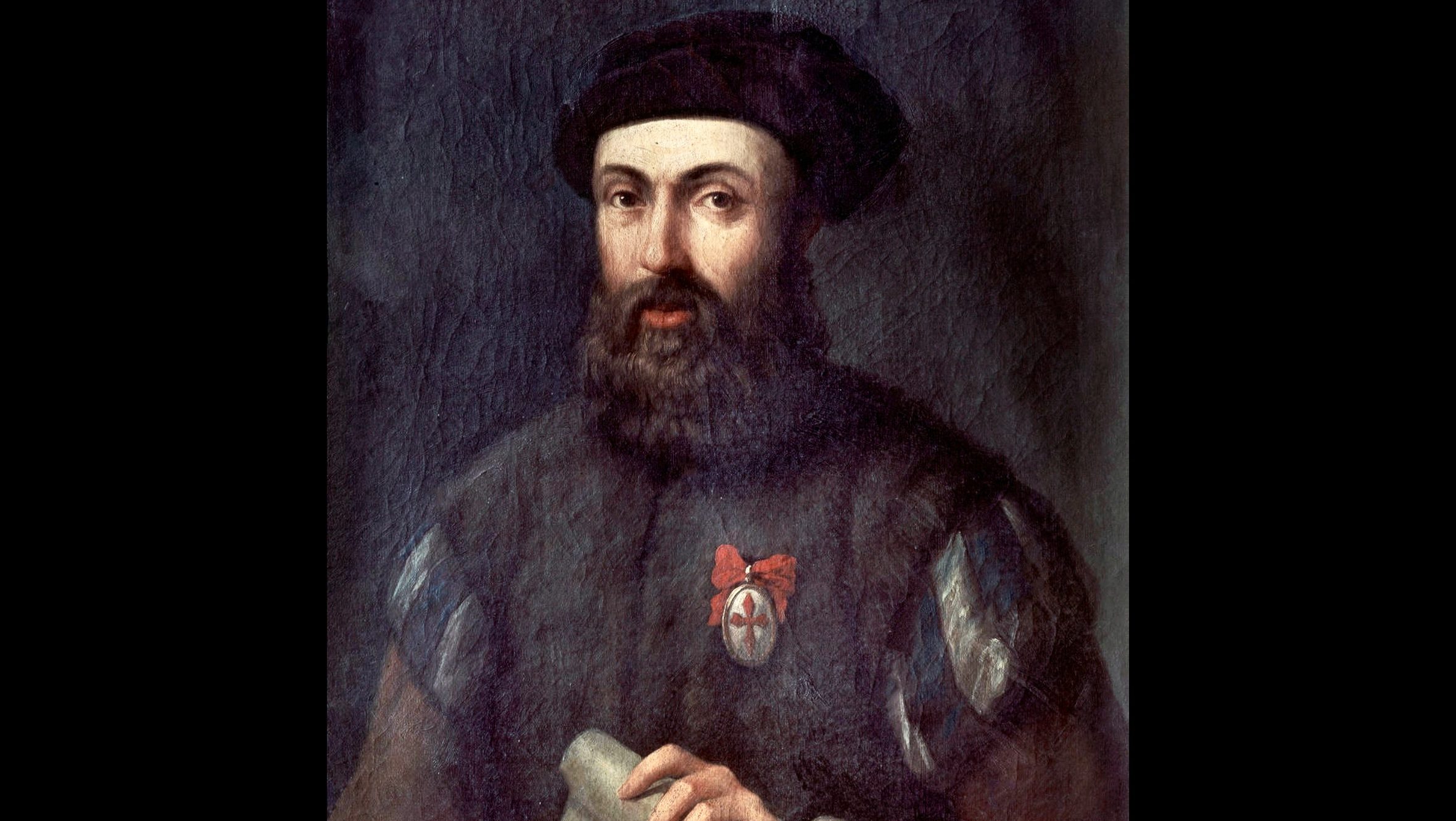
The Portuguese explorer, sailing for Spain, arrives in the archipelago during the first circumnavigation expedition, marking a turning point in Philippine and global history
Ferdinand Magellan reached the Philippines in March 1521 during the expedition that became the first circumnavigation of the globe. His arrival marked one of the most important moments in the history of European exploration, linking the Spanish imperial project to the Philippine archipelago and helping open a new phase of contact between Europe and Southeast Asia.
Magellan, a Portuguese navigator sailing under the Spanish flag, had already led his fleet across the Atlantic, through the strait at the southern end of South America that now bears his name, and across the Pacific Ocean. By the time his expedition reached the Philippines, the voyage had already become one of the most extraordinary maritime undertakings of the age.
His arrival in the archipelago was historically significant not only because of the scale of the journey, but because it led to Spain’s first alliance in the Pacific. Magellan made contact with local rulers and began laying the foundation for a Spanish presence that would later transform the political, religious, and cultural history of the islands. His expedition is also closely connected to the earliest Catholic missionary activity associated with Spain in the Philippines.
The event is tied to the broader Age of Exploration, when European powers were seeking new sea routes to Asian trade networks and attempting to expand influence across distant regions. Magellan’s voyage demonstrated the vast scale of the Pacific and showed that westward navigation could connect Europe to Asia by sea, even at immense human cost.
The expedition’s Philippine landfall also foreshadowed the violent conflict that followed. Within weeks, Magellan was killed on Mactan Island during a confrontation with local forces led by Lapulapu. Even so, the expedition continued and eventually completed the first circumnavigation, securing Magellan’s place in world history despite the fact that he did not survive the full journey himself.
March 1521 remains a defining date in both Philippine history and the history of global exploration because it marked the beginning of direct Spanish contact with the islands and formed part of the voyage that permanently changed how the world was connected by sea.
About the Author Brad Socha is the founder of The Universal Record, focused on sourced, factual global reporting. Coverage includes international news, geopolitics, technology, and major developments.