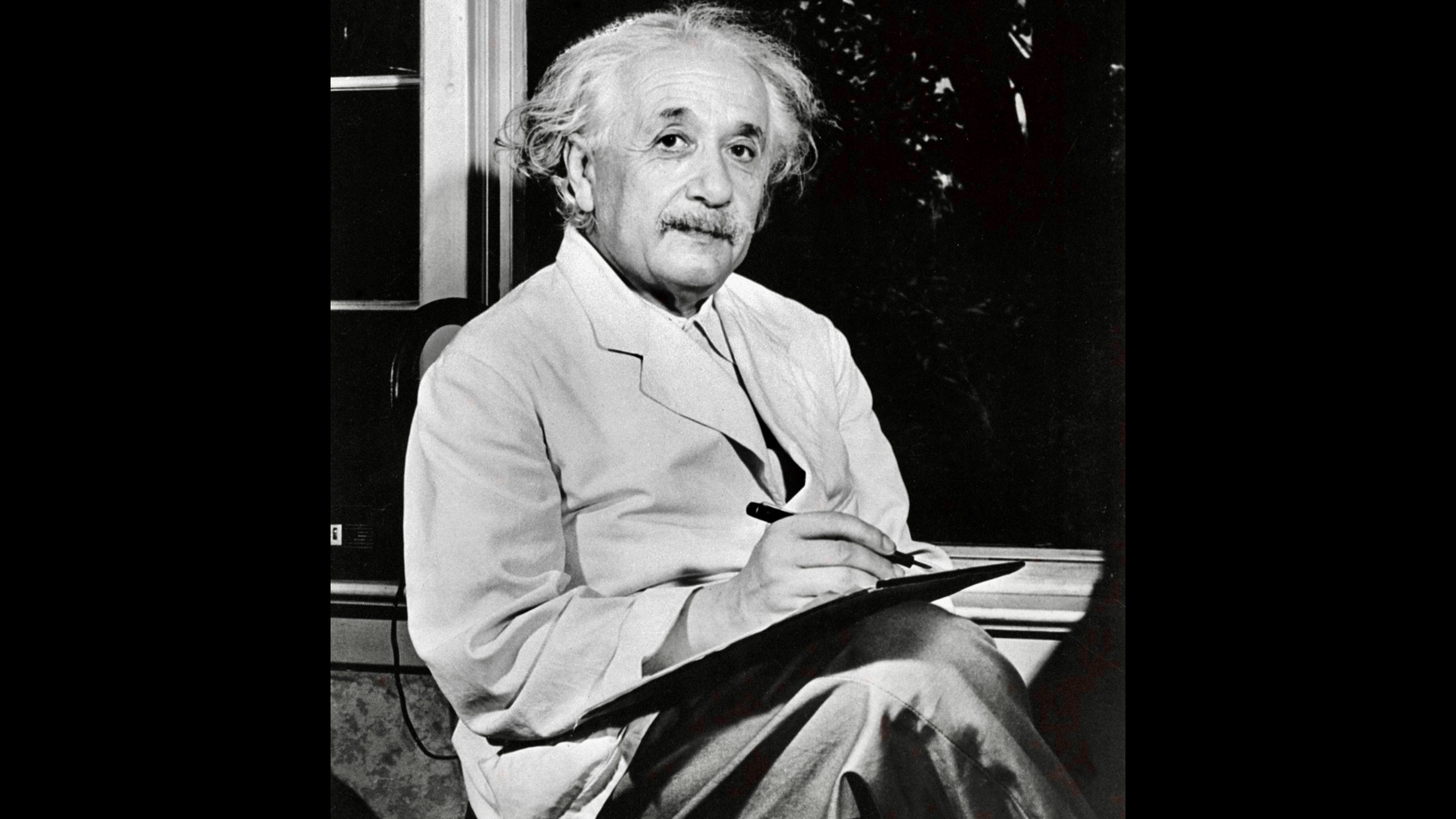
In March 1916, Albert Einstein’s theory of general relativity began gaining broader scientific recognition following its formal publication and dissemination within the global scientific community. The theory, which had been developed over several years and finalized in late 1915, represented a fundamental shift in how gravity, space, and time were understood.
The work of Albert Einstein introduced a new framework that replaced long-standing concepts established by Isaac Newton. Rather than describing gravity as a force acting at a distance, general relativity proposed that massive objects cause a curvature in spacetime itself. This curvature affects the motion of objects, leading to what is observed as gravitational attraction.
Einstein’s equations showed that space and time are not separate, fixed entities but are interconnected in a four-dimensional structure known as spacetime. The presence of mass and energy distorts this structure, influencing the paths of planets, light, and other objects. This concept provided a deeper explanation for astronomical phenomena that could not be fully accounted for by classical physics.
One of the earliest confirmations of the theory came from its ability to accurately explain the orbit of Mercury, which had long exhibited slight deviations from Newtonian predictions. General relativity accounted for this discrepancy with remarkable precision, strengthening confidence in the theory.
The theory also predicted several phenomena that were later confirmed through observation. These included the bending of light around massive objects, known as gravitational lensing, and the shifting of light frequencies in strong gravitational fields. In 1919, a solar eclipse expedition provided one of the first major experimental confirmations when starlight was observed bending around the sun, bringing widespread global attention to Einstein’s work.
General relativity further predicted the existence of black holes, regions of spacetime where gravity is so intense that nothing, not even light, can escape. Although these objects were not directly observed until much later, they have since become a central focus of modern astrophysics.
Another key implication of the theory is gravitational waves, ripples in spacetime caused by massive accelerating objects. These waves were first directly detected in 2015, nearly a century after Einstein predicted them, providing additional confirmation of the theory’s accuracy.
The publication and recognition of general relativity marked a turning point in scientific history. It laid the foundation for modern cosmology, influencing our understanding of the universe’s expansion, the behaviour of galaxies, and the origins of the cosmos.
Beyond theoretical science, the principles of general relativity have practical applications today. Technologies such as global positioning systems (GPS) must account for relativistic effects to maintain accuracy, demonstrating how Einstein’s work continues to influence everyday life.
Einstein’s theory of general relativity remains one of the most important scientific achievements in history. Its impact extends across physics, astronomy, and technology, fundamentally altering humanity’s perception of the universe and its underlying structure.
About the Author Brad Socha is the founder of The Universal Record, focused on sourced, factual global reporting. Coverage includes international news, geopolitics, technology, and major developments.