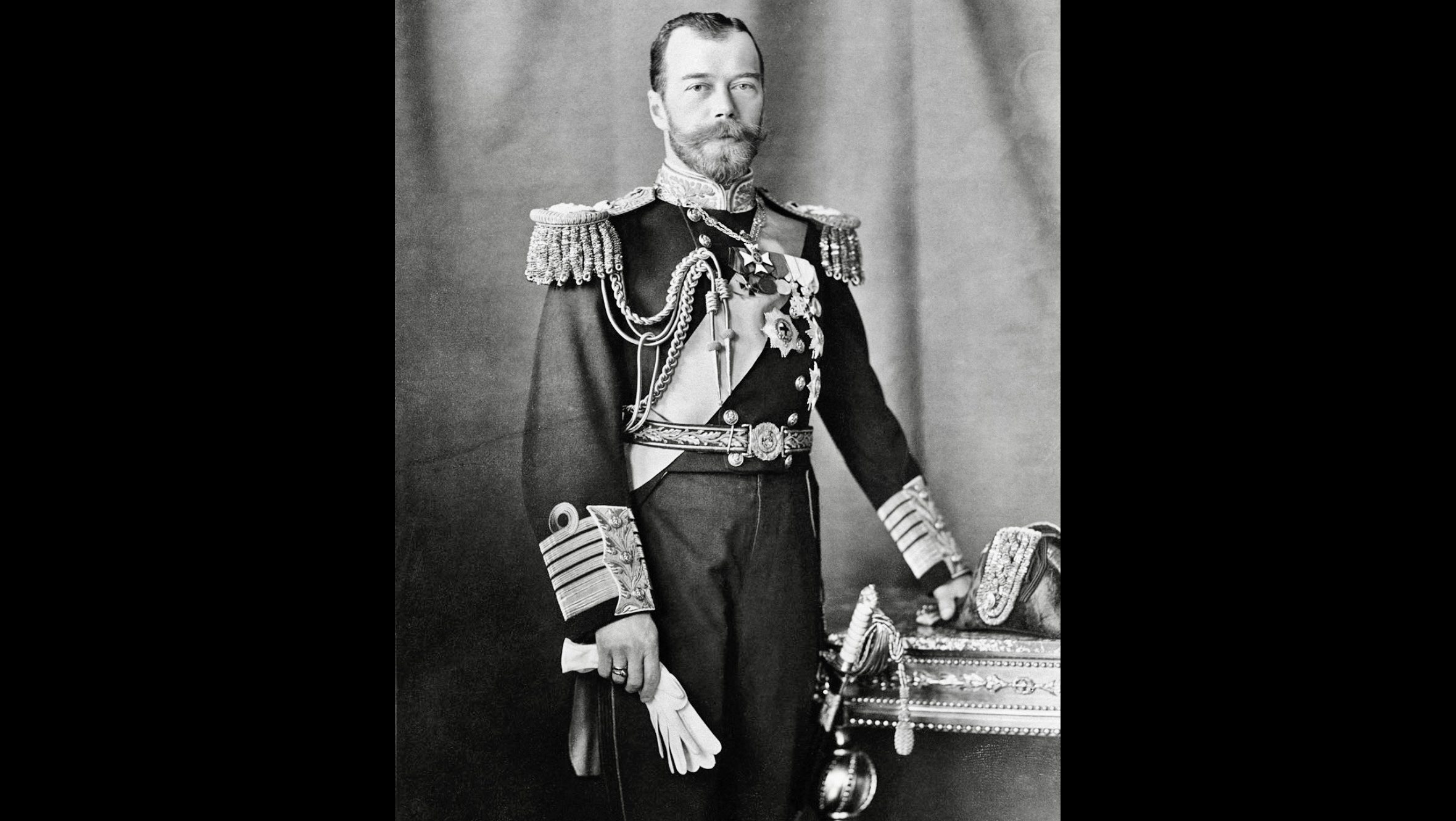
Tsar Nicholas II abdicated on 15 March 1917 during the upheaval of the February Revolution, ending the Romanov dynasty’s rule over Russia. He renounced the throne at Pskov as unrest spread and imperial authority collapsed.
As riots and disorder intensified in Petrograd, the government resigned and the Duma, backed by elements of the army, pressed the emperor to step down. Nicholas first considered abdicating in favour of his son Alexei, but instead gave up the throne in favour of his brother, Grand Duke Michael. Michael refused to accept the crown, which meant the monarchy effectively ended rather than continuing under another Romanov ruler.
The abdication came amid severe wartime strain. Russia had been battered by World War I, while food shortages, economic disruption, military losses, political anger, and public unrest pushed the empire toward collapse. By March 1917, the monarchy no longer had the support needed to maintain control.
The fall of Nicholas II became one of the defining turning points of the 20th century. It ended more than 300 years of Romanov rule and brought the Russian Empire to a close. A Provisional Government took power, but stability did not follow. Russia soon moved deeper into revolutionary crisis, leading later that year to the Bolshevik seizure of power.
The abdication also sealed the fate of the imperial family. After Nicholas stepped down, the Romanovs were placed under detention and eventually moved deeper into Russia. In July 1918, Nicholas, his family, and loyal retainers were killed in Yekaterinburg.
The date remains historically important because it marks not only the fall of one ruler, but the collapse of an entire imperial system that had dominated Russia for generations. Nicholas II’s abdication brought the Romanov era to an end and helped open the path to revolutionary transformation across Russia and beyond.
About the Author Brad Socha is the founder of The Universal Record, focused on sourced, factual global reporting. Coverage includes international news, geopolitics, technology, and major developments.