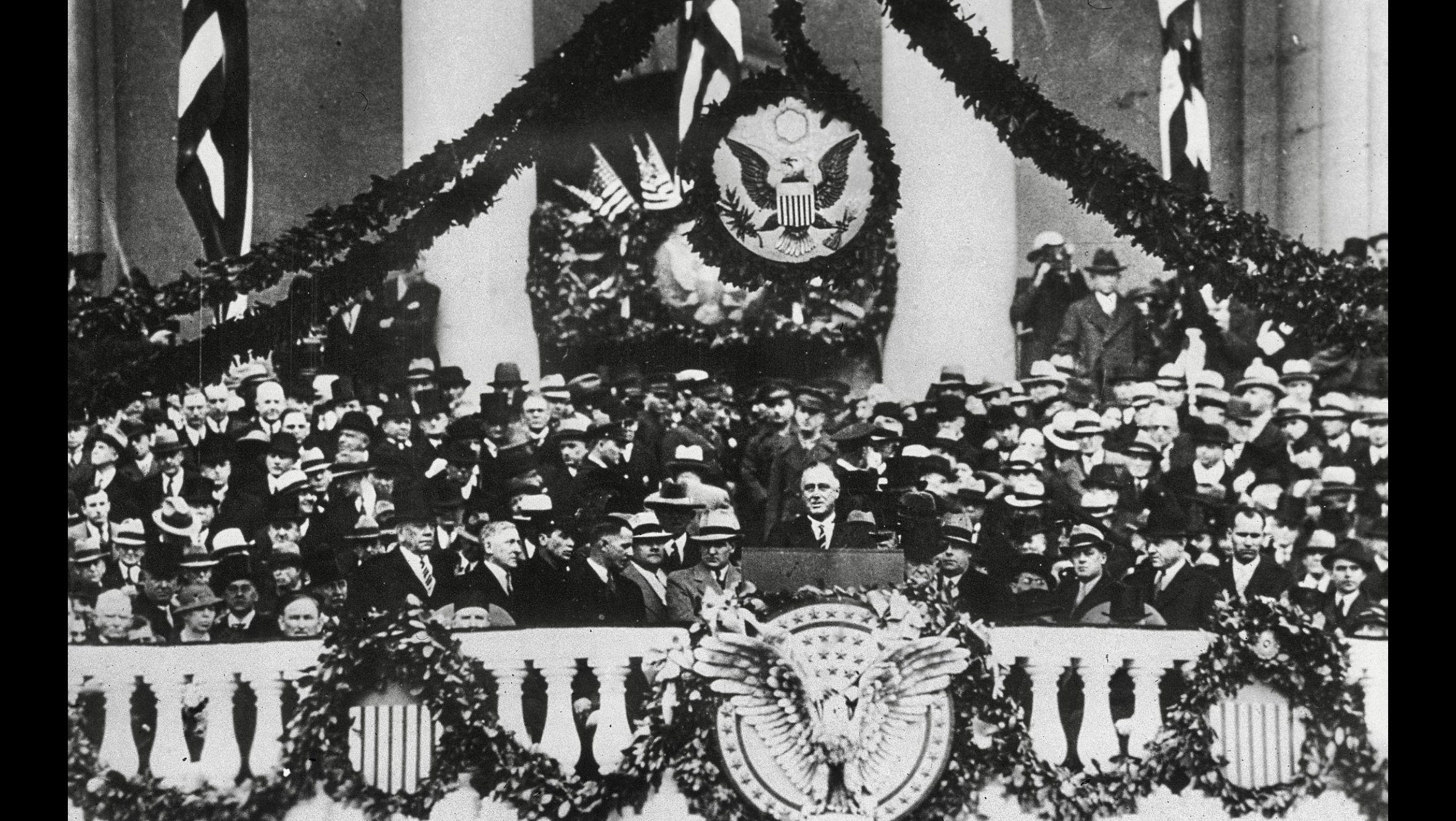
On March 4, 1933, Franklin D. Roosevelt was inaugurated as the 32nd President of the United States during one of the most severe economic crises in modern history, the Great Depression.
The country was experiencing massive unemployment, widespread bank failures, and economic instability. By early 1933, nearly one quarter of the American workforce was unemployed, and many banks had closed or were on the brink of collapse.
Roosevelt’s inauguration marked the beginning of a new political and economic approach aimed at stabilizing the nation and restoring confidence in the financial system.
A Nation in Crisis
When Roosevelt took office, the United States economy had been in decline since the 1929 stock market crash. The collapse triggered years of economic contraction that affected industries, agriculture, and financial institutions across the country.
Banks were failing at alarming rates. Many Americans had lost their savings, and several states had already declared temporary “bank holidays” to prevent further withdrawals.
Economic hardship was visible across the country through:
• widespread unemployment
• home foreclosures
• failing farms and businesses
• falling industrial production
The crisis created pressure for immediate government action.
“The Only Thing We Have to Fear Is Fear Itself”
During his inaugural address at the U.S. Capitol, Roosevelt delivered one of the most famous lines in American political history:
“The only thing we have to fear is fear itself.”
The speech was intended to restore public confidence and reassure citizens that decisive leadership and coordinated policy could stabilize the economy.
Roosevelt called for bold action and government intervention to address the emergency conditions facing the nation.
The Beginning of the New Deal
Shortly after taking office, Roosevelt introduced a series of programs and reforms that became known collectively as the New Deal. These policies were designed to provide economic relief, promote recovery, and reform financial systems.
Key early actions included:
• Emergency Banking Act to stabilize banks
• Federal Deposit Insurance Corporation (FDIC) creation
• Civilian Conservation Corps (CCC) jobs program
• Agricultural Adjustment Act (AAA) for farmers
• Public Works projects to create employment
These measures represented a major expansion of federal government involvement in economic policy.
Historical Significance
Roosevelt’s presidency ultimately lasted four terms, making him the longest-serving president in U.S. history. His leadership during both the Great Depression and World War II reshaped the role of government in American economic and social life.
March 4, 1933, was also historically notable because it was one of the last presidential inaugurations held on March 4. In the same year, the 20th Amendment to the U.S. Constitution moved future inaugurations to January 20 to shorten the transition period between elections and new administrations.
The inauguration of Franklin D. Roosevelt marked a turning point in both American political history and global economic policy.
About the Author Brad Socha is the founder of The Universal Record, focused on sourced, factual global reporting. Coverage includes international news, geopolitics, technology, and major developments.